


Geopolitical Tinderbox Slams Bitcoin: Dominance Slips Amid Israel-Iran Conflict

Over the weekend, the cryptocurrency markets were thrust into turmoil as escalating tensions in the Middle East sent shockwaves through global financial markets. Iran’s retaliatory drone and missile attack on Israel, following the bombing of the Iranian embassy in Syria, sparked fears of further conflict in the region. As a result, investors flocked to safe-haven assets, including cryptocurrencies, seeking refuge from the uncertainty.
Amidst the chaos, Bitcoin, the leading cryptocurrency, initially saw a surge in dominance as investors sought its perceived safety. However, this uptick was short-lived as the crypto’s dominance unexpectedly plummeted, raising questions about the cryptocurrency’s resilience in times of geopolitical turmoil.
Bitcoin Dominance Fluctuates Amidst Market Turmoil
The rapid decline in Bitcoin dominance puzzled market observers and sparked speculation about the possibility of an imminent altcoin season. Influencers like Crypto Phoenix and Altcoin ₳ardvark suggested that the decrease in dominance could signal a shift in investor sentiment towards alternative cryptocurrencies. However, conflicting views emerged, with the Blockchain Center’s Altseason Index indicating that the market is still tilted towards the coin’s dominance.
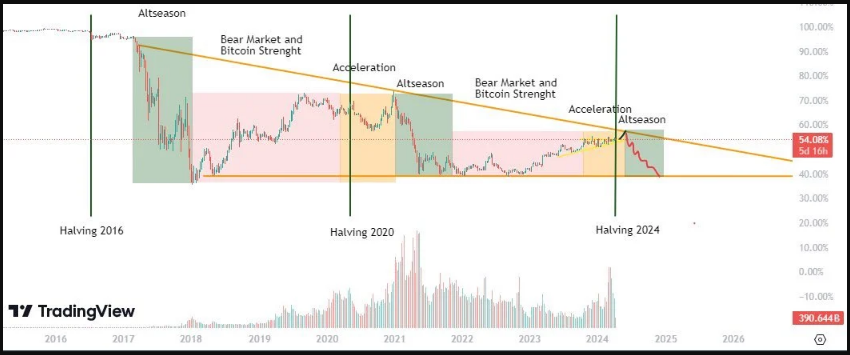
According to the Altseason Index, only 41% of large-cap altcoins are outperforming the flagship coin, suggesting that the market may not be ready for a full-fledged altcoin season just yet. Despite the weekend turmoil, Bitcoin’s position as the dominant player in the cryptocurrency market remains unshaken, with its dominance hovering nearly 40%.
Bitcoin’s Resilience Tested Amidst Market Uncertainty
The cryptocurrency sell-off triggered by geopolitical tensions highlights the volatile nature of digital asset investing. While Bitcoin’s status as a safe-haven asset was initially reaffirmed, its subsequent decline in dominance underscores the unpredictable dynamics of the crypto market. Investors are reminded of the importance of staying vigilant and adaptable in the face of geopolitical events that can significantly impact market sentiment.
Altcoins Weather The Storm
Despite the setback, some meme coins have demonstrated remarkable resilience, outperforming Bitcoin by significant margins over the past 90 days. Coins like WIF, DOGE, and PEPE have posted impressive gains, showcasing the potential for diversification within the cryptocurrency market.
As the crypto markets continue to navigate through geopolitical uncertainties, all eyes remain on Bitcoin’s dominance and its ability to weather the storm. Whether the recent dip in dominance heralds the onset of an altcoin season or merely a temporary blip remains to be seen. In the meantime, investors brace themselves for further market fluctuations and remain cautious amidst the prevailing uncertainty.
While geopolitical tensions have rattled the cryptocurrency markets, Bitcoin’s dominance has taken a dip, sparking speculation about the emergence of an altcoin season. However, conflicting indicators suggest that Bitcoin’s position as the market leader remains intact, highlighting the unpredictable nature of digital asset investing.
Featured image from Pixabay, chart from TradingView
Read more
* The content presented above, whether from a third party or not, is considered as general advice only. This article should not be construed as containing investment advice, investment recommendations, an offer of or solicitation for any transactions in financial instruments.


