




Japan, South Korea Stocks Rebound as Kospi Gains Over 4%, SK Hynix Rises Over 5%, Kioxia Surges Nearly 9%
TradingKey - On November 27, Japanese and South Korean stock markets both closed higher, with the South Korean market rebounding after consecutive pullbacks and tech stocks putting in standout performances. The Korea Composite Stock Price Index (KOSPI) closed up 4.34% at 4,915.69 points, while Japan's Nikkei 225 Index gained 2.11% to end at 58,711.11 points.
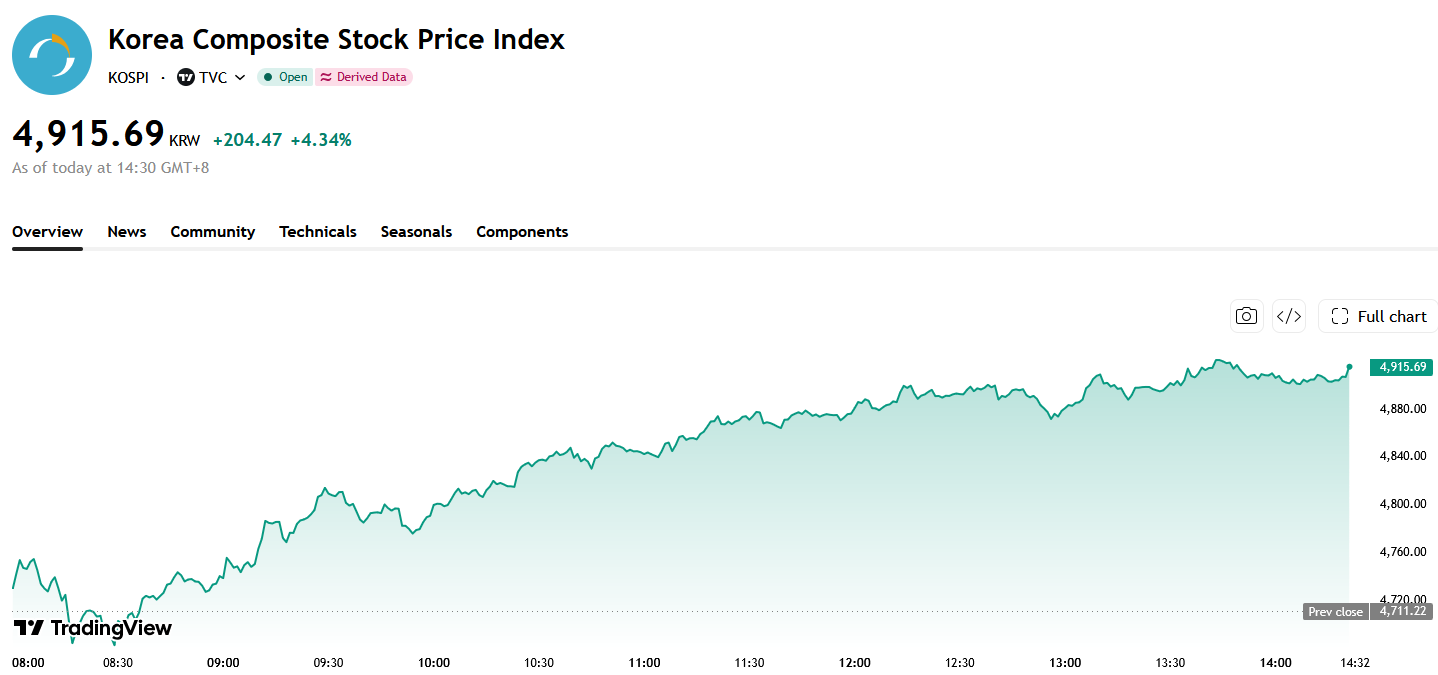
Source: TradingView
South Korean semiconductor leaders rallied broadly, with Samsung Electronics rising 4.55% to 179,100 won (approximately $134) and SK Hynix gaining 5.41% to 1.11 million won. In the Japanese market, Kioxia jumped 8.86% to 8,450 yen (approximately $53), while SoftBank Group climbed 3.13% to 2,984.5 yen, as memory chip and tech stocks became key drivers of the market rebound.
The rebound in South Korean equities was driven in part by rising expectations of policy support. Previously, uncertainties surrounding the global AI investment outlook and market concerns that AI capital expenditure growth could slow had sent the KOSPI tumbling earlier this week, briefly touching a near 10-month low. As South Korean policymakers consider tapping a stock market stabilization fund, some investors have begun buying the dip.
Citi economist Kim Jin-wook expects that the size of South Korea's stock market stabilization fund could be expanded from the current 10.76 trillion won to between 20 trillion and 40 trillion won, and could be deployed as early as next month.
Meanwhile, according to market sources, SK Hynix plans to achieve mass production of 3D DRAM within the next four to five years, with its first product expected to feature 100 vertically stacked memory cells and targeting commercialization around 2031. SK Hynix stated that existing equipment can already support 100-layer stacking, but dedicated equipment will be required to scale further to 200 to 300 layers or higher. Over the long term, the company also plans to explore combining multi-layer stacking with hybrid bonding technology, aiming to push 3D DRAM stacking to over 1,000 layers.
Recommended Articles


