




Gold has crashed from $5,500 to below $3,500 — how much further could it fall?

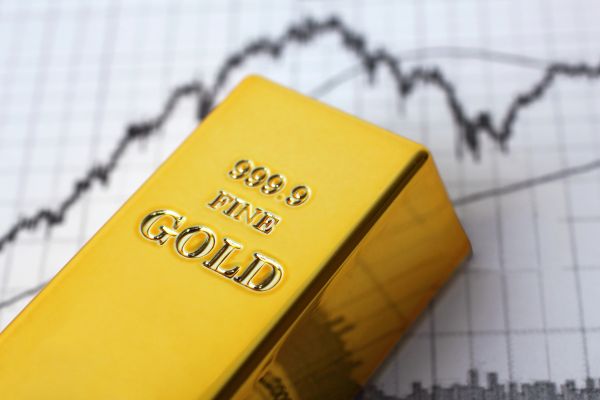
Gold has lost more than $2,000 an ounce since January, wiping out nearly 40% of its peak value and taking the precious metal back to levels last seen in September 2025. Even renewed selling across US technology stocks has failed to bring buyers back into an asset traditionally associated with protecting wealth during periods of uncertainty.
The latest blow came from US inflation data, with the Personal Consumption Expenditures (PCE) price index rising 3.8% in the year to October. Markets are now almost certain the Federal Reserve will raise interest rates in December, while the US dollar remains close to a 19-month high.
For XAUUSD traders, however, the most interesting development is how much bad news is already priced into gold. A December rate hike is widely expected, speculative enthusiasm has faded and bullion has surrendered much of its extraordinary rally.
Further losses may increasingly depend on how aggressive the Fed becomes in 2027, rather than simply what it decides next month.
Gold's $2,000 collapse challenges the safe-haven trade
Earlier this year, investors were buying gold as protection against geopolitical uncertainty, inflation, government debt and concerns about the long-term value of the US dollar. Central-bank purchases and strong investment demand helped drive prices to unprecedented levels, with momentum attracting further speculative buying.
Many of those concerns still exist, yet gold has fallen dramatically. Persistent inflation has encouraged the Fed to maintain restrictive monetary policy, strengthening the dollar and increasing the returns available from interest-bearing assets.
Gold also faces competition from cash when financial markets become particularly volatile. Investors reducing exposure to technology stocks or covering losses elsewhere may sell profitable gold holdings to raise liquidity, putting pressure on bullion precisely when its defensive qualities might otherwise be expected to attract buyers.
The simultaneous weakness across gold and technology shares illustrates why XAUUSD traders cannot assume that falling equity markets will automatically produce a precious-metals rally.
The December rate hike is already priced in
Markets are assigning roughly a 96% probability to a quarter-point Fed rate increase in December, with the remaining probability pointing toward a larger half-point increase. The latest inflation report has reinforced those expectations, leaving relatively little uncertainty about the immediate direction of monetary policy.
The bigger question for gold is what happens afterwards. If the Fed signals that December could be followed by several additional increases in 2027, investors may continue reducing exposure to non-yielding assets. A more cautious outlook could have the opposite effect, even if the central bank delivers the widely expected December hike.
Gold does not necessarily need actual interest-rate cuts to begin recovering. A reduction in the number of future hikes anticipated by financial markets could weaken the dollar and reduce bond yields before the Fed changes direction.
With so much pessimism already reflected in gold prices, economic data that challenges expectations for further tightening could produce a significant reaction in XAUUSD.
How much further could gold fall?
The breakdown below $3,500 removes an important psychological reference point for traders. Round-number levels often attract attention because market participants use them when setting entry prices, exit targets and risk limits.
The next round-number areas below $3,500 are $3,400 and $3,300, although neither represents a guaranteed support level. Reaching $3,300 would leave gold approximately 40% below its January peak.
Continued dollar strength, rising real yields and further withdrawals from gold investment funds could extend the decline. Another acceleration in US inflation would be particularly damaging if it encouraged markets to anticipate a longer tightening cycle.
A recovery above $3,500 that holds across several trading sessions would provide an early indication that selling pressure may be easing. A subsequent move toward $3,600 could attract further attention, particularly if accompanied by a weaker dollar or changing Fed expectations.
After a decline of this magnitude, short-term rebounds can be substantial without necessarily marking the beginning of a sustained recovery.
Central-bank buying could become increasingly important
Central banks have been major buyers of gold in recent years as countries diversify their foreign-exchange reserves and reduce dependence on dollar-denominated assets.
Unlike speculative investors, central banks generally make purchasing decisions based on longer-term reserve management rather than the next Fed meeting. Lower bullion prices may therefore attract official-sector demand even while private investors remain cautious.
Physical demand from jewellery buyers, particularly in China and India, could also recover as gold becomes more affordable relative to its January highs.
Neither source of demand guarantees a price recovery. However, sustained central-bank purchases combined with renewed investment flows could make further declines harder to maintain. Traders should watch for evidence that lower prices are bringing physical and institutional buyers back into the market.
Australian investors are experiencing a different gold sell-off
The weakening Australian dollar has cushioned some of the decline for domestic investors holding gold priced in Australian dollars. XAUUSD, however, tracks gold against the US dollar, so it reflects the full decline in the internationally quoted bullion price.
Consider an illustrative example:
In this example, a weaker Australian dollar reduces the decline in AUD-denominated gold from approximately 36% to 33%.
Australian traders using XAUUSD CFDs are taking exposure to movements in the US dollar gold price rather than purchasing bullion locally. Account currency conversions may also affect Australian-dollar trading results.
Understanding the distinction is particularly important when both gold and AUD/USD are experiencing substantial price movements.
What could move XAUUSD next?
Bullish factors
Softer US inflation: Evidence that price pressures are easing could reduce expectations for further Fed hikes in 2027.
US dollar reversal: A weaker dollar would make bullion more affordable for international buyers.
Renewed investment demand: Gold ETF inflows and stronger central-bank purchases could help absorb selling pressure.
Economic slowdown: Weaker US employment or consumer spending could encourage a less aggressive Fed outlook.
Bearish factors
Further monetary tightening: Expectations for multiple rate increases in 2027 could keep gold under pressure.
Persistent dollar strength: A stronger US currency would remain a headwind for international gold demand.
Investment outflows: Continued selling from gold ETFs and speculative traders could accelerate the decline.
Failed recovery attempts: An inability to reclaim $3,500 could leave traders focused on lower price levels.
Trading XAUUSD with Mitrade
Gold does not need to recover for traders to gain exposure to its price movements. Eligible Australian clients can use Mitrade CFDs to take long or short positions on XAUUSD without owning physical bullion.
Traders expecting inflation to moderate and interest-rate expectations to soften can take a long position, while those anticipating further monetary tightening or continued dollar strength can take a short position.
Stop-loss and take-profit orders can help define exit levels, while pending orders allow positions to open when selected prices are reached. Stop-loss orders are not guaranteed and may be filled at a worse price.
Mitrade holds an Australian Financial Services Licence. Commodity CFDs are leveraged products, so both potential gains and losses can be magnified.
You might be interested in…
1. Could gold fall below $3,000?
Further losses are possible if US monetary policy becomes more restrictive, the dollar continues strengthening and investment demand deteriorates. However, $3,000 would represent a decline of more than 46% from January's record, and sustained central-bank or physical demand could limit the downside.
2. Why is gold falling when inflation is rising?
Although gold is traditionally associated with inflation protection, rising inflation can trigger higher interest rates. When those increases strengthen the dollar and raise real yields, gold can become less attractive to investors.
3. Could gold recover even if the Fed raises rates in December?
Yes. Financial markets already overwhelmingly expect a December increase. Gold's reaction could depend more heavily on the Fed's guidance for 2027 than the rate decision itself.
4. Can Australian traders take a short position on gold?
Eligible Australian clients can use XAUUSD CFDs to take short positions if they expect gold prices to decline. Losses can occur if prices rise, and leverage magnifies both potential gains and losses.
Disclaimer: The content presented above, whether from a third party or not, is considered as general advice only. Trading OTC derivatives involves significant risk and may not be suitable for all investors. CFDs are leveraged products, and you may lose all the funds in your trading account. You do not own or have rights to the underlying assets. This content is general information and does not take into account your objectives, financial situation or needs. Consider the PDS, FSG, TMD and other relevant disclosure documents before deciding whether to trade, and seek independent advice where appropriate. Past performance and demo results are not reliable indicators of future performance.


