




SpaceX Drops Over 6% Pre-Market on Planned $32 Billion AI Chip Debt as Leverage and Financing Costs Spark Concern
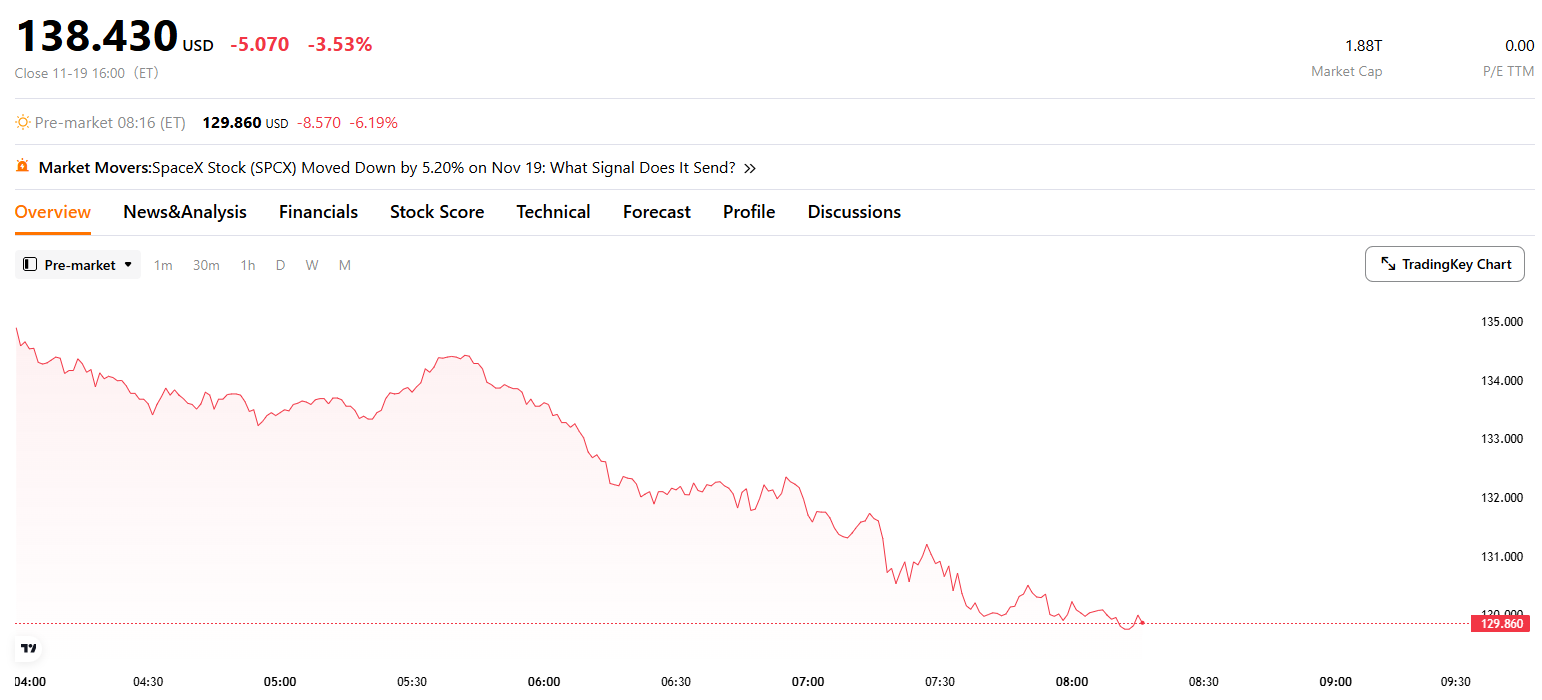
TradingKey - SpaceX (SPCX) fell more than 6% in US premarket trading on Friday. According to Bloomberg, the company completed an approximately $32 billion bond offering on Thursday, with proceeds to be used to purchase Nvidia (NVDA) AI chips. Although this financing helps accelerate its AI expansion, the deal's massive size, relatively complex structure, and comparatively high bond yields have heightened investor concerns over the company's leverage levels and future debt-servicing pressure.
Source: TradingKey
According to people familiar with the matter, the financing consists of three debt tranches, with all bonds scheduled to price on Thursday. Of this, about $6 billion in bonds was opened to a broader group of investors, while another roughly $26 billion in notes had previously been placed privately. Goldman Sachs and Apollo Global Management arranged the transaction.
If successfully completed, this would become one of the largest debt transactions in the AI infrastructure sector and could serve as a reference for other tech companies seeking to make massive chip purchases and build data centers. With demand for high-performance GPUs growing rapidly, relying solely on operating cash flow or equity financing has become insufficient to fully cover massive capital expenditures, leading more and more companies to turn to bonds, private credit, and asset-backed financing to raise funds.
In terms of financing costs, this deal is not cheap. Bloomberg reported that the largest tranche, the Class A3 notes totaling about $25.2 billion, carried a yield of 8.259%. By comparison, the average yield on US investment-grade bonds was approximately 5.95% on Thursday. SpaceX had to offer investors significantly higher returns, reflecting that the market still demands a relatively high risk premium for such large-scale AI infrastructure financings.
Notably, this $32 billion bond offering is not a traditional corporate bond issued directly by SpaceX, but rather part of a broader financing package exceeding $40 billion, designed primarily to keep the debt off-balance-sheet while funding the company's purchases of Nvidia GPUs.
Specifically, the financing will be executed through a special purpose vehicle (SPV) named Saturn Funding Trust. Managed by an Apollo-backed entity, the vehicle will first purchase the Nvidia chips and related computing equipment and then lease them to SpaceX for an expected lease term of about five years. SpaceX is required to make lease payments as agreed, remaining obligated to pay even under exceptional circumstances such as equipment failures or natural disasters. This arrangement provides bond investors with a relatively stable repayment source while helping SpaceX avoid recording the financing directly on its balance sheet.
Recommended Articles


