




Japan, South Korea Stocks Rise; KOSPI Up 1.62%, Nikkei 225 Up 0.32%, Kioxia Surges Nearly 6%
TradingKey - On August 4, Japanese and South Korean stock markets closed higher across the board. The Kospi closed up 1.62% at 6,358.95 points, while the Nikkei 225 Index rose 0.32% to close at 63,957.53.
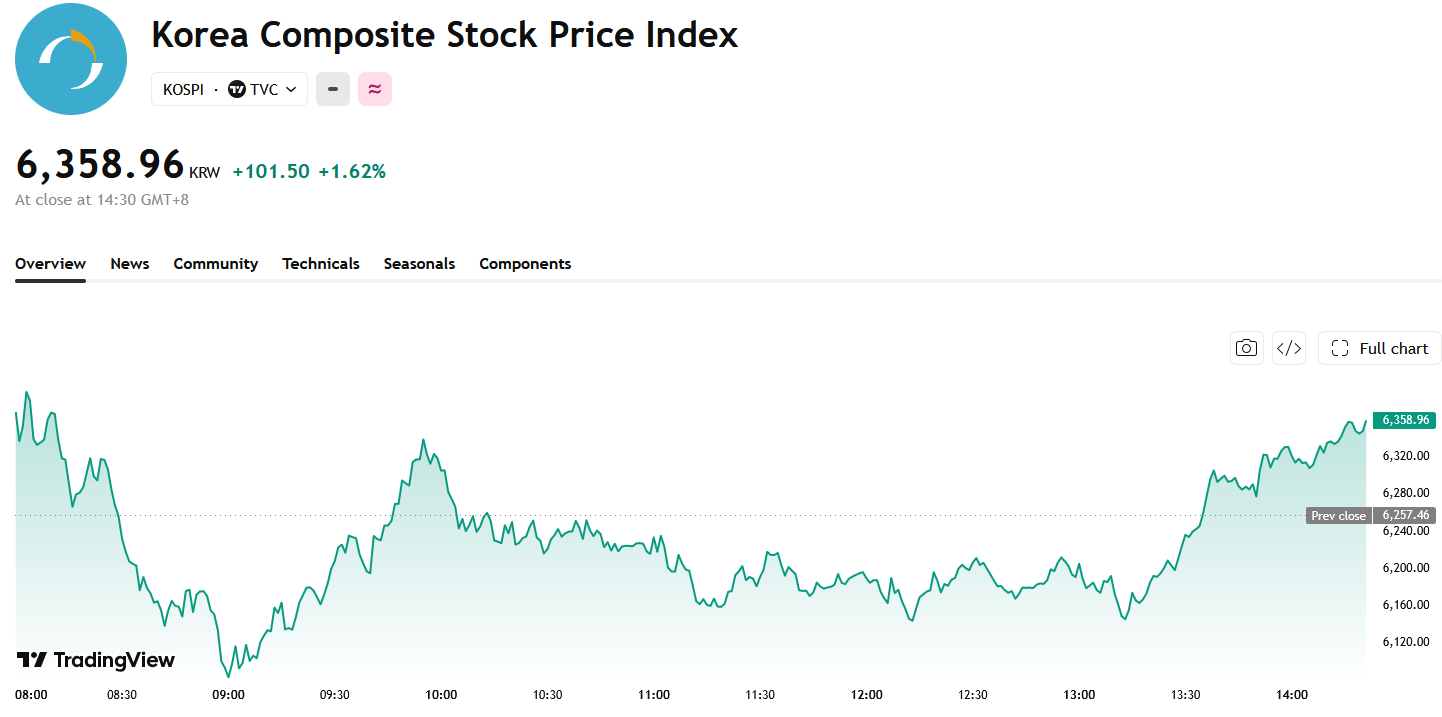
Source: TradingView
In terms of individual stocks, South Korean chipmakers stabilized. SK Hynix rose 0.64% to close at 1,577,000 won (approximately $1,100), while Samsung Electronics edged up 0.21% to close at 240,000 won.
In Japan, Kioxia surged 5.96% to close at 52,090 yen (approximately $330), while SoftBank Group closed down 3.06% at 5,228 yen.
A series of measures recently taken by South Korean regulators targeting single-stock leveraged ETFs have begun to take effect. Data show that the trading volume of the largest single-stock leveraged ETF linked to SK Hynix dropped to 59 million units, hitting its lowest level since early June, while the trading volume of similar products related to Samsung Electronics also fell to the lowest level since their listing.
Previously, such leveraged ETFs, which use derivatives to amplify returns, attracted a massive influx of retail capital and were believed to have amplified volatility in South Korean equities. To mitigate market risks, regulators have gradually raised the minimum cash margin requirements for investors and suspended approvals for new single-stock leveraged ETF products.
Institutions remain optimistic about the mid- to long-term outlook of the South Korean stock market. Goldman Sachs ( GS )'s Chief Asia-Pacific Equity Strategist, Timothy Moe, stated that he maintains a positive outlook on South Korean equities and continues to set a target of 12,000 points for the Kospi index.
He believes that as market volatility gradually subsides, corporate fundamentals will once again become the key driver of stock prices. Currently, the overall price-to-earnings ratio of South Korean equities is only about 5 times, leaving valuations significantly depressed. Market expectations for the sustainability of the memory chip upcycle are overly pessimistic, whereas Goldman Sachs estimates that this semiconductor cycle is likely to last longer and be larger in scale than previous ones.
By contrast, Goldman Sachs is relatively cautious about Japanese equities. Moe pointed out that following the recent intervention by Japanese authorities in the currency market, there is limited room for further appreciation of the yen. Meanwhile, after its earlier gains, the Japanese stock market faces the risk of a technical correction in the short term. Investors still need to monitor exchange rate fluctuations and the impact of the macroeconomic environment on corporate earnings.
Recommended Articles


