




South Korea’s Kospi Index Rebounds Over 17%, SK Hynix Surges Near 30%, Samsung Electronics Soars 23%
TradingKey - During the Asian trading session on July 31, the South Korean stock market staged an epic rally. The benchmark KOSPI index once surged over 17% intraday, triggering the Korea Exchange's 'Sidecar' mechanism, which suspended program trading for 5 minutes.
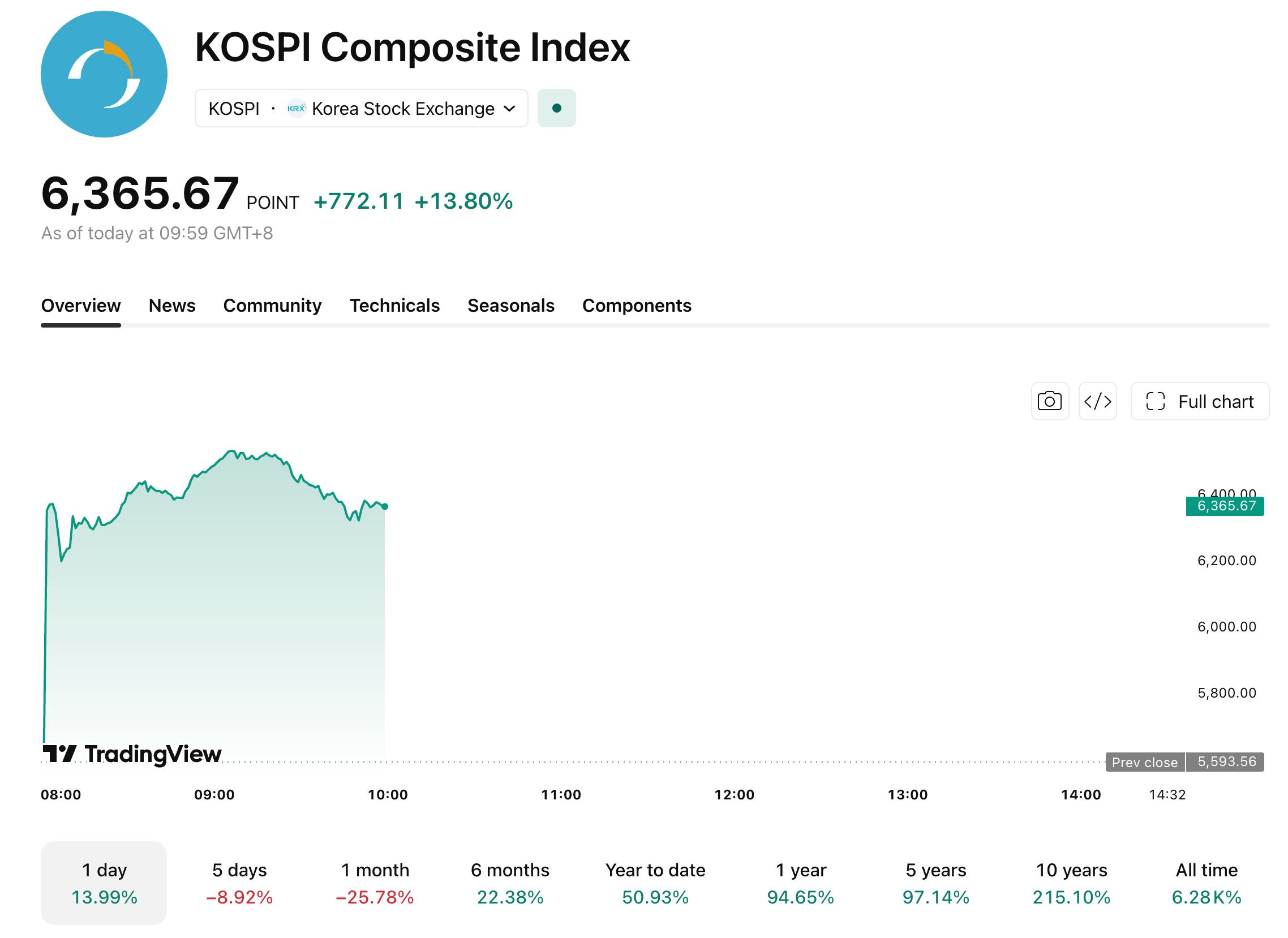
[Source: TradingView]
South Korea's two memory giants became the absolute main force behind the rally. SK Hynix once jumped near 30% intraday, while Samsung Electronics also surged over 23% at one point. As of press time, SK Hynix was trading at 1.64 million won (approximately $1,156), up 24.05%; Samsung Electronics was trading at 247,000 won, up approximately 19.57%.
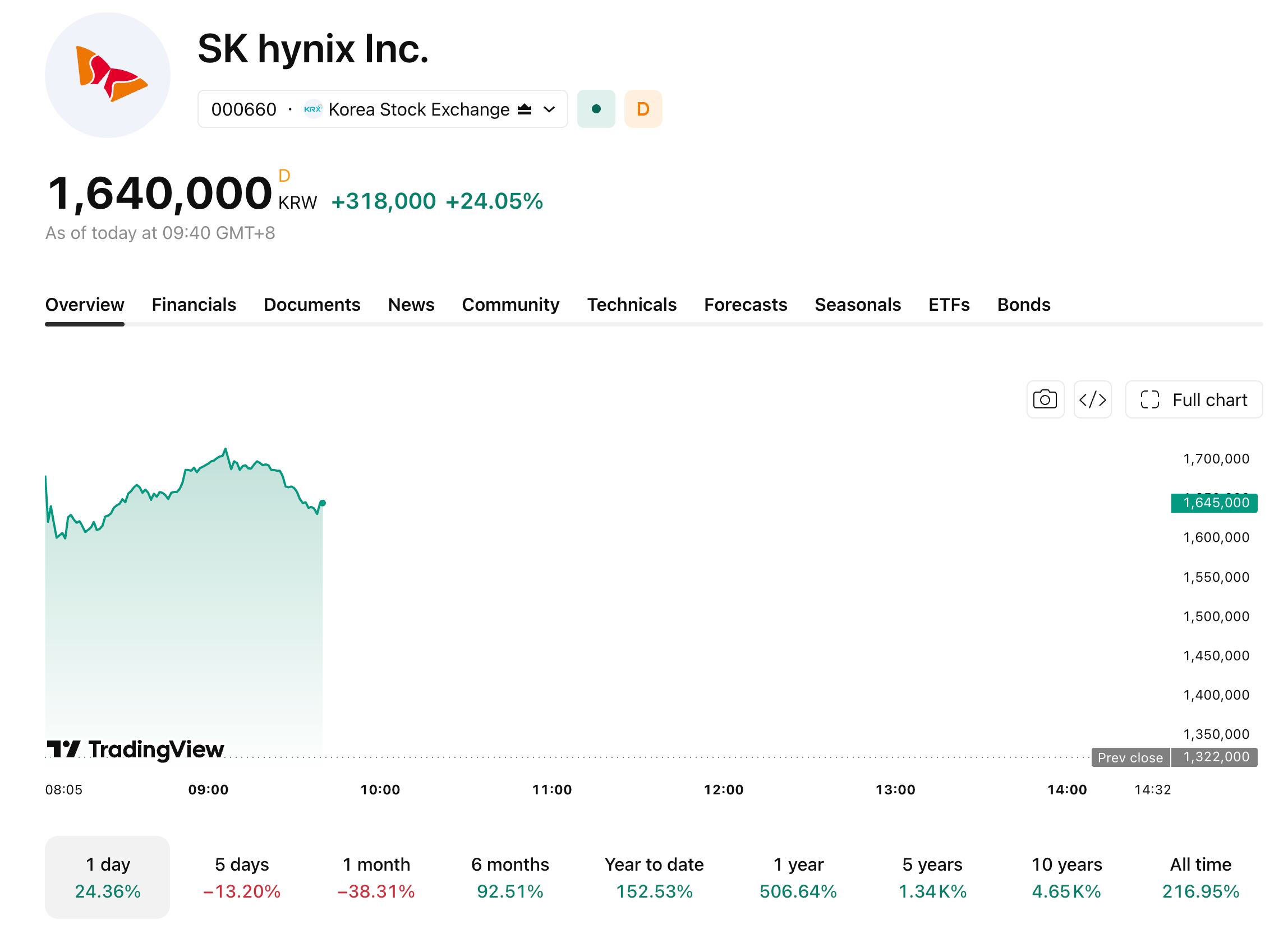
[Source: TradingView]
This reversal occurred against the backdrop of a cumulative 17% plunge in the KOSPI over the previous three trading days, driven by market doubts over the return on investment of AI capital expenditures by global tech giants such as Meta ( META ), Google ( GOOGL ), and Amazon ( AMZN ), coupled with concerns over memory chip competition from China, which forced highly leveraged funds to liquidate.
The core driver of today's rebound came from overnight US stocks. Microsoft's earnings beat expectations, reigniting confidence in long-term AI infrastructure investment, which sent the Philadelphia Semiconductor Index soaring 8%. The memory chip sector exploded across the board, with SanDisk ( SNDK) rising about 26%, Micron ( MU) surging over 18%, and SK Hynix ADR ( SKHY) jumping over 17%.
Highly symbolic market-support signals also emerged in South Korea. Regulatory filings show that Chey Tae-won, Chairman of SK Group, directly bought 3,620 shares of SK Hynix in the open market. This is the first time he has directly held shares in the company in his personal name, which the market generally interpreted as a strong endorsement of the company's long-term value by the leader.
On the fundamental front, SK Hynix's Q2 revenue was 79.3 trillion won, up 257% year-on-year, and operating profit was 60.5 trillion won, both hitting record highs. Goldman Sachs ( GS) experts believe that traditional DRAM prices will maintain double-digit growth this year, HBM has significant room for price increases next year, and the threat from Chinese competitors is limited in the short to medium term.
Despite the ferocious momentum of the rebound, some analysts believe it is more of a technical correction after an extreme oversold condition, rather than a trend reversal. Whether the KOSPI can stabilize in the future will still depend heavily on capital expenditure guidance from global tech giants and the trend of memory chip prices.
Recommended Articles


