




Why CoreWeave Stock Fell 30% in Just 1 Month
Key Points
Demand for AI data center capacity remains strong, but investors are increasingly demanding to know whether CoreWeave can translate that demand into profits and long-term shareholder returns.
Meta's recently revealed AI cloud ambitions have raised the stakes.
Expectations were too high to start with.
- 10 stocks we like better than CoreWeave ›
Just a few weeks ago, CoreWeave (NASDAQ: CRWV) looked unstoppable.
The neocloud provider had become one of Wall Street's hottest stocks, riding the wave of excitement generated by artificial intelligence. Investors were captivated by its explosive revenue growth, massive backlog of customer contracts, and strategic partnerships with some of the biggest names in AI.
Where to invest $1,000 right now? Our analyst team just revealed what they believe are the 10 best stocks to buy right now, when you join Stock Advisor. See the stocks »
Then, almost as quickly as it climbed, the stock tumbled. As of mid-afternoon Friday, CoreWeave had lost 30% of its market capitalization in just one month, leaving many investors wondering whether something has gone seriously wrong.
The answer is both yes and no.
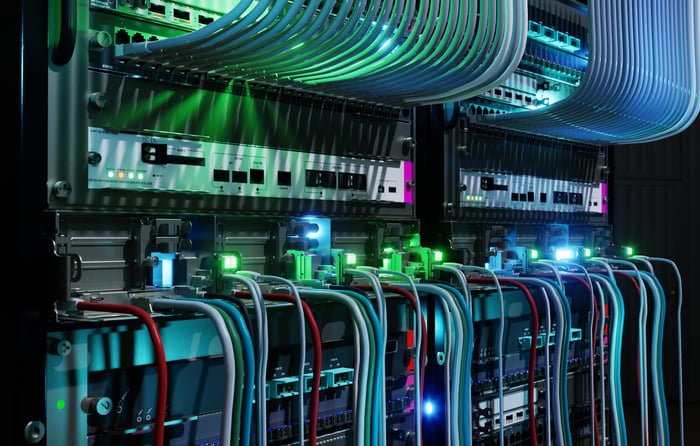
Image source: Getty Images.
Investors are starting to ask tougher questions
For much of the past year, investors focused on one question: Can CoreWeave grow fast enough?
The answer appeared to be yes. The company signed enormous contracts with clients, expanded aggressively, and established itself as one of the leading independent providers of AI cloud computing infrastructure. In the first quarter of 2026, revenue more than doubled year over year to $2.1 billion, while revenue backlog almost tripled to about $100 billion.
Yet despite the impressive performance, Wall Street is asking a very different question today: Can CoreWeave become a highly profitable business despite spending tens of billions of dollars on its infrastructure?
That distinction may sound subtle, but it changes everything. Growing quickly is impressive. Growing profitably in one of the most capital-intensive industries on Earth is much harder. Under generally accepted accounting principles (GAAP), CoreWeave remained loss-making in Q1 despite its massive contract wins. The only silver lining in the quarterly report it delivered on May 7 was that its adjusted earnings before interest, taxes, depreciation, and amortization (EBITDA) and adjusted operating income came in positive.
In short, investors are focused on whether CoreWeave will report GAAP profits in the near future.
Meta may have changed the competitive landscape
One of the biggest catalysts behind the stock's recent sell-off was a report that Meta Platforms is exploring leasing out some of its artificial intelligence computing infrastructure to external customers.
At first glance, that might not sound like bad news. After all, demand for AI computing capacity continues to surge.
But investors immediately see a much bigger implication over the long run. Meta isn't just one of the world's largest AI companies. It could also become one of the world's largest suppliers of AI computing capacity.
That shines a spotlight on an uncomfortable scenario. The largest customers of neoclouds like CoreWeave today could become its biggest competitors tomorrow. Whether Meta ultimately succeeds isn't the point.
In short, the market now views it as more probable that the AI infrastructure space will become more competitive over time, which would reduce the pricing power of independent compute providers like CoreWeave.
Expectations were probably too high to start with
Sometimes, a stock falls not because the business deteriorates, but because the expectations baked into its price become impossible for the company to satisfy. That appears to be part of CoreWeave's recent share price decline.
To put it into perspective, the stock now trades at a price-to-sales (P/S) ratio of 5.9 -- and that's after the stock price collapsed from its 52-week high of $153 to around $74 as of mid-afternoon Friday. Amazon, despite owning the largest cloud computing business globally, trades at a P/S ratio of 3.4.
In other words, investors weren't just valuing CoreWeave like a fast-growing cloud provider. They were valuing it as one of the defining winners of the AI revolution.
When expectations reach those levels, almost any uncertainty -- such as a potential new competitor or concerns over long-term profitability -- can trigger a sharp correction.
None of these developments, individually, fundamentally changes CoreWeave's business. Together, however, they have created enough uncertainty to drive investors to reassess how much they're willing to pay for the stock.
What does it mean for investors?
When a stock falls by more than 50% from its 52-week high, it naturally raises concerns among shareholders.
But let's put things into perspective. If you expected CoreWeave's stock to rise continuously in a straight line, that's likely unrealistic. Long-term investors should focus on a different question: Has the long-term investment thesis changed?
So far, the answer appears to be no. AI infrastructure demand continues to grow. CoreWeave remains deeply integrated with leading AI developers, and the company still has a substantial runway for expansion if management executes well.
What has changed is the need for a margin for error. Investors are no longer rewarding growth at any cost. What they want now is proof that CoreWeave can transform extraordinary demand for its services into a durable, profitable business.
The company's ability to provide that proof may ultimately determine where the stock goes over the next few years.
Should you buy stock in CoreWeave right now?
Before you buy stock in CoreWeave, consider this:
The Motley Fool Stock Advisor analyst team just identified what they believe are the 10 best stocks for investors to buy now… and CoreWeave wasn’t one of them. The 10 stocks that made the cut could produce monster returns in the coming years.
Consider when Netflix made this list on December 17, 2004... if you invested $1,000 at the time of our recommendation, you’d have $377,990!* Or when Nvidia made this list on April 15, 2005... if you invested $1,000 at the time of our recommendation, you’d have $1,269,518!*
Now, it’s worth noting Stock Advisor’s total average return is 896% — a market-crushing outperformance compared to 206% for the S&P 500. Don't miss the latest top 10 list, available with Stock Advisor, and join an investing community built by individual investors for individual investors.
See the 10 stocks »
*Stock Advisor returns as of July 26, 2026.
Lawrence Nga has no position in any of the stocks mentioned. The Motley Fool has positions in and recommends Amazon and Meta Platforms. The Motley Fool has a disclosure policy.
Recommended Articles


