




U.S. Power Demand Could Set a Record in 2026. 1 Vanguard ETF to Buy to Cash in on the AI Power Surge
Key Points
The Vanguard Utilities ETF is a conservative play on the AI boom.
Led by AI demand, commercial electricity consumption is soaring.
This sector ETF is also appealing to dividend investors.
- 10 stocks we like better than Vanguard Utilities ETF ›
If a poll asked investors to rank the 11 S&P 500 sectors in order of excitement, there's an excellent chance that technology would take one of the top spots, while utilities would be toward the bottom, if not in the cellar.
That's an old-school way of looking at things. Thanks to the evolution of artificial intelligence (AI), utility stocks have more pizazz than market participants typically ascribe to the sector, providing an interesting refresh for exchange-traded funds (ETFs) such as the Vanguard Utilities ETF (NYSEMKT: VPU).
Will AI create the world's first trillionaire? Our team just released a report on the one little-known company, called an "Indispensable Monopoly" providing the critical technology Nvidia and Intel both need. Continue »
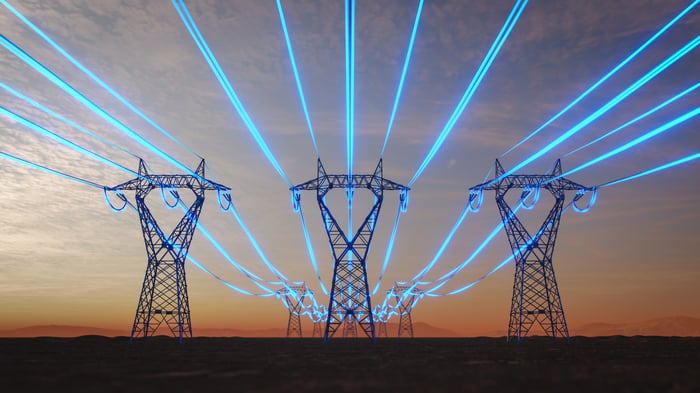
This Vanguard ETF is a backdoor AI play. Image source: Getty Images.
This $9 billion ETF should not be confused with a traditional tech fund or one dedicated to the broader AI investment thesis. Still, with this disruptive technology stoking exponential increases in power demand, the Vanguard fund is an interesting option for investors seeking some non-tech AI exposure.
Turning the AI lights on with VPU
As one of the largest ETFs in the category, this Vanguard fund allocates 62.4% of its portfolio to electric utility stocks, which is relevant because saying AI has power demands is an understatement. Data centers consume massive amounts of power.
Quantifying the power demands created by AI and cloud computing data centers isn't difficult. Last year, these facilities consumed a staggering 448 trillion watt-hours of electricity worldwide, exceeding the power consumption of all but 10 countries. That's a lot of power, and the portion consumed in the U.S. points to an opportunity with sector funds, including this Vanguard ETF.
A May report published by the Energy Information Administration (EIA) underscores the AI-related opportunity with this ETF. The EIA notes that 2026 power consumption will top last year's level, and that feat will be repeated next year. Of note to investors considering utilities exposure is that, in 2027, commercial power consumption will top residential consumption for the first time. Yes, that's an "AI thing."
Whether that makes this fund one of the best Vanguard ETFs remains to be seen. But with AI fostering new demand and with residential electricity prices unfortunately expected to rise this year and in 2027, this utilities ETF has the opportunity to deliver more growth than investors are expecting.
Demystifying this Vanguard ETF
These days, there's plenty of AI enthusiasm to go around, but it can also create some confusion. Let's break down the AI hoopla as it relates to this Vanguard ETF. In culinary terms, the utilities fund is more of an AI nibble than a buffet.
At the end of the day, it's still a utilities ETF. That means its 2.7% dividend yield and its potential to rally if the Federal Reserve gets around to cutting interest rates are appealing traits for income investors looking for a sector ETF to hold for the long term.
Speaking of the long term, this ETF lives up to its Vanguard DNA, charging just 0.09% in management fees per year, or $9 on a $10,000 stake. That's well below the average expense ratio of 0.97% found on comparable funds.
Should you buy stock in Vanguard Utilities ETF right now?
Before you buy stock in Vanguard Utilities ETF, consider this:
The Motley Fool Stock Advisor analyst team just identified what they believe are the 10 best stocks for investors to buy now… and Vanguard Utilities ETF wasn’t one of them. The 10 stocks that made the cut could produce monster returns in the coming years.
Consider when Netflix made this list on December 17, 2004... if you invested $1,000 at the time of our recommendation, you’d have $439,038!* Or when Nvidia made this list on April 15, 2005... if you invested $1,000 at the time of our recommendation, you’d have $1,277,804!*
Now, it’s worth noting Stock Advisor’s total average return is 942% — a market-crushing outperformance compared to 206% for the S&P 500. Don't miss the latest top 10 list, available with Stock Advisor, and join an investing community built by individual investors for individual investors.
See the 10 stocks »
*Stock Advisor returns as of June 10, 2026.
Todd Shriber has no position in any of the stocks mentioned. The Motley Fool has no position in any of the stocks mentioned. The Motley Fool has a disclosure policy.
Recommended Articles


