




WTI Futures (USOIL-F) Volatility Intensified on Jul 22: What to Watch
WTI Futures (USOIL-F) is up 2.13% at Jul 22 02:50(ET), now at $86.28, with a 7-day up of 7.61%.
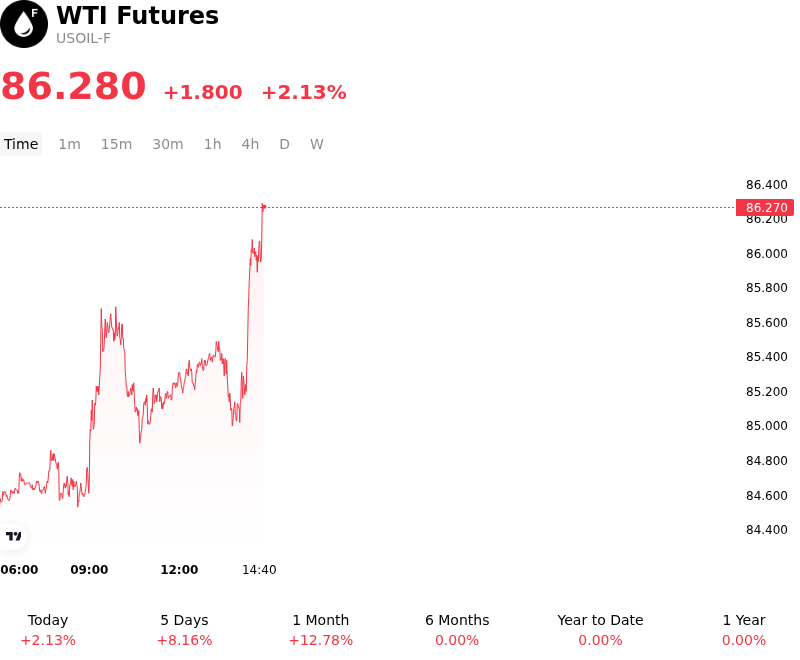
What is driving WTI Futures (USOIL-F)’s stock price up today?
The rally in WTI crude futures is primarily driven by the intensification of geopolitical hostilities in the Middle East following the collapse of a critical diplomatic accord between the United States and Iran. The resulting blockade of the Strait of Hormuz, a vital maritime chokepoint for global oil shipments, has severely disrupted crude flows and forced institutional investors to aggressively re-establish a significant risk premium. With tanker traffic through the region effectively halted, the threat of a prolonged supply shock has become the primary catalyst for the current price advance.
This supply-side anxiety is being reinforced by the latest weekly inventory data from the Energy Information Administration. The report highlighted a substantial drawdown in commercial crude stockpiles, with a particularly sharp decline at the Cushing, Oklahoma delivery hub. The persistent drainage of inventories at Cushing is signaling an increasingly tight physical market, placing significant upward pressure on the front end of the futures curve at a time when global spare capacity remains concentrated and difficult to mobilize.
On the demand side, robust high-frequency data from the United States indicates that the peak summer driving season is delivering stronger-than-expected consumption. Gasoline demand continues to trend above historical averages, supporting high refinery utilization rates as operators scramble to replenish gasoline and middle distillate stocks. The tightening of refined product markets has further incentivized crude buying by refiners, adding a demand-led layer to the prevailing supply concerns.
Macroeconomic factors are providing additional tailwinds to the energy complex. A weakening US dollar, driven by a shift in central-bank policy expectations and cooling inflation data, has enhanced the attractiveness of dollar-denominated commodities for international buyers. This currency-driven support is converging with broader risk-on sentiment in the financial markets, further amplifying the upward momentum in oil prices.
Investors continue to monitor the risk of additional production disruptions in North Africa and the potential for the Middle Eastern conflict to expand toward other key energy-producing regions. While the current move reflects an immediate reaction to the closure of critical transit routes, the underlying combination of falling inventories and resilient seasonal demand suggests a structural tightening of the global oil balance that may sustain elevated price levels in the near term.
Technical Analysis of WTI Futures (USOIL-F)
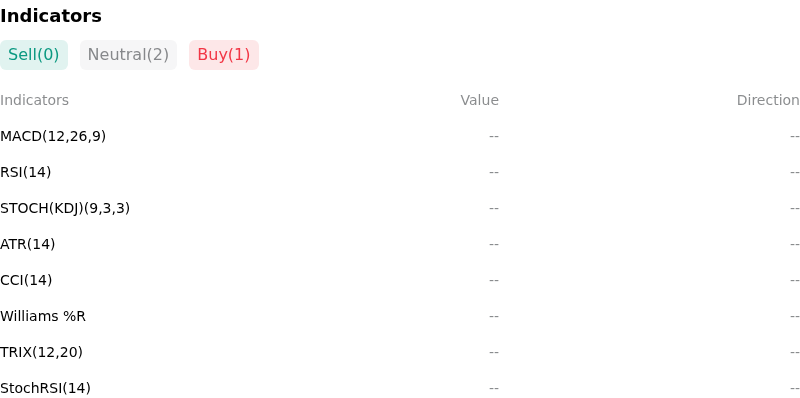
Technically, WTI Futures (USOIL-F) shows a MACD (12,26,9) value of 0.000, indicating a neutral signal. The RSI at 63.062 suggests neutral condition and the Williams %R at 0.054 suggests overbought condition. Please monitor closely.
More details about WTI Futures (USOIL-F)
Recent Events and Risks:
- Bearish Inventory Disruption: The latest EIA report revealed a surprise build of 2.1 million barrels in U.S. commercial crude inventories alongside a substantial 3.3 million barrel surge in gasoline stocks, signaling unexpectedly weak domestic demand during the transition into the winter heating season.
- Geopolitical Risk Premium Deflation: The implementation of a ceasefire agreement between Israel and Hezbollah has triggered a sharp unwinding of long positions, as the immediate threat of regional escalation and physical supply disruptions in the Middle East significantly diminishes.
- Sustained Chinese Demand Deterioration: Persistent weakness in Chinese refinery throughput and lackluster industrial data continue to weigh on the global demand outlook, with market participants concerned that the current pace of Chinese economic stimulus will fail to revitalize crude import volumes.
- Trade Policy and Tariff Volatility: Recent threats of 25% tariffs on Canadian and Mexican imports have introduced severe uncertainty regarding the cost and logistics of North American crude flows, raising the risk of localized supply gluts in the mid-continent and increased feedstock costs for Gulf Coast refiners.
Recommended Articles


