




Semiconductor stocks are rebounding — but this week’s earnings could test the AI trade again
Semiconductor stocks have been hit by a fast and unforgiving reset. Intel has fallen about 30% from last month’s high, while SanDisk recently dropped 21% in just a few sessions as investors questioned whether the AI infrastructure boom can keep justifying the sector’s extraordinary gains.
The selling has swept through memory, storage, networking and chip manufacturing—not just one company or one disappointing result. After months of pricing in relentless data-centre expansion, the market is now demanding proof that AI spending is still accelerating and that demand is spreading beyond a narrow group of winners.
That proof starts arriving this week. Alphabet, Texas Instruments and Intel are all due to report this week, giving Australian traders fresh signals on AI data-centre spending, demand beyond the AI boom, and whether the semiconductor rally can meet increasingly high expectations.
Alphabet’s capital-spending plans could reshape expectations for the companies supplying AI infrastructure, while Texas Instruments offers a crucial read on industrial, automotive and consumer-chip demand. Intel’s results will put its recovery and foundry strategy under the microscope.
For semiconductor stocks, this is a high-stakes week: results could reignite confidence in the AI trade—or trigger another sharp repricing across the sector.
The sell-off was broad across the chip sector
The reset was far deeper than a few volatile trading sessions. By mid-July, the Philadelphia Semiconductor Index had fallen 20% from its recent high, pushing the sector into bear-market territory.
The losses were a broad reassessment of an AI infrastructure trade that had delivered extraordinary gains through the first half of the year.
The current rebound may indicate that some traders see value after the pullback. But with expectations still high, this week’s results could quickly determine whether the recovery extends or reverses.
Contracts for Difference (CFDs) allow traders to take a long view if this week’s results restore confidence, or a short view if Alphabet, Texas Instruments, or Intel give the market a reason to cut expectations again.
“Trade the next semiconductor move with Mitrade.Fast AUD funding via PayID. ”
Why Alphabet and Texas Instruments matter for semiconductor stocks
Alphabet is not a chipmaker, but its results may be one of the week’s most important read-throughs for the semiconductor sector.
The Google owner is one of the world’s largest buyers of AI infrastructure. Its capital-expenditure guidance, comments on data-centre capacity and updates on AI products could influence expectations for the companies supplying memory, networking, servers and advanced chips.
Texas Instruments offers a different test. Its analogue chips are used across industrial equipment, vehicles and consumer electronics, making its results a useful indicator of demand outside the hyperscaler-led AI buildout.
Together, the results could help answer two separate questions:
Is spending on AI infrastructure still accelerating fast enough to support elevated expectations for memory and data-centre suppliers?
Is the broader semiconductor cycle improving, or is growth still concentrated in a narrow group of AI-linked companies?
Intel’s results add another layer. Traders will be watching for updates on data-centre demand, AI PCs, manufacturing progress and whether its foundry business is attracting enough customers to support its turnaround plans.
The challenge is capturing a sector-wide semiconductor move
This week’s results could change expectations across the AI supply chain, but direct share ownership can make it difficult to express that broader view.
Alphabet can move the wider chip sector: Its AI spending plans may affect demand for memory, storage, networking and data-centre suppliers.
Texas Instruments offers a broader demand read: Its outlook can show whether chip demand is improving beyond AI, including industrial, automotive and consumer markets.
One stock may not reflect the whole sector move: Intel shares track its own turnaround, while Alphabet’s results could affect a much wider group of chip-related companies.
Buying shares outright is usually a long-only approach: CFDs allow traders to take a long position if earnings boost confidence, or a short position if guidance triggers another sell-off.
Guidance may matter more than the headline numbers: Traders will be watching Alphabet’s capex plans, Texas Instruments’ demand outlook and Intel’s foundry progress.
For Australian traders, the challenge is finding exposure that matches the view: a company-specific response, a broader semiconductor reaction, or a wider technology-market move.
How Mitrade helps traders respond to a sector-wide chip repricing
Mitrade provides CFDs on US shares and global indices, allowing Australian traders to take a targeted view on individual earnings or broader exposure to a sector-wide chip move.
Trade the individual earnings reactions: Take exposure to US technology shares without buying the underlying stock, whether results strengthen the AI-infrastructure outlook or disappoint the market.
Use the Nasdaq for a broader AI and technology view: Rather than relying on one result, the Nasdaq can provide exposure to the wider reaction across large technology, chip and AI-linked companies.
Respond to both directions: Go long if Alphabet’s capex plans or Texas Instruments’ demand outlook restore confidence; go short if guidance suggests the sector’s recent reset has further to run.
Set orders before the key announcements: Stop-loss and take-profit orders can help define risk around overnight earnings and the sharp price moves that can follow conference calls.
Use leverage with care: At 5:1 leverage, a $1,000 position requires around $200 in margin—but losses, as well as gains, are amplified.
The next question is whether this week’s results give the sector a reason to recover—or expose another weakness in the AI investment story.
“Trade the next semiconductor move with Mitrade.Fast AUD funding via PayID. ”
What could drive semiconductor stocks next?
This week’s earnings will matter, but traders will also be watching several signals that could shape the next move across the sector:
Alphabet’s AI capital expenditure: Any increase, reduction or change in the pace of data-centre investment could influence the entire AI supply chain.
Texas Instruments’ order trends: Commentary on industrial, automotive and consumer demand may show whether the broader chip cycle is recovering.
Intel’s guidance: Updates on foundry customers, AI PCs and data-centre demand could determine whether its recent pullback deepens or stabilises.
Memory-chip pricing: Micron, SanDisk and Western Digital remain highly sensitive to supply, pricing and inventory expectations.
Asian market reactions: Moves in Samsung Electronics, SK Hynix, TSMC and the KOSPI can provide an early indication of how global investors are responding to AI demand.
US interest rates and geopolitical risk: Higher yields, energy-market volatility or further trade uncertainty could pressure high-valuation technology shares even if earnings remain strong.
For traders, the key is deciding whether to focus on the company-specific reaction or take a broader view on how earnings could move the technology sector.
Trade the semiconductor earnings reaction with CFDs
This week’s results could affect more than Alphabet, Texas Instruments and Intel. Their guidance may reshape expectations across AI infrastructure, memory, storage, networking, industrial chips and the wider technology sector.
Mitrade gives Australian traders ways to respond to that broader move with:
CFDs on US technology shares and major global indices, including the Nasdaq
Charts, pending orders and risk-management tools for managing fast-moving earnings reactions
An AUD-denominated account, with position values, margin and profit or loss displayed in Australian dollars
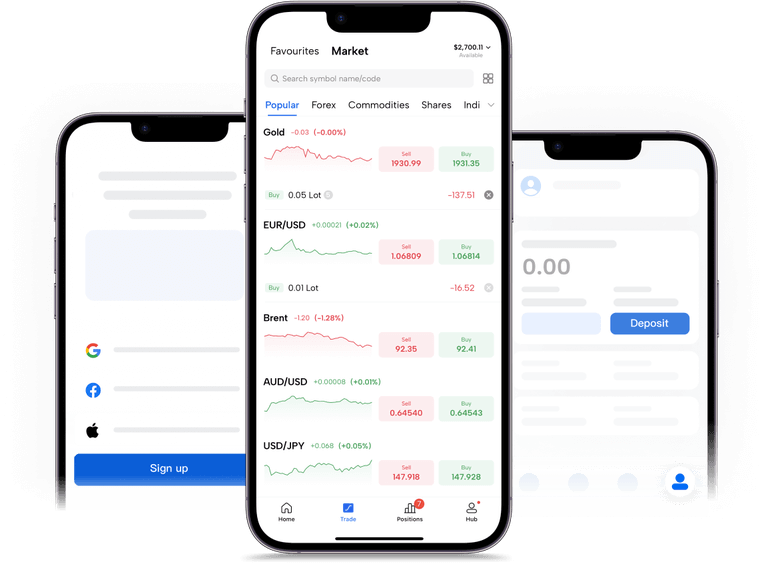
A mobile app for following US earnings, conference calls and market moves
ASIC regulation, with retail client funds held in segregated trust accounts
A free $50,000 demo account to practise before risking real capital
Once that view is clear, getting set up to trade the next move is straightforward.
Start trading semiconductor volatility in three simple steps
Open an account: Register through the Mitrade homepage, or use the fast sign-up process with an existing Google or Facebook account.
Fund in Australian dollars: Deposit using supported payment methods, including POLi or Visa/Mastercard.
Choose the exposure: Trade an individual US technology share or use the Nasdaq to take a broader view on whether earnings support—or undermine—the AI and semiconductor outlook.
Alphabet’s AI spending plans, Texas Instruments’ demand outlook and Intel’s turnaround update could all reshape the chip trade. Open your Mitrade account today and be ready to respond to the next semiconductor repricing.


1. Can traders benefit if semiconductor shares fall?
CFDs allow traders to take either long or short positions. A short position may benefit if a semiconductor share or technology index falls after earnings, although losses can occur if the market rises instead.
2. Is the Nasdaq a way to trade broader semiconductor sentiment?
The Nasdaq includes major technology companies and can reflect wider changes in AI spending and investor appetite for growth stocks. It is not a pure semiconductor index, so it can also be influenced by earnings and news from other large technology companies.
3. Can Australians practise trading semiconductor CFDs before using real money?
Yes. Mitrade provides a free demo account with $50,000 in virtual funds, allowing traders to practise with US shares and indices before trading with real capital.
Disclaimer: The content presented above, whether from a third party or not, is considered as general advice only. CFD trading involves significant risk of loss. Past performance does not guarantee future results. This article serves informational purposes only and does not constitute financial advice. Consider your risk tolerance before trading.


