




GBP/USD (GBPUSD) Is down 0.52% on Jul 16: Why It Happened
GBP/USD (GBPUSD) is down 0.52% at Jul 16 12:30(ET), now at $1.34681, with a 7-day up of 0.46%.
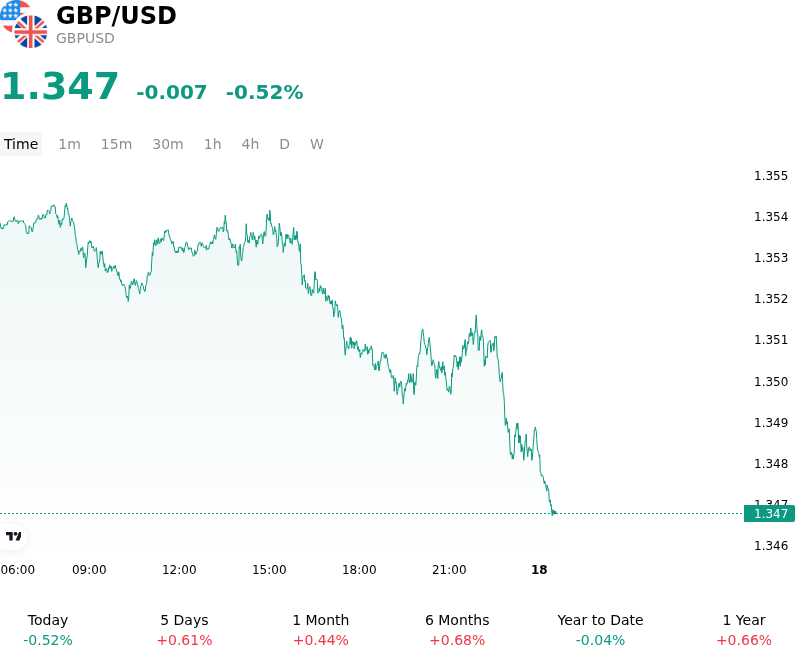
What is driving GBP/USD (GBPUSD)’s stock price down today?
The decline in GBPUSD is primarily driven by a widening of the interest rate differential in favor of the US dollar following a divergence in central bank expectations. While the Bank of England is increasingly signaling that a peak in the base rate has been reached amid cooling domestic inflationary pressures, the Federal Reserve has maintained a more restrictive posture. Recent US economic data, particularly in the services sector and consumer spending, suggests that the US economy remains more resilient than previously anticipated, prompting market participants to price in a higher for longer interest rate path for the Federal Reserve.
US Treasury yields have moved higher across the curve, specifically at the front end, as investors recalibrate their expectations for the timing of any potential policy easing. This upward shift in US yields has increased the relative attractiveness of dollar-denominated assets, leading to capital outflows from the British pound. In contrast, UK Gilt yields have faced downward pressure as recent labor market statistics indicated a gradual softening in wage growth, providing the Monetary Policy Committee with the necessary cover to adopt a more cautious approach to further tightening. This divergence in sovereign yield trajectories continues to be a central pillar of the downward pressure on the currency pair.
Broad-based US dollar strength is further supported by a moderate shift toward risk-off sentiment in global equity markets. As uncertainty persists regarding the global growth outlook and potential geopolitical frictions in energy markets, the US dollar’s role as a preeminent safe-haven asset has been reinforced. Sterling, which is traditionally more sensitive to global risk appetite, has struggled to find support in this environment. Institutional positioning reflects this cautious outlook, with a notable reduction in long sterling exposure as participants pivot toward the liquidity and yield profile offered by the greenback.
Looking forward, the trajectory of GBPUSD remains heavily dependent on the upcoming inflation prints from both jurisdictions. If the UK headline CPI continues to trend toward the target more rapidly than its US counterpart, the pressure on the Bank of England to pivot toward a more neutral stance will likely intensify. Investors are closely monitoring the Federal Reserve’s upcoming policy communications for any confirmation of this hawkish resilience. Until there is a clearer sign of a synchronized global easing cycle or a meaningful improvement in the UK growth outlook relative to the US, the pound is expected to remain vulnerable to dollar-led volatility.
Technical Analysis of GBP/USD (GBPUSD)
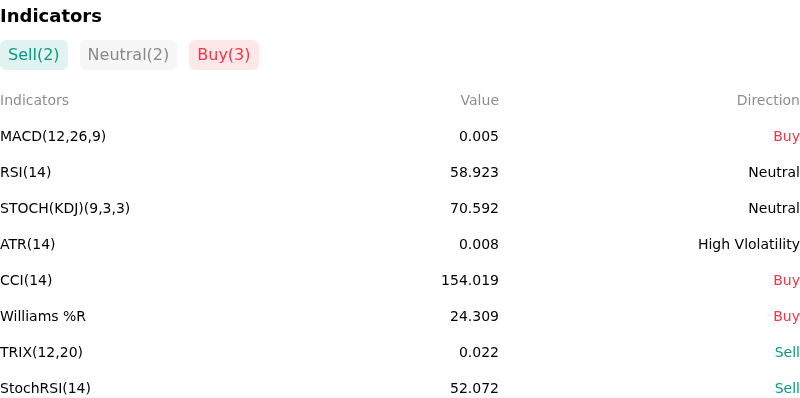
Technically, GBP/USD (GBPUSD) shows a MACD (12,26,9) value of 0.005, indicating a buy signal. The RSI at 59.211 suggests neutral condition and the Williams %R at 23.496 suggests buy condition. Please monitor closely.
More details about GBP/USD (GBPUSD)
Recent Events and Risks:
- Dovish BoE Policy Divergence: Recent comments from Bank of England officials suggesting a cooling labor market may allow for an earlier-than-expected transition to rate cuts has increased downside pressure on Sterling, especially as the Federal Reserve maintains a restrictive stance due to sticky US services inflation.
- Negative UK Growth Surprises: Preliminary GDP data and recent manufacturing PMI readings released within the last 48 hours have undershot analyst expectations, signaling that the UK economy faces stagnant growth, which undermines the currency's appeal relative to the more resilient US economic backdrop.
- Safe-Haven US Dollar Demand: Renewed geopolitical instability and volatility in global equity markets over the past 24 hours have triggered "risk-off" flows, favoring the liquid US Dollar over the pro-cyclical Pound, leading to a sharp retreat from recent resistance levels in the GBP/USD pair.
- Widening Yield Spreads: The recent surge in US Treasury yields following a robust Treasury auction and hawkish Fed commentary has widened the spread against UK Gilts, incentivizing capital outflows from the Pound as investors seek higher risk-adjusted returns in USD-denominated assets.
Recommended Articles


