




Morgan Stanley Stock (MS) Moved Down by 3.41% on Jul 16: Drivers Behind the Movement
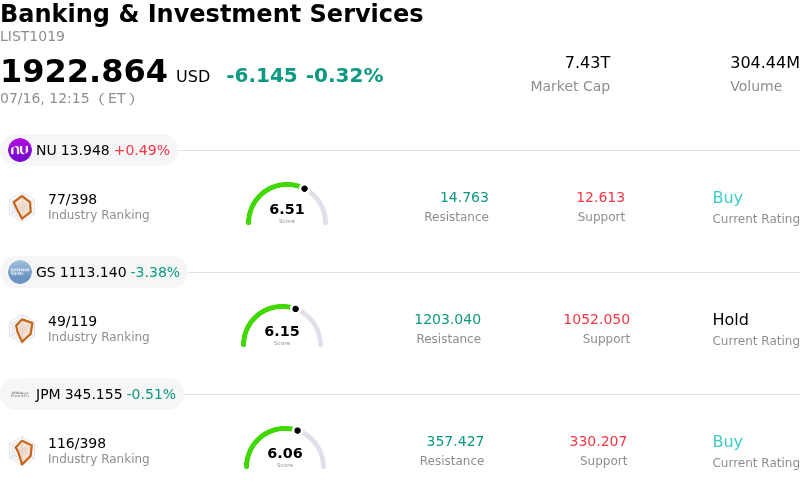
Morgan Stanley (MS) moved down by 3.41%. The Banking & Investment Services sector is down by 0.32%. The company underperformed the industry. Top 3 stocks by turnover in the sector: Nu Holdings Ltd (NU) up 0.49%; Goldman Sachs Group Inc (GS) down 3.38%; JPMorgan Chase & Co (JPM) down 0.51%.
What is driving Morgan Stanley (MS)’s stock price down today?
Morgan Stanley's downward movement follows the release of its second-quarter earnings report, which appears to have failed to meet the high expectations set by the market heading into the mid-year cycle. The primary driver behind the selling pressure stems from the wealth management division, where net interest income showed signs of compression. As deposit costs remain elevated and clients continue to shift assets into higher-yielding instruments, the margin pressure within this core segment has raised concerns regarding the sustainability of the firm's premium valuation relative to its peers.
In the institutional securities segment, the results indicated a mixed performance in investment banking. While there has been a global narrative regarding a recovery in deal-making and equity underwriting, the pace of this rebound for the firm appears more sluggish than anticipated. The significant intraday volatility reflects a tug-of-war between investors who view the institutional business as cyclically poised for growth and those concerned that a slowing macroeconomic environment will continue to delay a full-scale revival of the merger and acquisition and initial public offering pipelines.
Macroeconomic factors are also playing a significant role in the current price action. With the Federal Reserve signaling a more cautious approach to future rate adjustments, the outlook for the banking sector's profitability is being reassessed. Investors are particularly sensitive to any signals of rising credit costs or weakening consumer health, which could impact the broader financial ecosystem. Furthermore, management's guidance during the earnings call likely leaned toward the conservative side, prioritizing capital preservation over aggressive share buybacks in light of evolving regulatory requirements and capital standards.
Analyst sentiment has responded quickly to these developments, with several brokerage firms adjusting their internal models to account for lower fee income projections. The heightened volatility throughout the session suggests that market participants are repricing the stock to reflect a more balanced risk-reward profile. Until there is clearer evidence of a sustained acceleration in institutional activity or a stabilization of wealth management margins, the stock is likely to face continued headwinds from institutional portfolio rebalancing and defensive positioning among investors looking for more immediate growth catalysts.
Technical Analysis of Morgan Stanley (MS)
Technically, Morgan Stanley (MS) shows a MACD (12,26,9) value of 0.722, indicating a buy signal. The RSI at 64.394 suggests neutral condition and the Williams %R at 14.493 suggests overbought condition. Please monitor closely.
Media Coverage of Morgan Stanley (MS)
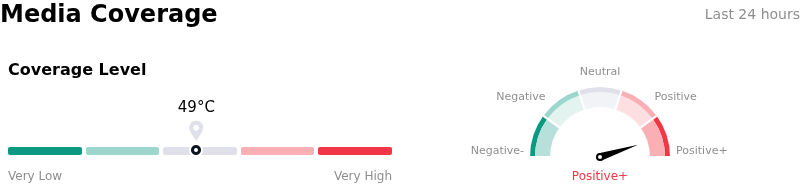
In terms of media coverage, Morgan Stanley (MS) shows a coverage score of 49, indicating a moderate level of media attention. The overall market sentiment index is currently in extremely bullish zone.
Fundamental Analysis of Morgan Stanley (MS)
Morgan Stanley (MS) is in the Banking & Investment Services industry. Its latest annual revenue is $114.74B, ranking 3 in the industry. The net profit is $16.25B, ranking 2 in the industry. Company Profile
Over the past month, multiple analysts have rated the company as Buy, with an average price target of $218.37, a high of $255.00, and a low of $145.00.
More details about Morgan Stanley (MS)
Company Specific Risks:
- Regulatory and AML Oversight: Persistent federal probes into the Wealth Management division’s client-vetting procedures and anti-money laundering (AML) protocols remain a significant legal overhang, creating risk for substantial fines and restrictive consent orders.
- Net Interest Income Sensitivity: Recent shifts in the interest rate environment have heightened concerns over net interest income (NII) compression, as the firm faces higher funding costs and a potential reduction in spreads within its core Wealth Management segment.
- Commercial Real Estate Credit Exposure: Continued volatility in the office-sector property market has forced the firm to maintain elevated provisions for credit losses, signaling underlying vulnerabilities in the institutional lending and commercial real estate portfolios.
- Investment Banking Revenue Volatility: Despite recent growth, analysts remain concerned about the sustainability of the investment banking pipeline, citing risks that geopolitical instability or macroeconomic cooling could delay the closing of high-value M&A and IPO mandates.
Recommended Articles


