




Trading the 'Magnificent 7' from Australia: A Guide to Accessing the World’s Biggest Tech Stocks

For Australian traders, accessing the biggest US technology stocks hasn’t always been straightforward, especially when US market hours fall late at night locally. Buying international shares typically means converting funds into US dollars, waiting through settlement delays, and committing significant capital, given that companies like Nvidia or Tesla trade at high share prices.
Today, many active traders use Contracts for Difference (CFDs) to trade US tech stocks from Australia. Instead of purchasing shares directly, CFDs allow investors to speculate on the price movements of the world’s most prominent technology companies without holding the underlying stock.
This guide explains how Australian traders access the ‘Magnificent 7’, how CFD trading compares with traditional share investing, and why these highly liquid US tech stocks remain a focal point for short-term market activity.
What Are the 'Magnificent 7'?
The ‘Magnificent 7’ refers to the group of “mega-cap” US technology companies that dominate global equity markets. These firms lead major sectors such as cloud computing, artificial intelligence, e-commerce, and consumer technology, and they consistently attract some of the highest trading volumes worldwide.
The group consists of:
Apple (AAPL): Consumer electronics and digital services.
Microsoft (MSFT): Enterprise software and cloud computing.
Alphabet (GOOGL): Internet search and advertising.
Amazon (AMZN): E-commerce and cloud infrastructure.
Nvidia (NVDA): Semiconductor design and artificial intelligence processing.
Meta Platforms (META): Social media and digital networking.
Tesla (TSLA): Electric vehicles and clean energy.
Due to their massive market capitalization, the daily price action of these seven companies heavily influences the broader direction of major US indices, such as the S&P500 and the Nasdaq-100. For active traders, that concentration of market influence makes the Magnificent 7 a consistent focal point for short-term trading activity.
CFDs vs. Traditional Share Investing for US Tech Stocks
Many of the Magnificent 7 companies trade at relatively high share prices, which can make direct ownership capital-intensive for Australian investors. The table below highlights the key differences between trading US tech shares via CFDs and purchasing them through traditional share investing.
For Australian traders focusing on companies like Nvidia, Apple, or Tesla, these factors can shape how efficiently capital can be deployed and how quickly positions can be adjusted during periods of market volatility.
“Trade Magnificent 7 with an ASIC-regulated broker. Fast AUD funding via PayID. ”
Why Australian Traders Focus on US Tech CFDs
Trading the Magnificent 7 offers several practical advantages for active market participants. Rather than spreading attention across hundreds of smaller companies, traders can focus on a small group of highly liquid stocks that generate consistent daily volatility.
Several practical factors drive this approach:
Bidirectional Trading: Technology stocks often experience sharp price swings, particularly during earnings seasons. CFDs allow traders to take short positions if they anticipate a decline, creating opportunities even during market pullbacks.
Capital Efficiency: The share prices of companies like Nvidia or Tesla can be high relative to available trading capital. Through leverage, Australian traders can gain exposure to these companies with a smaller upfront outlay. For example, investors looking to buy Nvidia shares in AU can use CFDs to control a position without funding the full physical share price.
High Liquidity: The Magnificent 7 rank among the most actively traded stocks in global markets. That depth of liquidity supports reliable execution and tighter spreads, which is particularly important when managing short-term positions.
Because these stocks trade at such high volumes and react quickly to market news, understanding what actually drives their price movement becomes essential for anyone trading the Magnificent 7.
What Drives the Price of the Magnificent 7?
While general market sentiment plays a role, price movement in the Magnificent 7 is usually driven by identifiable macroeconomic and sector-specific events.
Daily movement is most often influenced by:
Quarterly Earnings Reports: Announcements regarding revenue, profit margins, and forward guidance consistently trigger immediate and significant price volatility.
Interest Rate Decisions: Technology companies are classified as growth stocks. When the US Federal Reserve increases interest rates, the cost of borrowing rises, which often negatively impacts the valuations of the Magnificent 7.
Artificial Intelligence Advancements: Announcements regarding new semiconductor technology, AI processing capabilities, or enterprise software integration directly dictate the capital flow into companies like Nvidia and Microsoft.
Most significant price swings in the Magnificent 7 occur around scheduled market events, making trading hours and session timing a critical consideration for Australian traders.
When is the Best Time to Trade US Tech Stocks in Australia?
The primary challenge for Australian traders accessing US markets is the time difference. The New York Stock Exchange (NYSE) and Nasdaq operate during North American daytime hours, which translates to late evening and early morning trading in Australia.
The standard US trading session occurs between:
11:30 PM to 6:00 AM (AEST)
1:30 AM to 8:00 AM (AEDT - Daylight Savings Time)
The highest trading volume and most significant price movement typically occur during the first and last hours of the US session. For traders using CFDs, pending limit and stop orders allow positions to be executed automatically during these active periods, without needing to monitor the market continuously overnight.
For many Australian traders, this makes preparation before the US session begins an important part of managing overnight market exposure.
For Australian traders focusing on companies like Nvidia, Apple, or Tesla, these factors can shape how efficiently capital can be deployed and how quickly positions can be adjusted during periods of market volatility.
“Trade Magnificent 7 with an ASIC-regulated broker. Fast AUD funding via PayID. ”
Executing US Market Trades with Mitrade
Managing international market exposure requires a platform that supports efficient execution and transparent pricing. Mitrade removes much of the complexity associated with international share trading by offering direct access to the Magnificent 7 through a consolidated, ASIC-regulated environment.
Instead of managing foreign currency conversions or paying high international brokerage fees, Mitrade allows investors to trade US tech stocks using their standard Australian account.
Key Platform Advantages:
0% Commission: Execute trades on Apple, Tesla, and Nvidia without per-trade ticket fees. Trading costs are incorporated into the bid-ask spread.
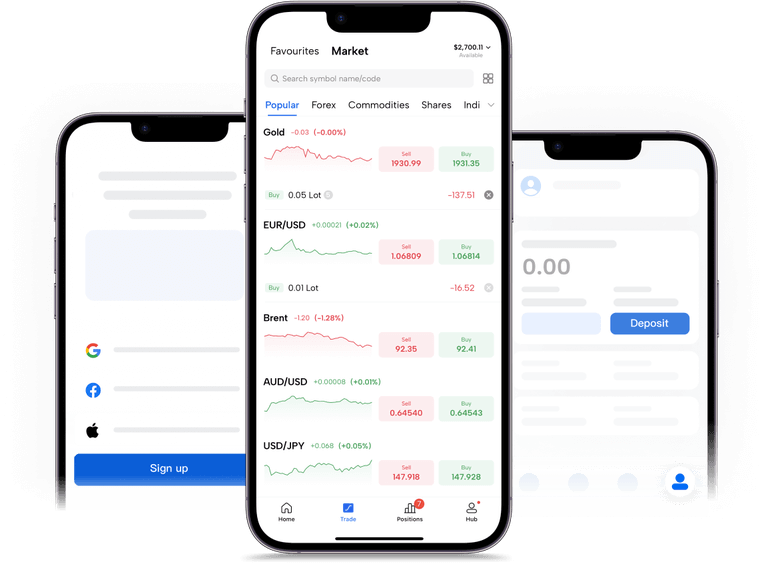
Native Mobile Application: Because the US market operates during Australian nighttime hours, the Mitrade mobile app allows traders to monitor positions, adjust trailing stops, and close trades directly from a mobile device.
Clear Risk Controls: The platform interface calculates required margin and projected profit/loss before order execution, helping traders confirm their exposure before entering a position.
ASIC Regulation: Retail client funds are held securely in segregated trust accounts, ensuring strict compliance with Australian financial laws.
With access to major US technology stocks from a single account, Australian traders can manage overnight market exposure more efficiently without adding unnecessary administrative steps.
Start Trading in 3 Simple Steps
Gaining exposure to the world's largest technology companies doesn’t need to be complicated. You can set up your account and begin executing your CFD strategy in three steps:
Open an Account: Register manually via the Mitrade homepage, or use the fast sign-up process by linking your existing Google or Facebook credentials.
Fund Your Account: Deposit your initial margin using secure Australian payment methods, including POLi or Visa/Mastercard.
Trade CFDs: Access the platform, analyze your preferred technology stock, define your risk parameters, and execute your long or short position.
Ready to put your strategies to the test? Open your account today and start trading the Magnificent 7 with confidence.


1. Is it legal to trade US share CFDs in Australia?
Yes. Trading US share CFDs is legal in Australia, provided the platform is licensed by the Australian Securities and Investments Commission (ASIC). ASIC-regulated brokers must meet strict requirements, including holding client funds in segregated trust accounts.
2. What leverage is available when trading the Magnificent 7?
Under current ASIC regulations, retail traders in Australia can access leverage of up to 5:1 on individual share CFDs. This means a trader can control a position worth five times their initial margin, making it possible to access high-value stocks like Nvidia or Tesla without committing the full share price.
3. Do Australian traders pay US taxes when trading US tech CFDs?
No. Because CFD traders do not own the underlying US shares, they are generally not subject to US capital gains tax. Profits from CFD trading are assessed under Australian tax rules, where gains are typically treated as ordinary income. Traders should keep accurate records and consult a registered tax professional if unsure how these rules apply to their situation.
4. Can Australian traders place orders outside the US market hours?
Yes. Many traders use pending limit and stop orders to set entry or exit levels in advance. This allows trades to be triggered automatically during US market hours, even if the trader is not actively monitoring the session overnight.
Disclaimer: The content presented above, whether from a third party or not, is considered as general advice only. CFD trading involves significant risk of loss. Past performance does not guarantee future results. This article serves informational purposes only and does not constitute financial advice. Consider your risk tolerance before trading.


