


The Case Against a SpaceX and Tesla Merger
Key Points
The trend in the industrial sector is toward breakups, not mega mergers.
Conglomerates have tended to trade at a discount rather than a premium in recent years.
Tesla has arguably not yet realized the full value of its robotaxi/Cybercab program, and with a fleet ramp-up a real possibility next year, it might make more sense to wait.
- Motley Fool Issues Rare "Total Conviction" Buy Alert ›
While we don't know what terms, if any, are on the table for a potential merger, there's a strong case that now isn't the best time for Tesla (NASDAQ: TSLA) to pursue a merger with Space Exploration Technologies (NASDAQ: SPCX). The argument rests on two main ideas. First, it runs contrary to market trends; second, Tesla is on the cusp of delivering significant shareholder value after years of disappointment.
Different risk and capital profiles
Over the last decade, the major trend with industrial conglomerates such as General Electric, United Technologies Corporation, Honeywell, 3M, Danaher, Johnson Controls, and Emerson Electric has been to break them up. While each company had its own circumstances, three themes apply to all:
Missed Nvidia in 2009? This Rare Signal Is Flashing Again. In 2009, a "Double Down" signal flashed for a little-known chipmaker called Nvidia. For the first time in years, that same "Total Conviction" signal is flashing for a company 1/100th the size of Nvidia. Continue »
- Separating companies allows for greater management and operational focus.
- The market has tended to apply a so-called conglomerate discount, and investors increasingly value the ability to make targeted investments.
- Each company has its own specific risk and its own capital allocation priorities, and they are better served as stand-alone companies.
Given the incredible complexity inherent in managing Tesla (EVs, robotaxi/Cybercab, Optimus, energy generation/storage, charging infrastructure, and a host of investments in building its own supply chain) and SpaceX (launch services, artificial intelligence (AI) infrastructure, Starlink, defense networks), it's not hard to see how complex a merged entity would become.
The argument over the conglomerate discount is admittedly subject to change, as conglomerates once commanded a premium. However, that's not the case now, and until it changes, there's no strong reason to believe a merger will lead to an immediate market-valuation rerating of the merged entity. On the contrary, the opposite could occur.
Different risk profiles and capital profiles
The argument from specific risk and capital profiles is the strongest. Tesla is on the cusp of beginning a multiyear journey to scale its robotaxi service and generate a long stream of recurring revenue from robotaxi/Cybercab. Investors can disagree on its profit potential amid competition, but robotaxi/Cybercab is baked into the valuation, and if you are holding the stock, you presumably believe in the potential of autonomous driving.
While it will obviously require significant upfront capital investment to build out the network, Tesla has the resources to do so and create a company with significant long-term cash flows. The same argument, albeit a few more years out, applies to Optimus. Tesla does not need SpaceX to achieve its own goals.
In contrast, SpaceX operates in a high-risk sector that requires even more massive capital investment. Moreover, while Starlink is currently SpaceX's profit generator, its revenue driver is the Super Intelligence business. The former is effectively funding growth in the latter.
Tesla is moving toward becoming a company with a long-term stream of recurring revenue, scaling robotaxi/Cybercab and, in time, Optimus, and a play on physical AI. In contrast, SpaceX is a business that requires massive, ongoing, and uncertain capital expenditures and is a play on AI infrastructure.
Regarding the uncertainty of capital expenditures, consider orbital data centers and SpaceX. Their depreciation rate is likely to be high because they realistically can't be serviced in space and, unlike terrestrial data centers, which can replace servers and chips, will likely last only as long as their graphics processing units (GPUs) remain useful. A high depreciation rate implies higher maintenance capital spending.
Tesla hasn't released value from robotaxi/Cybercab yet
To understand this argument, consider how private equity might run Tesla. Their typical model is to generate value from the investment and sell the asset only once the business is firing on all cylinders, and it can optimize the price.
If you believe Tesla will evolve into a company generating billions of recurring revenue from its Cybercab fleet and then from Optimus, it makes sense to hold the asset, at least until the company proves the doubters wrong and releases value from the robotaxi rollout. At which point, Tesla shareholders will be in a stronger position to demand a healthier premium for the business.
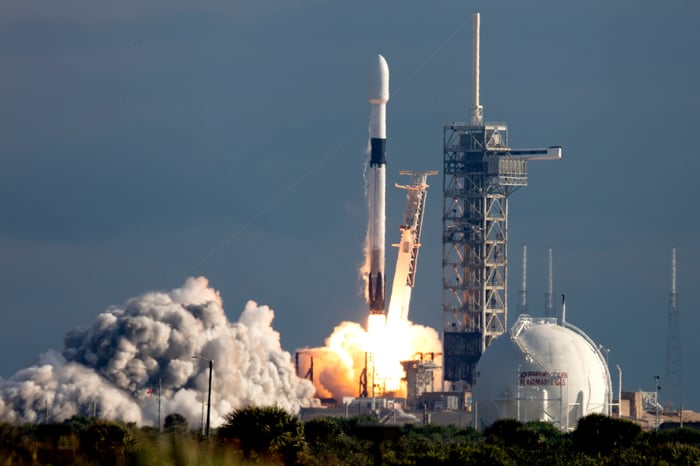
Image source: Getty Images.
What it means to investors
Again, while it's true that we don't know what kind of offer or what deal it will be, or even if there will be a proposal at all, the reality is the value of Tesla will key off of its current market price, and if you think it's undervalued and/or want to wait until the company releases value from robotaxi, then an offer now is unlikely to lead to a favorable outcome for you.
All told, in a merger, Tesla investors would dilute their claim on cash flows from robotaxi, EVs, and robotics (physical AI) in favor of using that cash to support space exploration and cloud computing (AI infrastructure). This creates a merged company with a significantly different risk and capital-allocation profile from Tesla, and they might not get full value for their Tesla shares until robotaxi scales.
We just issued 'double down' alerts on 3 stocks — find out if Tesla made our list
Ever feel like you missed the boat in buying the most successful stocks? Then you’ll want to hear this.
On rare occasions, our expert team of analysts issues a “Double Down” stock recommendation for companies that they think are about to pop. If you’re worried you’ve already missed your chance to invest, now is the best time to buy before it’s too late. And the numbers speak for themselves:
- Nvidia: if you invested $1,000 when we doubled down in 2009, you’d have $559,944!*
- Apple: if you invested $1,000 when we doubled down in 2008, you’d have $65,588!*
- Netflix: if you invested $1,000 when we doubled down in 2004, you’d have $334,308!*
Right now, we’re issuing “Double Down” alerts for three incredible companies, available when you join Stock Advisor, and there may not be another chance like this anytime soon.
See the 3 stocks »
*Stock Advisor returns as of October 30, 2026.
Lee Samaha has no position in any of the stocks mentioned. The Motley Fool has positions in and recommends Tesla. The Motley Fool has a disclosure policy.
Recommended Articles


