


Nvidia's Jensen Huang Confirmed Vera Rubin Chips Are Already in Production
Key Points
A report by SemiAnalysis suggested that Nvidia's Vera Rubin AI platform could be facing delays.
Any slowdowns could negatively impact the company's earnings.
CEO Jensen Huang said the reports of delays aren't true.
- 10 stocks we like better than Nvidia ›
Earlier this month, semiconductor research firm SemiAnalysis reported that Nvidia (NASDAQ: NVDA) was facing major setbacks with its Kyber NVL144 rack-scale solution. The server cabinet, designed to house Nvidia's Rubin Ultra architecture, had been delayed over 12 months to 2028, according to SemiAnalysis.
Nvidia issued a brief statement saying its roadmap is intact. More recently, CEO Jensen Huang weighed in while speaking to reporters at a developer event.
Where to invest $1,000 right now? Our analyst team just revealed what they believe are the 10 best stocks to buy right now, when you join Stock Advisor. See the stocks »
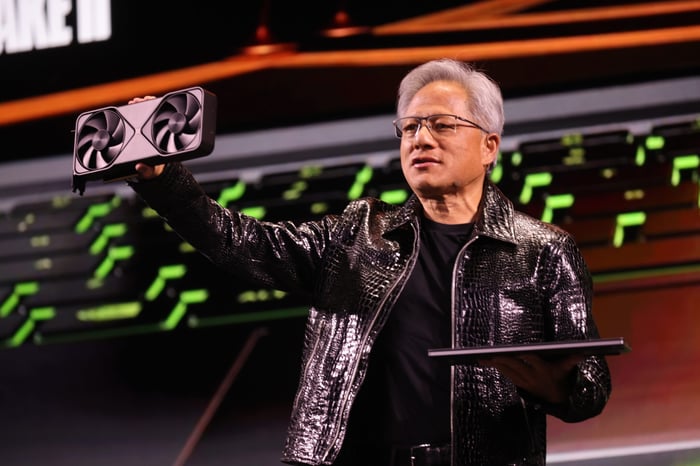
Nvidia CEO Jensen Huang. Image source: Nvidia Corporation.
Huang's response to the delay claims
When asked about potential delays in Vera Rubin, Huang said the reports are "not true." He also explained that "Vera Rubin is already in production. Giant amounts of production incoming."
Although Huang confirmed production, that's not new information -- Nvidia confirmed this back in January. It's also worth noting that while Huang addressed chip production, the report was concerning the Kyber rack. He didn't provide a production timeline, and neither did Nvidia, in its prior response.
Perhaps most important for Nvidia investors is Huang's claim about giant amounts of production, because Vera Rubin is a crucial part of the chipmaker's forward earnings projections and valuation.
Why an intact roadmap matters for Nvidia
Nvidia has made a habit of delivering blowout earnings reports, with revenue growing for 14 consecutive quarters. Most recently, revenue was up 85% year over year to a record $81.6 billion in its Q1 fiscal year 2027 (which ended April 26, 2026). That consistent revenue growth stems from its status as the leading GPU company and its practice of updating its AI chips every year. AI companies that want to remain competitive need to continually upgrade to Nvidia's latest chips.
This has worked out well for Nvidia so far, but any major delay that knocks the chipmaker off its update cadence could negatively impact its earnings. Earlier this year, Huang provided a sales forecast of $1 trillion combined for Blackwell and Vera Rubin through 2027, so there's little room for setbacks. A slowdown would also give other chipmakers, such as Advanced Micro Devices, room to potentially cut into Nvidia's market share.
What to watch
Delay concerns for Nvidia look to be overstated, based on Huang's recent comments. And even though SemiAnalysis reported the delays, it's still bullish on Nvidia, forecasting that the chipmaker's data center revenue will exceed analyst estimates by 20% in the second half of its fiscal 2027.
The concrete data will be in Nvidia's upcoming earnings calls, with the next one scheduled for Aug. 26. If Nvidia continues to top analyst expectations and raise guidance, then that will be a good sign that there are no issues with the product roadmap.
Should you buy stock in Nvidia right now?
Before you buy stock in Nvidia, consider this:
The Motley Fool Stock Advisor analyst team just identified what they believe are the 10 best stocks for investors to buy now… and Nvidia wasn’t one of them. The 10 stocks that made the cut could produce monster returns in the coming years.
Consider when Netflix made this list on December 17, 2004... if you invested $1,000 at the time of our recommendation, you’d have $377,990!* Or when Nvidia made this list on April 15, 2005... if you invested $1,000 at the time of our recommendation, you’d have $1,269,518!*
Now, it’s worth noting Stock Advisor’s total average return is 896% — a market-crushing outperformance compared to 206% for the S&P 500. Don't miss the latest top 10 list, available with Stock Advisor, and join an investing community built by individual investors for individual investors.
See the 10 stocks »
*Stock Advisor returns as of July 26, 2026.
Lyle Daly has positions in Nvidia. The Motley Fool has positions in and recommends Advanced Micro Devices and Nvidia. The Motley Fool has a disclosure policy.
Recommended Articles


