


Why Did Joby Aviation Stock Fall Below $10?
Key Points
The market is demanding execution, not just progress.
Technology alone won't determine the winner in the air taxi business.
Joby has the resources to keep executing, but profitability remains years away.
- 10 stocks we like better than Joby Aviation ›
When a high-growth stock drops below a psychological price level, like $10, investors naturally ask the same question: Has something gone wrong? In the case of Joby Aviation (NYSE: JOBY), the answer isn't as straightforward as many investors think.
The company hasn't reported a major operational setback. It continues to make progress toward commercializing its electric flying taxis, remains well-funded, and still expects to begin carrying passengers in 2026. So why has the stock fallen?
Missed Nvidia in 2009? This Rare Signal Is Flashing Again. In 2009, a "Double Down" signal flashed for a little-known chipmaker called Nvidia. For the first time in years, that same "Total Conviction" signal is flashing for a company 1/100th the size of Nvidia. Continue »
The answer has less to do with Joby Aviation's business and more with changes in investors' expectations.
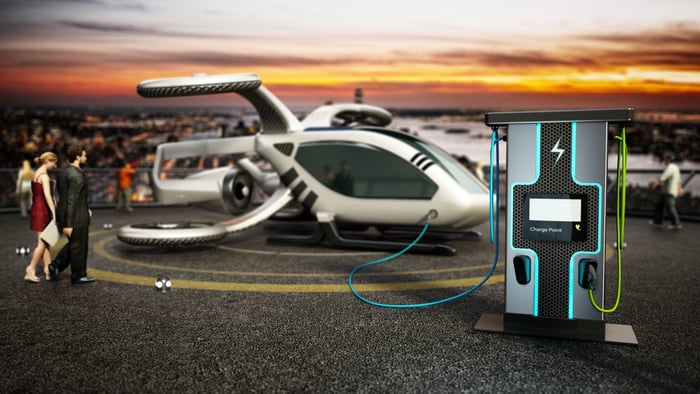
Image source: Getty Images.
Investors are no longer paying for potential alone
For years, Joby Aviation's investment story revolved around the possibility of air taxis making technological breakthroughs.
So far, things seem to be moving in the right direction. The company demonstrated successful flight tests, advanced through FAA certification, expanded manufacturing capacity, and built partnerships with companies such as Toyota Motor , Delta Air Lines, and Uber Technologies. Each milestone strengthened confidence that flying taxis could eventually become a reality.
But that was the past. Today, however, investors want something more tangible, that the business can generate revenue.
Joby Aviation is approaching the point where technological progress alone is no longer enough to drive the stock higher. Investors now want evidence that the company can begin commercial operations and turn years of research and development into a real business. And 2026 is the pivotal year when the company expects to launch its services across multiple U.S. cities.
That shift in expectations often happens as innovative companies move closer to commercialization. The market becomes less interested in what could happen and more interested in what will happen over the next few quarters.
Commercial success is still far from guaranteed
And here's the thing: Even if Joby launches commercial flights in 2026, the company will still have plenty to prove. Flying passengers is only the beginning. Joby must show that customers are willing to use the service regularly, ticket prices can support healthy margins, and its operations can scale safely and efficiently.
These questions matter because successful technology doesn't always become a successful business. It will require management to execute well across multiple fronts to build a viable business model.
And that's how Investors are beginning to evaluate Joby. Instead of asking whether flying taxis can work, they're asking whether they can generate sustainable revenue, profits, and, ultimately, attractive returns on capital.
The truth about profitability that investors should know
While it makes a lot of sense to include air taxis as part of future transportation infrastructure, it will still take years before the business turns a profit.
The main reason is that the company must continue to spend heavily on engineering, manufacturing, certification, and commercial preparation. Even if we assume the service goes live as planned, further investments will still be needed across the whole operation.
Thus, in today's market, where many investors prefer companies already generating cash flow rather than businesses still investing heavily for future growth, Joby Aviation (and its stock price) will likely see volatility in the near future.
What does it mean for investors?
Joby Aviation's decline below $10 doesn't necessarily mean its long-term investment thesis has broken. Instead, it reflects a market that has become more demanding.
Investors are no longer rewarding certification milestones and partnership announcements the way they once did. They now want evidence that Joby Aviation can launch commercial operations, attract paying customers, and build a profitable business. That's a much higher bar to meet.
For long-term investors, the opportunity remains compelling if Joby Aviation executes well over the next several years. But until the company begins converting technological progress into commercial success, the stock is likely to remain volatile.
In short, the stock is not for the faint-hearted.
Should you buy stock in Joby Aviation right now?
Before you buy stock in Joby Aviation, consider this:
The Motley Fool Stock Advisor analyst team just identified what they believe are the 10 best stocks for investors to buy now… and Joby Aviation wasn’t one of them. The 10 stocks that made the cut could produce monster returns in the coming years.
Consider when Netflix made this list on December 17, 2004... if you invested $1,000 at the time of our recommendation, you’d have $371,842!* Or when Nvidia made this list on April 15, 2005... if you invested $1,000 at the time of our recommendation, you’d have $1,244,783!*
Now, it’s worth noting Stock Advisor’s total average return is 900% — a market-crushing outperformance compared to 207% for the S&P 500. Don't miss the latest top 10 list, available with Stock Advisor, and join an investing community built by individual investors for individual investors.
See the 10 stocks »
*Stock Advisor returns as of July 18, 2026.
Lawrence Nga has no position in any of the stocks mentioned. The Motley Fool recommends Delta Air Lines. The Motley Fool has a disclosure policy.
Recommended Articles


