


US-Iran Doha Talks Show Disagreements, Trump Says Iran Has Requested Negotiations, Oil Prices Return to $70 Mark
TradingKey - On June 29, Eastern Time, a clear divergence emerged in the statements of the U.S. and Iran regarding whether they will hold talks in Doha on the 30th.
U.S. President Donald Trump posted on social media platform Truth Social that day that Iran had requested talks, stating, "the talks will be held tomorrow in Doha (Qatar)." White House Press Secretary Karoline Leavitt subsequently confirmed to the media that U.S. presidential envoy Steve Witkoff and Trump's son-in-law Jared Kushner "will fly to Doha this week" to attend the high-level U.S.-Iran talks.
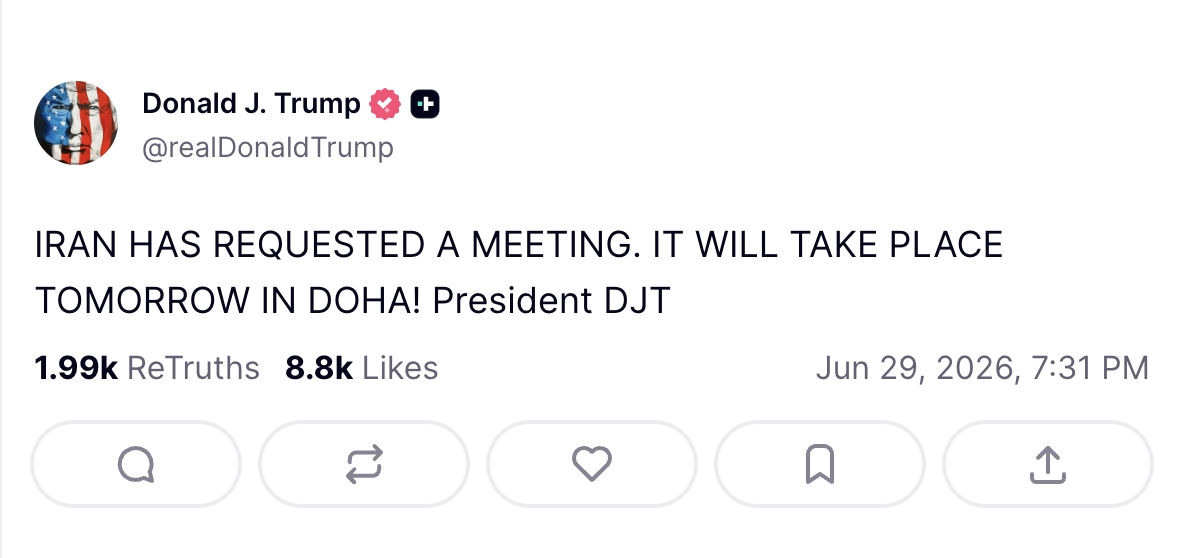
[Source: Truth Social]
However, the Iranian side offered a contradictory response. Iranian Deputy Foreign Minister Kazem Gharibabadi stated that day that reports concerning technical negotiations between Iran and the U.S. in Doha this week are "untrue." Gharibabadi noted that consultations between Iran and Qatar are ongoing, and technical talks will only be officially held once an agreement is reached on the date and location.
The divergence emerged against the backdrop of a renewed escalation in military conflict between the U.S. and Iran over the past few days.
The U.S. military launched strikes against targets inside Iran for two consecutive days on June 26 and 27, targeting Iranian military surveillance facilities, communication systems, air defense positions, and drone storage facilities. U.S. Central Command stated that the operation was a direct response to "Iran's continued actions targeting commercial vessels." Previously, a Panama-flagged tanker was hit by an Iranian attack drone near the Strait of Hormuz.
The Iranian side retaliated swiftly. The Islamic Revolutionary Guard Corps (IRGC) issued a statement on June 28, claiming it had used missiles and drones to destroy eight key U.S. military infrastructure facilities at the Ali Al Salem Air Base in Kuwait and the U.S. Fifth Fleet in Bahrain. Iran's Ministry of Foreign Affairs stated that the U.S. military action was a clear violation of the memorandum of understanding previously agreed upon by both sides, and that Iran responded in accordance with its inherent right to national self-defense.
According to a report by Axios, the U.S. and Iran were originally scheduled to hold negotiations in Switzerland on June 30, but relocated the venue to Doha due to the re-escalation of tension. The focus of the talks has also shifted from Iran's nuclear program to the Strait of Hormuz. The report added that both sides have agreed to halt attacks against each other.
However, the latest remarks by the Iranian deputy foreign minister have cast doubt on whether the talks will proceed as scheduled.
Against the backdrop of escalating military conflict and contradictory diplomatic statements, global oil prices rebounded on Monday. As of press time, WTI crude oil futures rose 1.29% intraday to trade at $70.12 per barrel, while Brent crude gained 1.05% to $73.36 per barrel. Since last Thursday, a succession of vessel attacks in the Strait of Hormuz has significantly slowed maritime shipping activities.
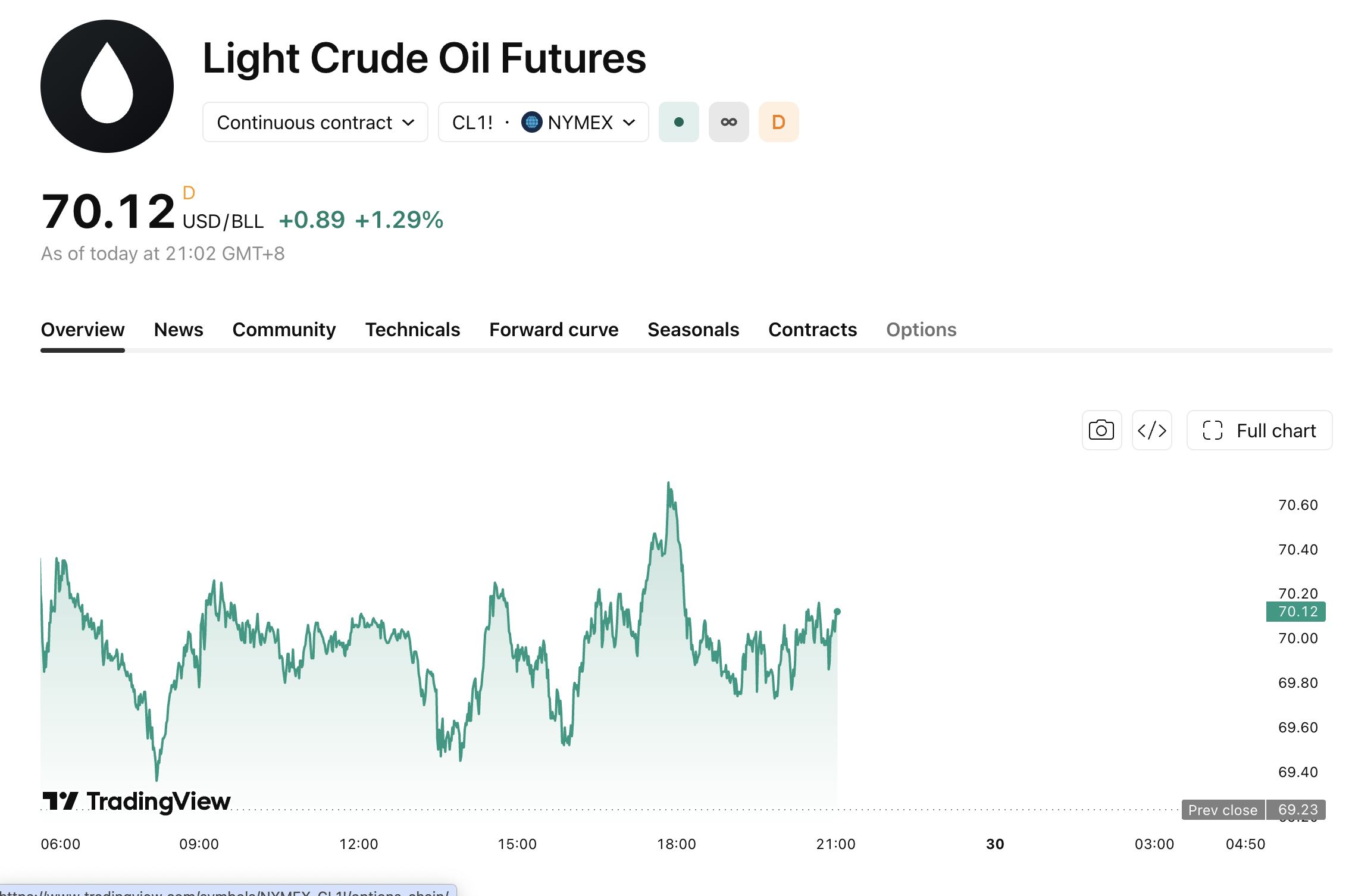
[Source: TradingView]
Even as military conflicts escalated, both sides also signaled some signs of de-escalation. According to Iranian media reports, Iran has resumed flights from Tehran to Dubai, with tickets available for a flight to Dubai at 10:40 a.m. on June 29. Furthermore, Iranian President Masoud Pezeshkian stated that day that Qatar will unfreeze approximately $6 billion of Iran's blocked assets.
Whether the Doha talks can take place on the 30th as scheduled remains highly uncertain. Diplomatic communications between the U.S. and Iran post-ceasefire remain fluid, and the resumption of shipping in the Strait of Hormuz, along with the next move for oil prices, will depend on the final outcome of this diplomatic maneuvering.
Recommended Articles


