


GBP/USD (GBPUSD) Volatility Intensified on Jul 2: Factors to Watch
GBP/USD (GBPUSD) is up 0.56% at Jul 2 04:05(ET), now at $1.33473, with a 7-day up of 1.20%.
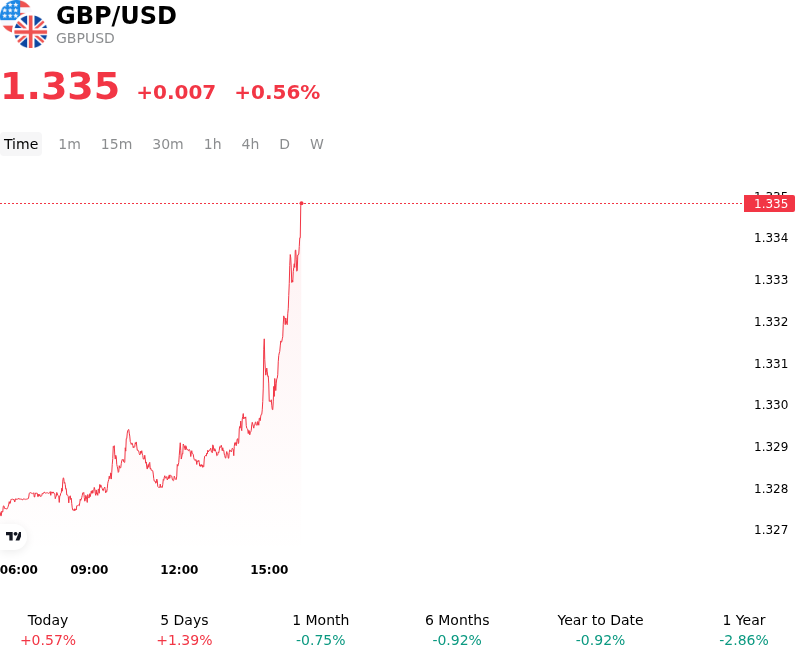
What is driving GBP/USD (GBPUSD)’s stock price up today?
The appreciation in the GBPUSD currency pair during the session was primarily driven by a confluence of easing UK political uncertainty and a softening US labor market outlook, which weighed on the US dollar. On the domestic front, investor sentiment toward the British pound received a significant boost from developments in the UK leadership race. Andy Burnham, the frontrunner to replace Keir Starmer as Prime Minister, successfully calmed financial markets by pledging strict adherence to existing fiscal rules and borrowing limits. This commitment to fiscal discipline alleviated institutional fears of a widening budget deficit or an overly loose fiscal policy, bolstering demand for UK gilts and providing solid support to Sterling.
Further bolstering the pair was a softening of the US dollar, which faced downward pressure following weaker-than-expected US private employment data. The June ADP National Employment Report revealed that private sector hiring slowed to 98,000 jobs, falling short of consensus expectations. This cooling in private payrolls fueled anticipation of a softer official Nonfarm Payrolls (NFP) print, scheduled for release on Thursday. A moderation in employment growth suggests a broader deceleration in the historically tight US labor market, tempering the recent upward pressure on US Treasury yields and dampening expectations for aggressive monetary tightening by the Federal Reserve.
This shift in rate expectations was particularly notable in the context of recent central bank communication at the European Central Bank's Sintra Forum. While Federal Reserve Chair Kevin Warsh recently maintained a hawkish tone, emphasizing the central bank's commitment to its inflation target, the soft ADP data led markets to re-evaluate the likelihood of a persistent hawkish trajectory. Conversely, Bank of England Governor Andrew Bailey’s recent reiteration that immediate interest rate cuts remain off the table due to persistent service sector inflation risks provided supportive interest-rate differentials for the pound.
Consequently, the combination of restored fiscal credibility in the UK and tentative signs of a cooling US labor market prompted institutional capital to flow back into Sterling. While the immediate outlook for the pair remains highly sensitive to the official US employment data, the reduction in the UK’s political risk premium and steady Bank of England policy expectations suggest that the pound’s recovery is underpinned by solid macroeconomic adjustments rather than a purely temporary shift in risk sentiment.
Technical Analysis of GBP/USD (GBPUSD)
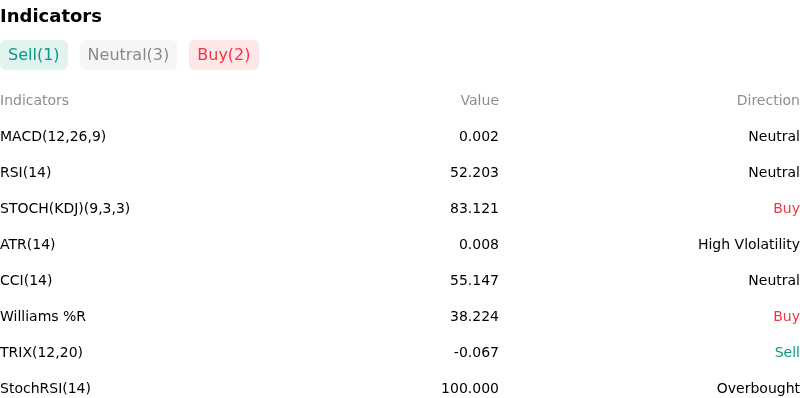
Technically, GBP/USD (GBPUSD) shows a MACD (12,26,9) value of 0.002, indicating a neutral signal. The RSI at 52.203 suggests neutral condition and the Williams %R at 38.224 suggests buy condition. Please monitor closely.
More details about GBP/USD (GBPUSD)
Recent Events and Risks:
- UK Political Instability and Speculative Selling Pressure: The political vacuum created by the sudden resignation of UK Prime Minister Keir Starmer continues to fuel significant market anxiety. Concerns surrounding the leadership transition and the fiscal policy of the future Chancellor have pushed net-short speculative positioning on the Pound to $8.72 billion—the highest level since 2015—leaving GBP/USD highly vulnerable to sudden downward shocks.
- Plunging UK Economic Confidence and Wide Deficit: The IoD Directors' Economic Confidence Index dropped sharply to -61 in June from -53 in May, highlighting a rapid deterioration in business sentiment and revenue expectations. This domestic economic fragility is compounded by a widening UK current account deficit and recent downward revisions to historical annual GDP growth, dampening sterling's structural appeal.
- Divergent Fed-BoE Monetary Policy Policy Trajectories: Under new Chair Kevin Warsh, the Federal Reserve has adopted a hawkish tilt, removing its easing bias and raising inflation projections, which signals that US interest rates will remain elevated. Conversely, despite inflation hovering above target at 2.8%, the Bank of England's dovish-leaning bias and 7-2 vote split to hold rates at 3.75% limit the Pound's yield support and compress the relative yield spread in favor of the US Dollar.
- Immediate Intraday Volatility from the US Non-Farm Payrolls (NFP) Release: With the highly anticipated US jobs report scheduled for today, any upside surprises in payroll growth or wage inflation could prompt immediate dollar-buying. If the data reinforces the Fed’s hawkish posturing, GBP/USD faces imminent risk of breaking below its short-term ascending channel and targeting deeper technical support near the 1.3140 and 1.3000 levels.
Recommended Articles


