


From Iran War Panic to New Peaks: How U.S. Indexes Rallied Right Through the Fear
Key Points
The stock market bounced back quickly after the initial strike on Iran.
Many investors are betting that these disruptions will be temporary.
Whatever happens in the Persian Gulf, investors are best advised to focus on buying high-quality stocks for the long haul.
- These 10 stocks could mint the next wave of millionaires ›
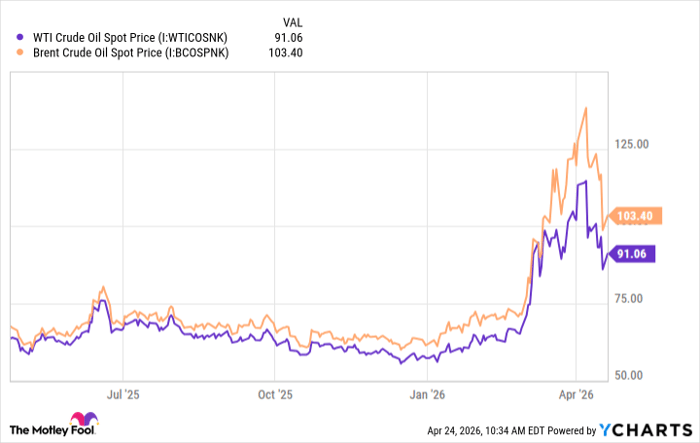
It seems like bear market cycles last just a few weeks these days. While the 2026 Iran conflict drawdown was not an official bear market, plenty of stocks slipped 20% or more in just a few short weeks, while oil prices doubled from $60 per barrel to $120.
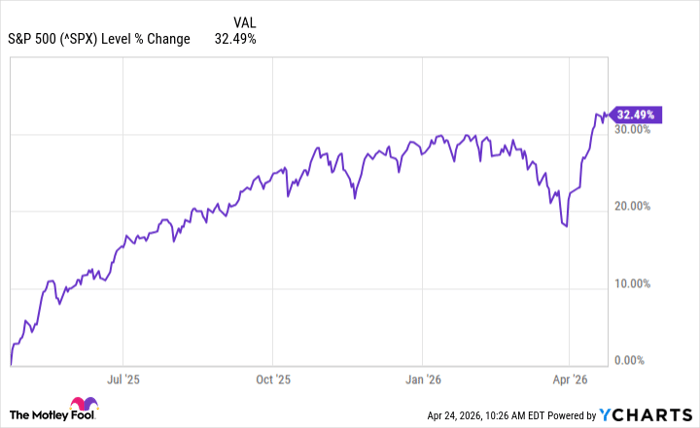
Today? The stock market is back trading close to all-time highs, with the S&P 500 (SNPINDEX: ^GSPC) index rocketing above $7,000. Here's why the panic turned back into euphoria, why the bull market is continuing despite ongoing conflict and blockade in the Persian Gulf, and where the market and investors might go from here.
Will AI create the world's first trillionaire? Our team just released a report on the one little-known company, called an "Indispensable Monopoly" providing the critical technology Nvidia and Intel both need. Continue »
Image source: Getty Images.
From panic to new highs
The initial carnage from the Iran conflict looked to be heading for an extended disruption of global oil and natural gas production, as well as petrochemical products. Israel and the United States took out some of Iran's energy-producing infrastructure, while Iran was targeting energy infrastructure sites in Qatar, Saudi Arabia, and other Middle East countries in retaliation. Financial markets began to panic at the prospect that a significant amount of infrastructure was going to be destroyed in the war, which could cut off oil supply for years as refineries are rebuilt.
Now, cooler heads have prevailed with the ongoing ceasefire. Even though there have been changing blockades on shipping through the Strait of Hormuz, investors can stomach a temporary disruption in energy flows over a few weeks (or even months). But a multiyear disruption could throw the global economy into a tailspin.
The new economy is unfazed by oil disruptions
Even so, rising oil prices will push up input costs across many parts of the global economy. Oil and natural gas are used extensively across sectors such as transportation, agriculture, and manufacturing. Wall Street analysts at J.P. Morgan estimate that an oil price of $110 a barrel could reduce S&P 500 earnings by 2% to 5% in 2026.
If that is the case, then why is the S&P 500 index near an all-time high? For one, Wall Street is forward-looking, meaning that if most investors believe oil prices will only be elevated temporarily, they can look to the years ahead and believe the economy will return to a pre-crisis normal.
Data by YCharts.
Second, Wall Street is much more preoccupied with all things artificial intelligence (AI) right now. If you look at the largest companies in the world, almost all of them are big technology players reinvesting in AI infrastructure or parts of that supply chain, primarily semiconductor businesses. These businesses are not heavily dependent on oil as an input cost, which makes the S&P 500 index less at risk from the Iran conflict.
The United States economy is still a user of oil, but its economic output is less dependent on oil than it was 50 years ago during past energy supply shocks. In turn, this makes an oil-price-induced recession much less likely in the minds of market participants. Of course, if oil shoots through to $200 a barrel, there may be different discussions to be had. But right now the expectation is that this will not be the case.
Data by YCharts.
What happens now?
The next steps in the oil market are anyone's guess. As of this writing on April 23, the United States is changing its tune and may begin attacking the country again, while it is unclear exactly what supplies are getting through (or not) the Strait of Hormuz blockades by both Iran and the United States. Did I already say this was confusing?
In general, individual investors would do best to focus not on the day's macroeconomic news but on finding quality stocks to buy that can stand the test of time. Transition your focus to this, and your portfolio will thank you over the next decade, no matter where oil trades in 2026.
Where to invest $1,000 right now
When our analyst team has a stock tip, it can pay to listen. After all, Stock Advisor’s total average return is 983%* — a market-crushing outperformance compared to 200% for the S&P 500.
They just revealed what they believe are the 10 best stocks for investors to buy right now, available when you join Stock Advisor.
See the stocks »
*Stock Advisor returns as of April 26, 2026.
JPMorgan Chase is an advertising partner of Motley Fool Money. Brett Schafer has no position in any of the stocks mentioned. The Motley Fool has positions in and recommends JPMorgan Chase. The Motley Fool has a disclosure policy.
Recommended Articles


