


The S&P 500 Is Soaring Right Now, but Is It Really Safe to Invest? Here's What History Says.
Key Points
Stocks have been rallying in recent weeks, but it's only a matter of time before we face a downturn.
It's impossible to predict the market's short-term performance, but its long-term outlook is promising.
Now more than ever, it's crucial to invest in the right places.
- These 10 stocks could mint the next wave of millionaires ›
This year has been a roller coaster of ups and downs for investors. After reaching a new low for the year in late March, the S&P 500 (SNPINDEX: ^GSPC) is now up by more than 11% since it bottomed out less than a month ago, as of this writing.
While the Federal Reserve's decision to hold interest rates steady has renewed optimism on Wall Street, many investors are waiting for the other shoe to drop. That's reasonable, especially given how volatile the market has been lately.
Will AI create the world's first trillionaire? Our team just released a report on the one little-known company, called an "Indispensable Monopoly" providing the critical technology Nvidia and Intel both need. Continue »
All of this uncertainty can make managing your investments challenging. If stocks are just going to plunge again, buying at record-high prices may not be the best idea. But holding off on buying might mean missing out on lucrative gains if the market continues to surge. Here's what history has to say about it.

Image source: Getty Images.
History has good and bad news for investors
The bad news is that nobody can say where the market might be headed in the coming weeks and months, and past performance doesn't predict future returns. Although history can help provide context during periods of volatility, every market downturn is different.
Fortunately, history can offer some reassurance for long-term investors. The S&P 500 has experienced countless corrections, bear markets, and recessions over the past century. It's not only survived all of those downturns, but it's also come out the other side earning positive total returns.
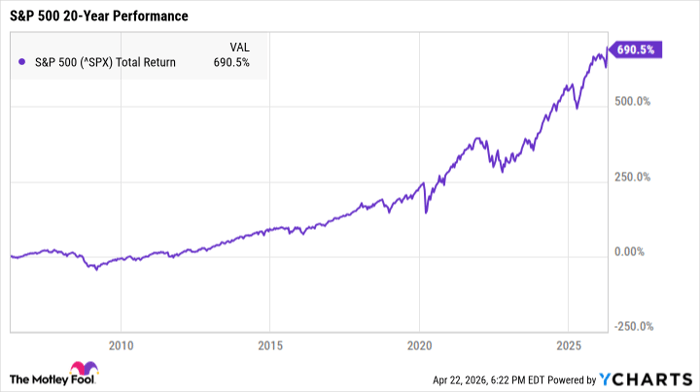
^SPX data by YCharts
More importantly, history shows that the longer you stay invested in the market, the less likely you are to lose money.
If stock prices sink in the coming months, your portfolio could lose value. But you won't actually lock in those losses unless you sell your investments for less than you paid for them. By simply holding your stocks through volatility, your portfolio should regain any lost value.
Throughout the S&P 500's history, around one-third of its one-year periods ended in negative total returns, according to analysis from investment firm Capital Group. Meanwhile, all of the index's 10-year periods over the last 82 years have ended in positive total returns.
This means that if you'd bought an S&P 500 index fund and held it for only one year before selling, there's a 33% chance, historically, you'd lose money. But by holding it for at least 10 years, it's highly likely you'd earn positive total returns. In short, time in the market is far more important than timing the market.
The right investments are more important than ever
Stock prices can't keep surging forever, so it's a matter of when the next bear market or recession begins. Not all companies will pull through tough economic times, and if you're investing in shaky stocks, your portfolio may struggle during the next downturn.
Healthy companies with strong foundations may still take a beating during a recession, but they're likely to recover and experience long-term growth. The more of these stocks you have in your portfolio, the better your chances of building wealth over time -- regardless of how the market fares in the short term.
Where to invest $1,000 right now
When our analyst team has a stock tip, it can pay to listen. After all, Stock Advisor’s total average return is 967%* — a market-crushing outperformance compared to 199% for the S&P 500.
They just revealed what they believe are the 10 best stocks for investors to buy right now, available when you join Stock Advisor.
See the stocks »
*Stock Advisor returns as of April 24, 2026.
Katie Brockman has no position in any of the stocks mentioned. The Motley Fool has no position in any of the stocks mentioned. The Motley Fool has a disclosure policy.
Recommended Articles


