


Prediction: Buying Pfizer Stock Today Could Set You Up for Life
Key Points
Pfizer has a proven track record of success in the pharmaceutical sector.
Management has shown, once again, that it can pivot quickly when needed.
- 10 stocks we like better than Pfizer ›
Pfizer (NYSE: PFE) investors got some very bad news when the company was forced to abandon its internally developed GLP-1 weight loss drug in April, 2025. With patent expirations on the horizon, falling even further behind competitors like Novo Nordisk (NYSE: NVO) and Eli Lilly (NYSE: LLY) in an emerging new drug niche was a bad look. However, what happened next is what's really important.
Pfizer quickly changes course in the GLP-1 space
GLP-1 drugs have seen strong consumer demand. Eli Lilly's industry-leading GLP-1 drugs Mounjaro and Zepbound, for example, saw revenue growth of 99% and 175%, respectively, in 2025. The flameout of Pfizer's internally generated GLP-1 candidate was a major setback.
Will AI create the world's first trillionaire? Our team just released a report on the one little-known company, called an "Indispensable Monopoly" providing the critical technology Nvidia and Intel both need. Continue »
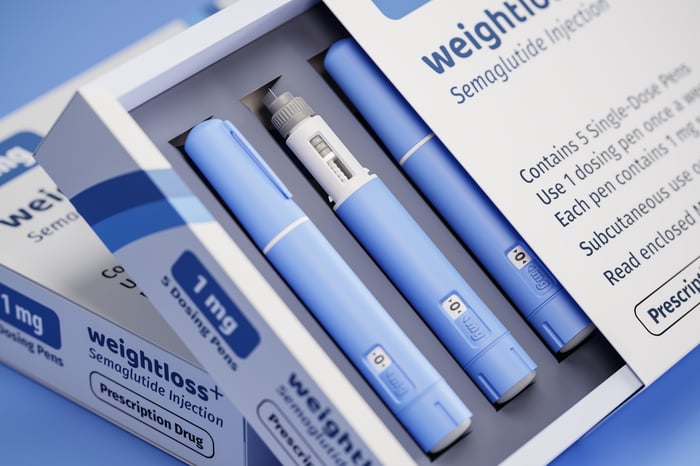
Image source: Getty Images.
In fact, Pfizer hasn't exactly been hitting out of the park for a while. Its COVID vaccine success is well in the past, and it has notable patent expirations coming up over the next couple of years. The stock is down around 50% from its 2021 highs. That said, Pfizer didn't give up on the GLP-1 niche. It quickly shifted gears, buying a company with a promising GLP-1 candidate. The deal closed in November, 2025, less than a year after Pfizer announced its own weight loss drug had been dropped. That's a pretty quick pivot.
Pfizer is still an industry giant
What's interesting here is that, despite a massive decline in value, Pfizer still has a market cap of $150 billion. It is a well-respected industry giant navigating the normal ebbs and flows of the pharmaceutical industry. Innovation is vital, but it doesn't come in a smooth line. And, sometimes, a company's plans don't work out as well as hoped.
It is what happens during the hard times that defines a drug company. In February 2026, less than a year after its own drug was dropped, Pfizer announced that the long-acting GLP-1 drug it is now working on was progressing as hoped. That's the sign that Pfizer hasn't suddenly lost its way. It is still the industry-leading drugmaker it was back when COVID vaccines were driving the stock higher.
Long-term investors should consider Pfizer
Pfizer's dividend yield is a lofty 6.2%, largely because its payout ratio is over 100%. Conservative dividend investors may want to tread with caution. However, management has stated its intention to maintain the dividend. All in, if you think in decades, this out-of-favor drug stock is still an industry leader. It could easily help set you up for life and, likely, for a lifetime of dividends.
Should you buy stock in Pfizer right now?
Before you buy stock in Pfizer, consider this:
The Motley Fool Stock Advisor analyst team just identified what they believe are the 10 best stocks for investors to buy now… and Pfizer wasn’t one of them. The 10 stocks that made the cut could produce monster returns in the coming years.
Consider when Netflix made this list on December 17, 2004... if you invested $1,000 at the time of our recommendation, you’d have $503,861!* Or when Nvidia made this list on April 15, 2005... if you invested $1,000 at the time of our recommendation, you’d have $1,026,987!*
Now, it’s worth noting Stock Advisor’s total average return is 884% — a market-crushing outperformance compared to 179% for the S&P 500. Don't miss the latest top 10 list, available with Stock Advisor, and join an investing community built by individual investors for individual investors.
See the 10 stocks »
*Stock Advisor returns as of March 29, 2026.
Reuben Gregg Brewer has no position in any of the stocks mentioned. The Motley Fool has positions in and recommends Pfizer. The Motley Fool recommends Novo Nordisk. The Motley Fool has a disclosure policy.
Recommended Articles


