


Should You Buy Nike Stock Before March 31?
Key Points
The most encouraging signal is product innovation, particularly in the running segment, where growth has quietly reaccelerated.
Near-term risks for Nike are very real: Soft global demand, tariff pressure, and weak segments like Converse could easily overshadow progress.
- 10 stocks we like better than Nike ›
Nike (NYSE: NKE) will report its earnings results for the third quarter of its fiscal 2026 on March 31 after the markets close. Investors will be paying close attention.
Earnings per share (EPS) are expected to come in at $0.29, roughly 45% below the same quarter last year. Revenue for the full fiscal year is tracking toward $46.7 billion -- down about 9% from two years prior.
Will AI create the world's first trillionaire? Our team just released a report on the one little-known company, called an "Indispensable Monopoly" providing the critical technology Nvidia and Intel both need. Continue »
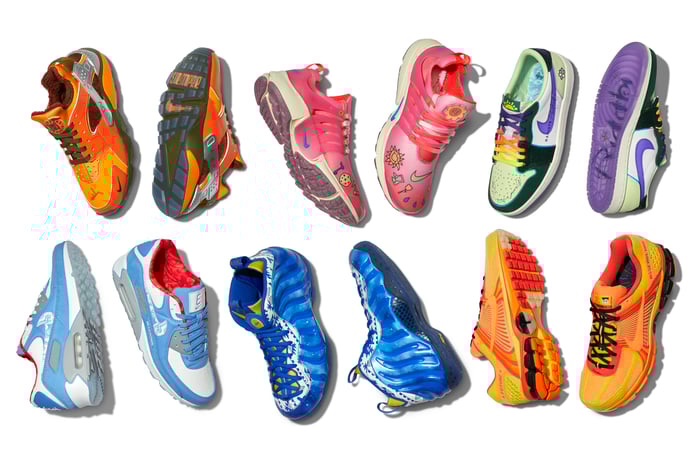
Image source: Nike.
Has Elliott Hill been good for Nike?
When Elliott Hill returned as CEO in October 2024, the first thing he did was reverse the direct-to-consumer bet his predecessor had made. That seems to have been a smart move. Wholesale revenue grew 8% to $7.5 billion in the second quarter of fiscal 2026.
Nike rejoined the Amazon sales platform (after exiting in 2019) and rebuilt partnerships with Foot Locker and Dick's Sporting Goods. These aren't cosmetic changes. They represent a full reversal of the strategic mistake that caused the decline.
But the product piece is the one I'd watch most closely.
Hill's team has delivered genuine innovation, including:
- Nike Mind: A footwear concept over 10 years in development that Nike says is "a new sensory footwear concept that helps reawaken the foot, the body and the mind."
- Project Amplify, which Nike says is a "first-generation footwear system ... comprised of a lightweight, powerful motor; drive belt; and rechargeable cuff battery that seamlessly integrate with a carbon fiber–plated running shoe that can be worn with or without the robotics system."
- Aero-FIT cooling technology, which is reportedly more than twice as effective as legacy materials.
These are product developments that don't rely on fluff, and running -- the segment where On Running and Hoka first hurt Nike -- has grown over 20% for two consecutive quarters.
Nike is risky right now
The March 31 report is unlikely to show that a company turnaround is complete, and investing based on what you think will happen on one day is unwise. UBS analyst Jay Sole, with a neutral rating and a $58 price target for Nike as I write this, is flagging a below-consensus implied Q4 EPS outlook and no expected fiscal year 2027 guidance.
Channel checks show soft global sales momentum through March. Tariffs and the ongoing conflict in the Middle East add another layer to Nike's finances. Tariffs are estimated to have a potential impact of roughly $1.5 billion on Nike's cost structure. And Converse, a meaningful subsidiary, saw a 30% revenue drop in the previous quarter.
Here's my honest take: Buying Nike ahead of March 31 would be a bet on a turnaround that's real but early, with execution risk still very much in play. I think it makes more sense to wait and see what the company reports.
However, the product innovation is genuine, and I truly think Hill is making meaningful changes. But the timeline is still unclear, so I'd stay away for now or invest small amounts.
Should you buy stock in Nike right now?
Before you buy stock in Nike, consider this:
The Motley Fool Stock Advisor analyst team just identified what they believe are the 10 best stocks for investors to buy now… and Nike wasn’t one of them. The 10 stocks that made the cut could produce monster returns in the coming years.
Consider when Netflix made this list on December 17, 2004... if you invested $1,000 at the time of our recommendation, you’d have $503,268!* Or when Nvidia made this list on April 15, 2005... if you invested $1,000 at the time of our recommendation, you’d have $1,049,793!*
Now, it’s worth noting Stock Advisor’s total average return is 898% — a market-crushing outperformance compared to 182% for the S&P 500. Don't miss the latest top 10 list, available with Stock Advisor, and join an investing community built by individual investors for individual investors.
See the 10 stocks »
*Stock Advisor returns as of March 27, 2026.
Micah Zimmerman has no position in any of the stocks mentioned. The Motley Fool has positions in and recommends Amazon and Nike. The Motley Fool has a disclosure policy.
Recommended Articles


