


Goldman Sachs Just Sounded the Alarm on Private Credit. Here Are 2 Things Investors Need to Know.
Key Points
Goldman Sachs CEO David Solomon called out private credit risk in his annual shareholder letter.
Blue Owl, a private credit company, is down 39% this year.
The risk of contagion is exacerbated by pressure on software and the war in Iran.
- 10 stocks we like better than Blue Owl Capital ›
The private credit market doesn't get much attention from retail investors in ordinary circumstances, but the current market environment is looking increasingly extraordinary.
The private credit market is generally only open to high-net-worth individuals and institutional investors, and typically provides high interest rates to investors for illiquid loans. However, recently, the private credit market has begun looking distressed as it's closely tied to the software industry, and the same nervousness that has led to software stocks falling on fears of AI disruption is causing some investors to mark private loans down, reflecting those risks, and it could lead to a downward spiral.
Will AI create the world's first trillionaire? Our team just released a report on the one little-known company, called an "Indispensable Monopoly" providing the critical technology Nvidia and Intel both need. Continue »
Goldman Sachs CEO David Solomon commented on these risks in his annual shareholder letter, published on Friday, and said that concerns around private credit, including about underwriting quality and exposure to software that could be disrupted by AI, were a reminder that "the credit cycle has not been repealed," meaning it's at risk of going through a default cycle.
On that note, here are two things investors should know about the private credit market.
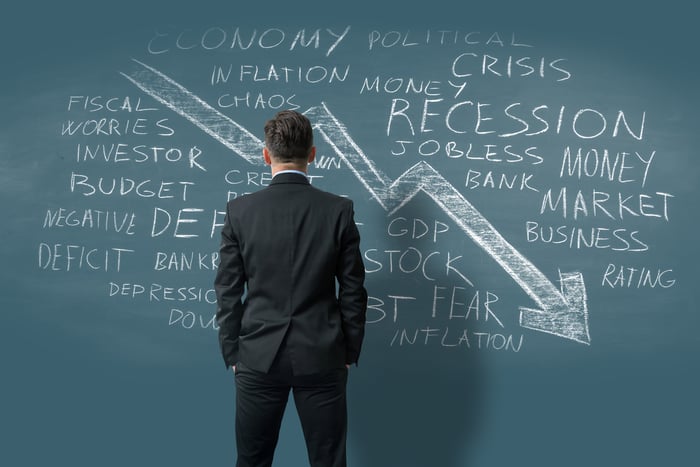
Image source: Getty Images.
1. Private credit stocks are tumbling
Several publicly traded private credit firms, or business development company (BDC) stocks, have plunged in recent months, and financial giants like Blackstone and Morgan Stanley have capped investor withdrawals to prevent a run on liquidity.
Blue Owl Capital (NYSE: OWL), for example, is down 39% year-to-date, as the company has restricted investor redemptions following high requests, sold $1.4 billion in assets to pay out investors, and fallen victim to a contagion fear in the private credit market, which is the biggest risk here.
If these private loans are no longer performing and the software market sees more AI disruption, there could be a liquidity crisis in the private credit market, which is valued at more than $1 trillion.
2. There's a huge network of risks in the market right now
If the private credit market crashes, there's a risk of another systemic financial crisis like what happened in 2008, and the IMF even warned that banks' exposure to private credit means any fallout could spread to traditional banks.
The private credit crisis is coming at the same time as worries about the AI boom are building. Investors are concerned that hyperscalers are spending too much money on their data center buildouts, essentially spending money that they won't get back, and that AI could disrupt enterprise software, which has already caused valuations in the software sector to plunge.
Finally, the war in Iran and the spike in oil prices have introduced a new level of risk in the stock market. Overall, there's a lot more uncertainty in the market than there was just a few months ago. Investors should stay vigilant and be prepared for a pullback. It's a good time to build cash to potentially take advantage of lower share prices.
Should you buy stock in Blue Owl Capital right now?
Before you buy stock in Blue Owl Capital, consider this:
The Motley Fool Stock Advisor analyst team just identified what they believe are the 10 best stocks for investors to buy now… and Blue Owl Capital wasn’t one of them. The 10 stocks that made the cut could produce monster returns in the coming years.
Consider when Netflix made this list on December 17, 2004... if you invested $1,000 at the time of our recommendation, you’d have $494,747!* Or when Nvidia made this list on April 15, 2005... if you invested $1,000 at the time of our recommendation, you’d have $1,094,668!*
Now, it’s worth noting Stock Advisor’s total average return is 911% — a market-crushing outperformance compared to 186% for the S&P 500. Don't miss the latest top 10 list, available with Stock Advisor, and join an investing community built by individual investors for individual investors.
See the 10 stocks »
*Stock Advisor returns as of March 21, 2026.
Jeremy Bowman has no position in any of the stocks mentioned. The Motley Fool has positions in and recommends Blackstone. The Motley Fool has a disclosure policy.
Recommended Articles


