


Billionaire Investor Philippe Laffont's Hedge Fund Sold Its Entire Stake in The Trade Desk and Increased Its Position in This Streaming Giant by 17x
Key Points
Philippe Laffont is a prominent tech investor.
Laffont is also known as a Tiger Cub, a group of investors that worked as research analysts for Julian Robertson's Tiger Management.
In the fourth quarter of 2025, Laffont's fund, Coatue Management, sold its entire stake in the digital adtech company The Trade Desk and significantly increased its stake in a streaming company that has been in the thick of controversy.
- 10 stocks we like better than Netflix ›
Philippe Laffont is not only a billionaire but also a member of an elite group of investors known as the Tiger Cubs. All members of this group worked as analysts for Julian Robertson's Tiger Global Management in the 1990s. Many would go on to launch their own funds, some backed by Robertson, and most largely concentrated in the tech sector.
Laffont's Fund, Coatue Management, had nearly $40.8 billion in its equity fund. During the fourth quarter, Coatue completely exited its stake in The Trade Desk (NASDAQ: TTD) and increased its position in a prominent streaming stock by 17-fold.
Where to invest $1,000 right now? Our analyst team just revealed what they believe are the 10 best stocks to buy right now, when you join Stock Advisor. See the stocks »
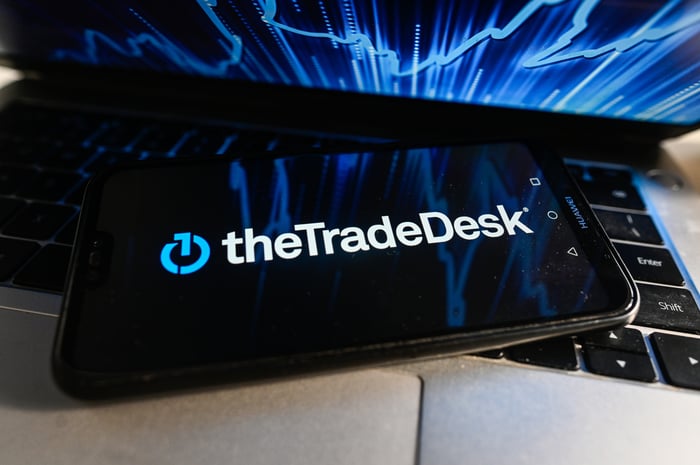
Image source: Getty Images.
Exiting a struggling ad-tech stock that was once a market darling
The Trade Desk is a data-driven platform that helps advertisers plan and build digital advertising campaigns while also enabling them to buy and sell ad space. Using data analytics and artificial intelligence (AI), The Trade Desk helped agencies identify key customer segments and optimize ad campaigns in real time.
Investors initially liked the platform because, unlike other large search and advertising giants, such as Google and Meta Platforms, it didn't sell any ad space of its own, giving it more incentive to find customers the best price available in the market. Through the first nine months of 2025, the company grew revenue 20% year over year, and grew earnings by about 24%.
But that's nothing compared to the company's earnings growth in 2024, which more than doubled year over year. But the stock has been crushed over the past year, down 67%. Like most other sectors, there is a significant threat of disruption from other AI ad platforms and larger tech giants like Amazon, which has built a challenger ad platform. Reports have indicated that Amazon has been able to steal market share.
Furthermore, the software rout, driven by AI threats, significantly compressed TTD's valuation. At its peak, The Trade Desk stock traded at about 80 times forward earnings and over 25 times forward sales. Today, those multiples are 12 and 3.6, respectively.
The stock is way more attractive today from a multiple perspective, but it will have to contend with the uncertainty of AI, so investors should understand that this isn't an obvious buy-the-dip opportunity. Wall Street analysts currently expect earnings and revenue growth to decelerate over the next year.
Buying the dip on this struggling streaming stock
The streaming giant Netflix (NASDAQ: NFLX) has seen its stock fall 43% since June of last year, most of which occurred after Netflix struck an agreement to acquire the film and television studios, including HBO Max, from Warner Bros. Discovery in a controversial deal that has been filled with drama.
Although Netflix has an agreement in place, Paramount Skydance is still very much in the picture and is fighting tooth and nail to acquire all of Warner Bros., including the cable assets. Even if Paramount eventually fades from the picture, Netflix would still have to overcome antitrust concerns, so the deal is far from certain.
The sell-off of Netflix stock has likely occurred for several reasons. Netflix is not a proven acquirer, so the company faces execution risk. Closing a deal of this magnitude is a big distraction from the core business, and Netflix had to take on significant debt to complete its nearly $83 billion acquisition, which includes the assumption of Warner Bros. debt.
Clearly, Laffont and his team are buying the dip, and I think they have a pretty compelling case for why Netflix can bounce back in the long term. If they can close the deal, I believe HBO and Netflix would make a fierce streaming company by combining Netflix's technical and marketing prowess with the great content and franchises that HBO already offers. There is expected to be billions in annual cost savings as well.
If the deal doesn't work out, it's business as usual for Netflix, which has already proven its dominance by surpassing 325 million subscribers while raising subscription prices. The company has a significant growth opportunity from its newer advertising business, which it expects to double revenue this year.
Furthermore, Warner Bros will have to pay Netflix a $2.8 billion termination fee if the deal doesn't go through, so I think the stock could rebound through multiple avenues.
Should you buy stock in Netflix right now?
Before you buy stock in Netflix, consider this:
The Motley Fool Stock Advisor analyst team just identified what they believe are the 10 best stocks for investors to buy now… and Netflix wasn’t one of them. The 10 stocks that made the cut could produce monster returns in the coming years.
Consider when Netflix made this list on December 17, 2004... if you invested $1,000 at the time of our recommendation, you’d have $409,970!* Or when Nvidia made this list on April 15, 2005... if you invested $1,000 at the time of our recommendation, you’d have $1,174,241!*
Now, it’s worth noting Stock Advisor’s total average return is 889% — a market-crushing outperformance compared to 192% for the S&P 500. Don't miss the latest top 10 list, available with Stock Advisor, and join an investing community built by individual investors for individual investors.
See the 10 stocks »
*Stock Advisor returns as of February 24, 2026.
Bram Berkowitz has no position in any of the stocks mentioned. The Motley Fool has positions in and recommends Amazon, Meta Platforms, Netflix, The Trade Desk, and Warner Bros. Discovery. The Motley Fool has a disclosure policy.
Recommended Articles


