


The 1 Financial Decision That Could Tank Your Retirement Budget Fast
Key Points
Some retirees opt to spend money on a second home.
While that may seem like a good idea, it could come with a host of expenses.
Before you commit to a second home, figure out what it'll cost to rent one in your preferred vacation destination.
- The $23,760 Social Security bonus most retirees completely overlook ›
I was talking to a former colleague who just retired. He's been looking at homes in his favorite vacation town. His logic is that it pays to buy a second home there so he's guaranteed a place to stay whenever he visits.
While I don't have access to his IRA balance, if I had to guess, he's got at least a couple of million in there. His primary home is also paid off, and he's most likely in line for a pretty generous monthly Social Security check.
Will AI create the world's first trillionaire? Our team just released a report on the one little-known company, called an "Indispensable Monopoly" providing the critical technology Nvidia and Intel both need. Continue »
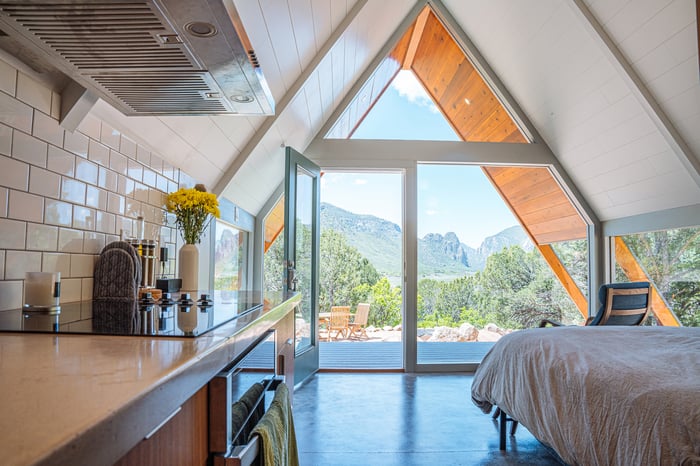
Image source: Getty Images.
Still, I cautioned my old coworker that a second home purchase may not be the wise financial decision he thinks it is. And if you're considering buying a second home in retirement, you may want to pause and regroup.
The danger of owning a second home in retirement
If there's a specific vacation spot you frequent, it's easy to see why you might think that purchasing a home there makes sense. When you own a home, you don't have to pay rent every time you visit. You also don't have to worry about lodging selling out if you want to make a last-minute trip.
But owning a second home in retirement could also upend your budget. Even if you're able to purchase one without a mortgage, there are many other expenses that could come with owning one, including:
- Property taxes
- Homeowners insurance
- Maintenance
- Repairs
- Utilities
- HOA fees
Some of those costs could be unpredictable, too. You may be able to factor property taxes and insurance costs into your budget for now. But what if they increase over time? Similarly, repairs are hard to budget for.
Of course, part of your plan may be to buy a second home and rent it out when you're not using it. But renting out a second home may not be as easy as you'd think.
Some areas have restrictions on short-term rentals. And if you're not around to deal with guests, you'll need a property manager, whose fees could eat into your income.
Do this before buying a second home
If there's a certain spot you love to visit, you might assume that buying a second home there makes sense once you're retired. But first, run the numbers to see how much it might cost to rent a place instead.
In my colleague's case, he wants to spend up to three months a year in his preferred vacation spot. But a quick search reveals that you can rent a home in that area for a monthly fee of about $5,000.
When we did the math, we realized that if he were to buy a home in that area mortgage-free, he'd be looking at about $7,000 a year in property taxes and $1,000 in insurance. We budgeted another $600 a month for maintenance and utilities at a minimum.
All told, we got to the $15,000 it would cost to rent a home for three months without accounting for actual repairs. So now, my colleague is reconsidering that second home.
It could make sense to buy a second home in retirement. But think about whether a second home purchase is really a smart choice. If you're not careful, it could derail your budget and cause you a world of financial stress.
The $23,760 Social Security bonus most retirees completely overlook
If you're like most Americans, you're a few years (or more) behind on your retirement savings. But a handful of little-known "Social Security secrets" could help ensure a boost in your retirement income.
One easy trick could pay you as much as $23,760 more... each year! Once you learn how to maximize your Social Security benefits, we think you could retire confidently with the peace of mind we're all after. Join Stock Advisor to learn more about these strategies.
View the "Social Security secrets" »
The Motley Fool has a disclosure policy.
Recommended Articles


