


Should You Invest $1,000 in Oklo Right Now? 3 Things to Know First
Key Points
Oklo stock rose 238% in 2025 due to increasing demand for its technology.
The company is still pre-revenue but anticipates deploying its first reactors sometime in 2027.
- 10 stocks we like better than Oklo ›
If you're willing to wait a few more years for a pre-revenue company to finally convert its many signed customer agreements, then investing $1,000 in Oklo (NYSE: OKLO) now is a risky endeavor with huge potential upside. There are a few things you need to know about this fission technology and nuclear fuel recycling company first, though.
Oklo doesn't have revenue, yet
Oklo is busy building advanced fission reactors called Aurora powerhouses. These powerhouses will meet the growing energy needs of data centers and in industries such as defense and manufacturing.
Where to invest $1,000 right now? Our analyst team just revealed what they believe are the 10 best stocks to buy right now, when you join Stock Advisor. See the stocks »
It's important to note that Oklo already has several binding agreements and partnerships with major companies. Meta Platforms, Siemens Energy, and Liberty Energy are among the announced contracts. Oklo anticipates deploying its first reactors sometime in 2027.
Once Oklo can begin deploying its technology, it'll convert its letters of intent and power purchase agreements into actual revenue. Still, it will likely take multiple years to realize the fruits of this very real demand.
The stock's valuation reflects optimism, not fundamentals
Because Oklo doesn't have current revenue, the stock is trading at a massive premium and is fueled by optimism. In 2025, Oklo surged, and the stock was up over 700% at one point. It ended the year up nearly 240%. If investors are basing decisions purely on company fundamentals, Oklo is absurdly expensive.
Investors considering an investment in Oklo will be relieved to see the stock has dipped back down to around $65 per share as of Feb. 19. This retreat is well off the 52-week high of $193.
However, it's hard to ignore the very real momentum the company is generating and the deals it is signing. Not to mention, OpenAI founder Sam Altman was previously the company's chairman of the board and is a large investor in Oklo. This connection gives the energy company even more legitimacy.
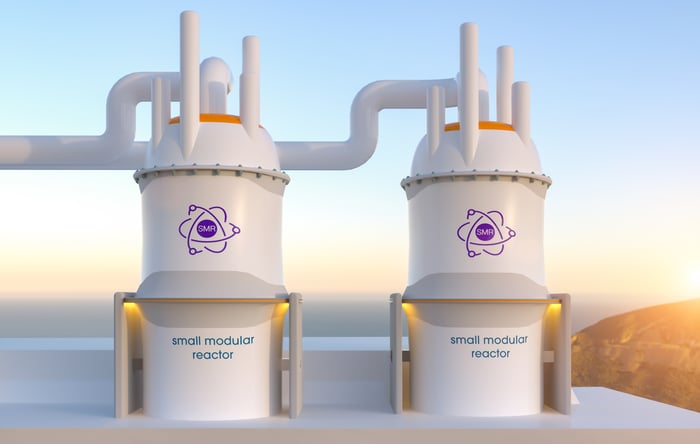
Image source: Getty Images.
The company's hype is based on real demand
Oklo is awaiting licensing approval from the U.S. Nuclear Regulatory Commission (NRC). A decision on Oklo's application is expected imminently. Assuming Oklo receives the go-ahead and can deploy on time in 2027, investors should anticipate a flurry of new business for Oklo.
Of course, there's the risk of denials and delays, but the demand for Oklo's reactors is growing alongside the power needs of AI.
Should you invest?
Even a $1,000 investment in Oklo stock will require a lengthy and patient time horizon. Due to the risks associated with awaiting licensing approval and the deployment timeline, it's important that investors in Oklo have a higher risk appetite and can withstand substantial volatility. If Oklo gets the green light in 2026 and deploys in 2027, Oklo could see substantial revenue and new stock highs.
Should you buy stock in Oklo right now?
Before you buy stock in Oklo, consider this:
The Motley Fool Stock Advisor analyst team just identified what they believe are the 10 best stocks for investors to buy now… and Oklo wasn’t one of them. The 10 stocks that made the cut could produce monster returns in the coming years.
Consider when Netflix made this list on December 17, 2004... if you invested $1,000 at the time of our recommendation, you’d have $415,256!* Or when Nvidia made this list on April 15, 2005... if you invested $1,000 at the time of our recommendation, you’d have $1,151,865!*
Now, it’s worth noting Stock Advisor’s total average return is 892% — a market-crushing outperformance compared to 194% for the S&P 500. Don't miss the latest top 10 list, available with Stock Advisor, and join an investing community built by individual investors for individual investors.
See the 10 stocks »
*Stock Advisor returns as of February 20, 2026.
Catie Hogan has no position in any of the stocks mentioned. The Motley Fool has positions in and recommends Meta Platforms. The Motley Fool recommends Siemens Energy Ag. The Motley Fool has a disclosure policy.
Recommended Articles


