


USA Rare Earth Stock: Buy, Sell, or Hold?
Key Points
USA Rare Earth recently announced two separate funding deals: one from the U.S. government and the other from private investors.
The deals will help fund USA Rare Earth at a critical time, but come at a steep price to existing shareholders.
Despite the stock's recent declines, now is not a good time to buy the dip.
- 10 stocks we like better than USA Rare Earth ›
Rare earth elements have become one of the hottest topics in U.S. politics. These 17 metallic elements are challenging to obtain yet crucial to a variety of high-tech products, including defense and aerospace applications. Currently, China dominates this market, accounting for nearly 70% of the world's supply of these resources.
The United States is moving quickly to hedge against the risks of relying on a potential adversary for such scarce materials, recently announcing a significant investment in USA Rare Earth (NASDAQ: USAR), a pre-revenue materials stock that aims to lead domestic rare earth element production.
Will AI create the world's first trillionaire? Our team just released a report on the one little-known company, called an "Indispensable Monopoly" providing the critical technology Nvidia and Intel both need. Continue »
Should investors buy, sell, or hold USA Rare Earth stock?
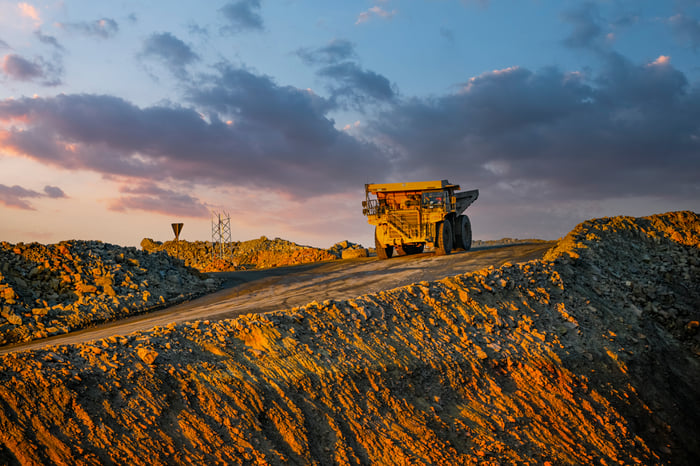
Image source: Getty Images.
New funding deals raise the floor, but lower the ceiling
USA Rare Earth is currently developing a massive deposit in Texas and building a processing facility in Oklahoma. By 2030, management is targeting daily extraction of 40,000 metric tons of rare earth and critical minerals, which it will refine into materials, metals, and magnets for the federal government, defense companies, and other customers.
The U.S. government received 16.1 million shares of common stock and another 17.6 million stock warrants as part of the deal. While the government's backing dramatically increases the likelihood of USA Rare Earth's long-term survival, it also dilutes shareholders as the total share count expands. Additionally, USA Rare Earth tapped private markets for another $1.5 billion in funding, further increasing the total share count by 69.8 million shares.
All in, these funding deals could ultimately increase the share count by as much as 75%. In other words, each existing USA Rare Earth share would be worth almost 43% less than before, since it now represents a smaller stake in the business.
Shares of USA Rare Earth have fallen by more than 25% since the funding announcements
Even though the deals increase USA Rare Earth's odds of long-term success, it's crucial to remember that the government acts in the national interest, not necessarily in the interests of corporate shareholders. The market is essentially weighing the company's improved financials versus the dilution resulting from those funding deals. That's why the stock has gone down, not up, since the announcements.
Investors may want to refrain from rushing to buy the dip here. Even after the decline, USA Rare Earth now has a market cap of $4.2 billion. Again, the company doesn't generate any revenue yet. Management expects to begin commercial production at its Round Top deposit (Texas) by late 2028, so the company is likely still more than two years away from generating enough revenue to justify the stock's current valuation.
Buying or owning the stock at this point means accepting numerous risks. For instance, what if the government changes its mind about backing USA Rare Earth due to eventual political turnover or another reason? What if the company fails to meet its target dates or its 40,000-metric ton production goal?
Since the dilution offsets the stock's recent decline, it's still hard to see compelling value in USA Rare Earth. That makes the stock a sell today.
Should you buy stock in USA Rare Earth right now?
Before you buy stock in USA Rare Earth, consider this:
The Motley Fool Stock Advisor analyst team just identified what they believe are the 10 best stocks for investors to buy now… and USA Rare Earth wasn’t one of them. The 10 stocks that made the cut could produce monster returns in the coming years.
Consider when Netflix made this list on December 17, 2004... if you invested $1,000 at the time of our recommendation, you’d have $414,554!* Or when Nvidia made this list on April 15, 2005... if you invested $1,000 at the time of our recommendation, you’d have $1,120,663!*
Now, it’s worth noting Stock Advisor’s total average return is 884% — a market-crushing outperformance compared to 193% for the S&P 500. Don't miss the latest top 10 list, available with Stock Advisor, and join an investing community built by individual investors for individual investors.
See the 10 stocks »
*Stock Advisor returns as of February 17, 2026.
Justin Pope has no position in any of the stocks mentioned. The Motley Fool has no position in any of the stocks mentioned. The Motley Fool has a disclosure policy.
Recommended Articles


