


Taiwan Semiconductor Manufacturing (TSM) CEO C.C. Wei Just Delivered Fantastic News for Nvidia Investors
Key Points
TSMC reported the highest monthly sales figures in the company's history.
The robust results confirm that AI adoption continues, despite fears to the contrary.
Nvidia supplies the vast majority of the processors powering AI, putting the chipmaker in an enviable position.
- 10 stocks we like better than Nvidia ›
Since generative artificial intelligence (AI) burst onto the scene roughly three years ago, Nvidia (NASDAQ: NVDA) stock has been in the limelight. The company is the leading supplier of graphics processing units (GPUs), the advanced computer chips that underpin the technology. The unprecedented demand for its high-end processors fueled blistering revenue and profit growth, making it the world's most valuable company, with a market cap of $4.6 trillion. Many experts believe AI adoption is just beginning.
However, some are wary of the fading buzz and uneven adoption, and are looking for confirmation that AI growth will continue. Given its epic three-year run, it's easy to see why some investors have grown hesitant.
Where to invest $1,000 right now? Our analyst team just revealed what they believe are the 10 best stocks to buy right now, when you join Stock Advisor. See the stocks »
Taiwan Semiconductor Manufacturing (NYSE: TSM), commonly known as TSMC, just provided the most convincing proof yet that demand for AI remains robust.
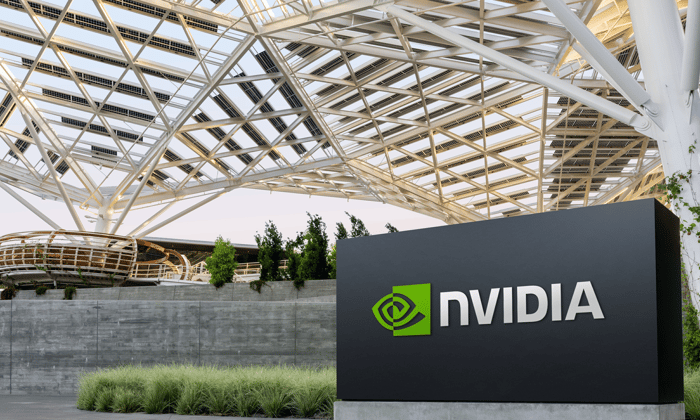
Image source: Nvidia.
Record monthly sales
TSMC has earned bragging rights as the world's most advanced chip foundry, resulting in its billing as the world's largest contract chipmaker. It controls roughly 71% of the global chip market and manufactures more than 90% of the most advanced semiconductors, making it a closely watched bellwether for AI demand.
When CEO C.C. Wei released the company's monthly sales figures, investors were taken aback. In January, TSMC delivered net revenue of NT$401.26 billion (roughly $12.7 billion), which jumped 37% year over year and was a 20% increase from December. This marked the highest monthly sales in TSMC's history, as demand for advanced processors kicked into overdrive.
TSMC provides the most advanced chips for AI, high-performance computing (HPC), and smartphones, so it has its finger on the pulse of tech industry demand. While the results are undoubtedly positive for TSMC investors, they also have broader implications.
Connecting the dots
Most AI processing takes place in data centers, which is Nvidia's home turf. The company holds a dominate 92% of the data center GPU market, according to IoT Analytics. The unparalleled demand for its chips makes Nvidia one of TSMC's most important clients. Moreover, while Apple has long been TSMC's largest customer in terms of sales, recent reports suggest that Nvidia is poised to take the crown from Apple sometime in 2026.
Taking a step back, TSMC's results suggest strong ongoing demand for AI-centric chips and, by extension, strong demand for Nvidia's GPUs.
The tech industry is embracing AI, fueled by strong demand from customers. This is driving a data center boom, with spending of $3 trillion to $4 trillion expected by 2030. GPUs are the single biggest cost driver of data center spending, accounting for roughly 39% of total costs. As the leading provider of data center GPUs, Nvidia will likely be the beneficiary of a significant portion of that spending.
The company is scheduled to report the results of its fiscal 2026 fourth quarter (ended Jan. 26), and anticipation is high. Nvidia is guiding for year-over-year revenue growth of 65%, which would mark an acceleration from the 62% growth in Q3.
Is Nvidia stock a buy?
For investors, there's clear upside. Nvidia is one of the most highly rated stocks on Wall Street. Of the 63 analysts who offered an opinion in February, 94% rate it a buy or strong buy. Furthermore, an average price target of $254 implies potential upside of 33% from Monday's closing price.
Evercore ISI analyst Mark Lipacis is more bullish than his Wall Street peers, with a $352 price target on Nvidia, or potential upside of 85%. The analyst calls Nvidia the "Top Pick" for 2026, thanks to the "tectonic shift to parallel processing."
Nvidia stock has gained 746% over the past three years (as of this writing), driven higher by blistering demand for AI. Despite that significant run-up, the stock is still surprisingly affordable at less than 25 times forward earnings.
Given Nvidia's significant market share, strong demand -- as evidenced by TSMC's robust results -- and a stellar rating from Wall Street, I'd argue the company is well-positioned to continue benefiting from the accelerating adoption of AI.
Should you buy stock in Nvidia right now?
Before you buy stock in Nvidia, consider this:
The Motley Fool Stock Advisor analyst team just identified what they believe are the 10 best stocks for investors to buy now… and Nvidia wasn’t one of them. The 10 stocks that made the cut could produce monster returns in the coming years.
Consider when Netflix made this list on December 17, 2004... if you invested $1,000 at the time of our recommendation, you’d have $439,362!* Or when Nvidia made this list on April 15, 2005... if you invested $1,000 at the time of our recommendation, you’d have $1,164,984!*
Now, it’s worth noting Stock Advisor’s total average return is 918% — a market-crushing outperformance compared to 196% for the S&P 500. Don't miss the latest top 10 list, available with Stock Advisor, and join an investing community built by individual investors for individual investors.
See the 10 stocks »
*Stock Advisor returns as of February 11, 2026.
Danny Vena, CPA has positions in Apple and Nvidia. The Motley Fool has positions in and recommends Apple, Nvidia, and Taiwan Semiconductor Manufacturing. The Motley Fool has a disclosure policy.
Recommended Articles


