


Input Output CEO Charles Hoskinson Talks Crypto Industry Future at Token2049
Charles Hoskinson, co-founder and CEO of Input Output (IOHK), the pre-eminent engineering firm behind the Cardano blockchain and co-founder of Ethereum, took the stage at Token2049 in Singapore to discuss the pressing challenges facing the cryptocurrency industry.
During his speech, Hoskinson also announced that Cardano’s privacy-focused sidechain, Midnight, is now live in the testnet phase. Here, we share key insights from his address, covering both the Midnight launch and his views on how the industry can overcome the critical hurdles.
Generational Shifts in Crypto
Hoskinson explained that the first generation of crypto was driven by Bitcoin believers, who sought independence from centralized financial systems. Their goal was to “be their own bank,” with a focus on decentralization and removing intermediaries like banks. According to Hoskinson, people in the early days of crypto were not motivated by money, but by the promise of a decentralized financial system.
He then highlighted that the second generation of crypto was marked by the introduction of smart contracts, ushered in by the Ethereum network. This era was focused on programmability, enabling more complex transactions and decentralized applications (dApps) on the blockchain, expanding beyond simple peer-to-peer transfers.
“It was like when Javascript came to the web browser,” the IOHK CEO said.
However, Hoskinson noted that the smart contract programmability introduced in the second generation of crypto was expensive. This led to the third generation, which focuses on scalability, interoperability, and governance.
He acknowledged we are currently in the middle of this phase and raised questions about the need for the upcoming fourth-generation features, such as real-world assets and conducting “business on the blockchain.”
The Double-Edged Sword of Transparency
According to Charles Hoskinson, the fourth generation of blockchain technology, which aims to support concepts like creating businesses on the blockchain, will have its loopholes.
“Do you like running a business where all your HR is public, where all the money in the cash registers is public? Every real-world application, asset, business, transnational agreement always has two sides; a public and a private side… But the private side is still something that’s not clear,” Hoskinson stated.
He questioned the decentralization of these future applications, suggesting they may come with two sides: public and private. Hoskinson’s first concern was whether the private side of these applications would be off-chain and centralized. If so, they would no longer uphold the core principle of decentralization that the crypto industry values — he concluded that the answer was “no.”
His second challenge revolved around identity and regulation. For blockchain to truly integrate with real-world applications, he believes the crypto industry must address the question of identity.
The traditional financial system already has systems for property rights, dispute resolution, and transnational agreements — elements the crypto world lacks. For crypto to fulfill its potential, particularly in handling real-world assets, it must solve the “who” question — who owns and controls these assets?
“The minute you have who, you have to decide who gets to know who, gets to see who, gets to decide you,” Hoskinson added.
Hoskinson also highlighted that privacy will continue to be a significant barrier. As users leverage the capabilities of real-world assets on blockchain, how much of their personal information will be exposed, and how private will that data remain? He believes this privacy issue will hold back the industry’s true potential.
“Is it private forever, to the end of time? Is it private for a little while? Is it private within a security model?” Hoskinson asked.
Despite recognizing the crypto industry’s growth, Hoskinson also mentioned that it has been “programmed to hate,” alluding to the internal conflicts and resistance within the community.
“You go and talk to these people, and if the person owns the token, it is virtuous and good. And if it’s competing against another token, that token is evil and bad,” the IOHK cofounder said.
Cardano’s Solution for Data Protection and Privacy in Crypto
During his speech, Hoskinson announced the launch of Midnight, a new project by Input Output Global (IOG) that entered the testnet on October 1, 2024, after a period on Devnet. Hoskinson believes Midnight will address major issues like identity, privacy, and incentive fragmentation in the crypto space.
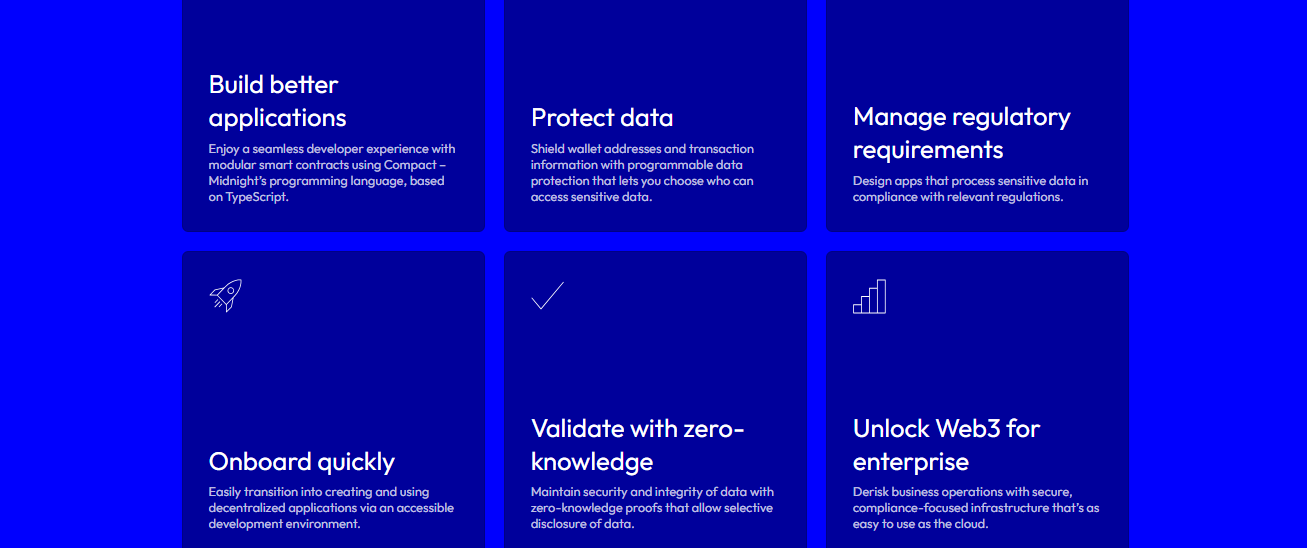
Midnight is a data-protection blockchain designed to improve security, compliance, and the developer experience. It aims to assist creators, businesses, inventors, and researchers in protecting their data and intellectual property. The project has a wide range of use cases, such as identity verification, decentralized credit storage, and improving AI and LLM technologies.
With a private smart contract stack already in place, Hoskinson plans to create a hybrid application model where developers from platforms like Ethereum, Solana, and Bitcoin can integrate identity and privacy features into their applications. Cardano is actively encouraging developers to participate in Midnight as the project moves forward.
Multi-Resource Consensus Could Shape Crypto’s Next Era
Hoskinson presented his solution to the crypto industry’s incentives problem by proposing an approach he called the “Glacier Drop.” Instead of relying on venture capital (VC) funding to create tokens, this model would provide a new way to distribute incentives within the ecosystem.
He also introduced the concept of a multi-resource consensus, which would allow different consensus protocols, such as proof of work and proof of stake, to coexist on the same blockchain. This integration would enable validators to maintain the blockchain’s state using multiple protocols simultaneously.
The IOHK CEO connected these ideas to the ongoing Midnight testnet project, which provides powerful data protection tools for developers across different blockchains. Midnight offers a user-friendly experience, with features like TypeScriptsupport, a plug-in for Microsoft VS Code, and the Midnight SDK, making it easier for developers to build secure applications.
Hoskinson believes that if these solutions are implemented, the fourth generation of blockchain could revolutionize industries like healthcare, supply chains, and finance by bringing them into the crypto space. His ultimate message was that if the millions involved in crypto worked together rather than competing, it could lead to unprecedented growth for the industry
“The Apollo mission had a million people work on it and those people are proud because the end result was that they got to go to the moon. We want to go to the moon and beyond in crypto. We have to start working with each other, and we do that by giving each other incentives to do so,” Hoskinson said.
Recommended Articles


