

DeFi Platform Delta Primes Loses $6 Million In Security Breach, Is North Korea Involved?

Source Newsbtc

Decentralized Finance (DeFi) platform Delta Primes suffered a security breach on Monday, affecting the protocol’s users. The attack took $6 million from the project’s pools and is under investigation. However, on-chain investigators suspect it could be linked to North Korean hackers and be part of a larger-scale scheme.

Hackers Drain $6 Million From DeFi Protocol

On Monday morning, cyber security platform Cyvers Alerts informed the community about the ongoing attack on DeFi borrowing protocol Delta Primes. The initial report revealed that Cyvers’ system had detected multiple suspicious transactions involving the project on the Arbitrum chain.

The transactions suggested the DeFi protocol’s team had lost the private key, initially losing $4.5 million from the DPUSDC, DPARB, and DPBTCb pools. The suspicious draining address immediately swapped the USDC for Ethereum (ETH).

In the next hour, Cyvers detailed that the attackers had seemingly changed the proxy, pointing to a malicious address. Other reports explained that “this malicious contract can inflate the deposited amount of the hacker on all pools.”

The attackers drained another $1.48 million from the pools before Delta Prime’s team regained control. Two hours after the initial reports, the DeFi platform addressed the incident.

Per the post, DeltaPrime Blue, on the Arbritum chain, was attacked and drained for $5.98 million. The team confirmed that the attack was due to a compromised private key, with the cause still being investigated.

Delta Prime’s team also assured users that DetalPrime Red, on Avalanche, was safe from this attack, detailing that the “implementation here is covered solely by multisigs and cold wallets (as it should be).”

Additionally, the post claimed that the risk was already contained, reassuring its community that the DeFi protocol’s insurance pool would cover potential losses:

The risk is contained, we’re working on asset-retrieval and the insurance pool will cover any potential losses where possible / necessary. Additionally, we’re looking into other ways to reduce user losses to a minimum.

Are North Korean Hackers Responsible?

Despite the quick response, some users expressed their concerns about the incident. When questioned about it, the team explained that there were no timelocks for DeltaPrime Blue:

This is exactly what timelocks are for. The switch from this hot & non-timelocked owner to a cold timelocked owner should have been done on Arbitrum like it was on Avalanche (and like other initial owners on Arbi)

One community member criticized the team for not having the same security measures on DeltaPrime Blue and Red, stating there was no excuse for the mistake. Moreover, on-chain sleuth ZachXBT suggested that the attack could be linked to a larger-scale problem.

A month ago, Zach assisted another team with another crypto hack. The investigation unveiled that over 25 projects within the space had unknowingly hired multiple IT workers from North Korea using fake identities as developers.

Today, the crypto detective revealed that the DeFi protocol was among the teams he alerted about the North Korean IT workers in August. He also noted that the method used for Delta Prime’s exploit was similar to the hack he originally assisted.

As of this writing, Delta Prime’s team has not addressed the possible link. However, it stated that they would focus on getting the funds back and that “the event isn’t over yet.”
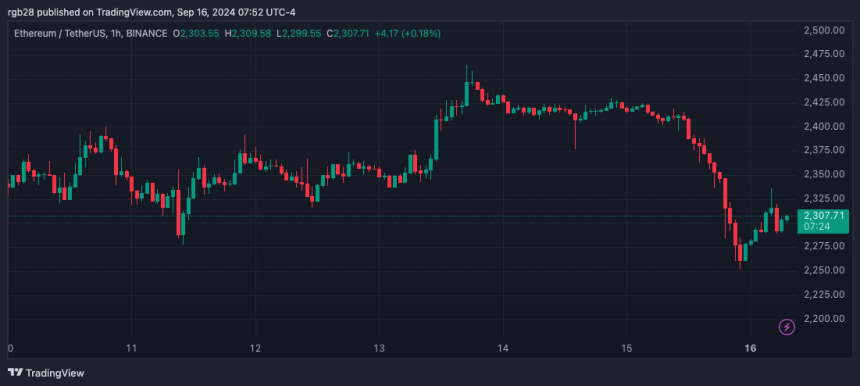
DeFi, ETH, Ethereum, ETHUSDT
Disclaimer: For information purposes only. Past performance is not indicative of future results.
placeholder
Big Tech's $800 billion AI bill faces its first real test — free cash flow is the judgeAlphabet and Microsoft report after the close on October 28, Amazon on October 29, with hyperscaler AI capex running near $800 billion a year. Meta's negative free cash flow and 9.40% drop on October 22 was the warning; this week's prints decide whether cloud growth and backlog can pay for the buildout. Here are the consensus numbers, the free-cash-flow table and the two-sided test.
Author  Irene Q.
Oct 26, Mon
Alphabet and Microsoft report after the close on October 28, Amazon on October 29, with hyperscaler AI capex running near $800 billion a year. Meta's negative free cash flow and 9.40% drop on October 22 was the warning; this week's prints decide whether cloud growth and backlog can pay for the buildout. Here are the consensus numbers, the free-cash-flow table and the two-sided test.
placeholder
Anthropic files for a $2 trillion IPO — the $80.7 billion loss is the decoy, the $450 billion compute bill is the riskAnthropic publicly filed its S-1 on October 26, revealing $16.29 billion of first-half revenue (+1,304% year over year) and a $80.7 billion net loss — of which $72.4 billion is a non-cash convertible-note charge. The real number is the $450 billion of signed, mostly non-cancelable compute commitments. Here is what the filing says, why NVDA, ARM and MU are the tradeable read-through, and the conditions that decide whether the AI trade passes its first public valuation test.
Author  Irene Q.
Oct 27, Tue
Anthropic publicly filed its S-1 on October 26, revealing $16.29 billion of first-half revenue (+1,304% year over year) and a $80.7 billion net loss — of which $72.4 billion is a non-cash convertible-note charge. The real number is the $450 billion of signed, mostly non-cancelable compute commitments. Here is what the filing says, why NVDA, ARM and MU are the tradeable read-through, and the conditions that decide whether the AI trade passes its first public valuation test.
placeholder
Fed October Rate Decision Preview: Rate Hike Pause Has Become Consensus, How Will US Stocks, Dollar, and Gold React?The Federal Reserve will announce its October interest rate decision at 14:00 Eastern Time on October 28, and Fed Chair Warsh will hold a press conference at 14:30. Markets currently wide
Author  TradingKey
Oct 27, Tue
The Federal Reserve will announce its October interest rate decision at 14:00 Eastern Time on October 28, and Fed Chair Warsh will hold a press conference at 14:30. Markets currently wide
placeholder
Bitcoin is back above $80,000 — but 75% of the bounce was shorts, not buyersBitcoin trades at $80,669, back above the $80,000 line after touching $79,145 on October 24. But 75.4% of the last 24 hours of futures liquidations were shorts, CME open interest fell 36,545 BTC in October, and spot ETFs lost $773.5 million on October 22-23. Price is up; positioning is down. Here is why the bounce is a squeeze, and the four things that would make it real.
Author  Suzie
Yesterday 05: 54
Bitcoin trades at $80,669, back above the $80,000 line after touching $79,145 on October 24. But 75.4% of the last 24 hours of futures liquidations were shorts, CME open interest fell 36,545 BTC in October, and spot ETFs lost $773.5 million on October 22-23. Price is up; positioning is down. Here is why the bounce is a squeeze, and the four things that would make it real.
placeholder
Brent's $115 front month sits $4.6 above January — the $14 spread to WTI is the supply-risk premiumDecember Brent trades at $115.29 while January is $110.71, a $4.58 backwardation. The December Brent-WTI spread is $14.2, versus a $3-5 normal. That gap, not the headline, is where the Middle East supply risk is priced. Here is what the curve says, why the December contract's expiry on October 30 will mechanically cut the headline by $4.6, and the 108.81 neckline that decides the next move.
Author  Irene Q.
23 hours ago
December Brent trades at $115.29 while January is $110.71, a $4.58 backwardation. The December Brent-WTI spread is $14.2, versus a $3-5 normal. That gap, not the headline, is where the Middle East supply risk is priced. Here is what the curve says, why the December contract's expiry on October 30 will mechanically cut the headline by $4.6, and the 108.81 neckline that decides the next move.
goTop
quote