


Movement: Multi-Chain Layer 2 Targets Korea
Movement Labs is a startup project that raised $38 million in Series A funding earlier this year and its Layer 2 blockchain called Movement has recently gained global attention.
The two founders, Rushi Manche and Cooper Scanlon used to be the students of Vanderbilt University. They first met in college, where they recognized each other’s fascination with blockchain technology and quickly bonded, dreaming of building a business together, which led them to drop out of college in 2022 and found the company.
Even though the mainnet hasn’t launched yet, Movement is attracting market interest for three main reasons:
First, they use the Move, which is a programming language developed by Meta (formerly Facebook) when they were still in the blockchain business. Meta abandoned its blockchain business due to regulatory issues, and former employees from related departments created Aptos and Sui.
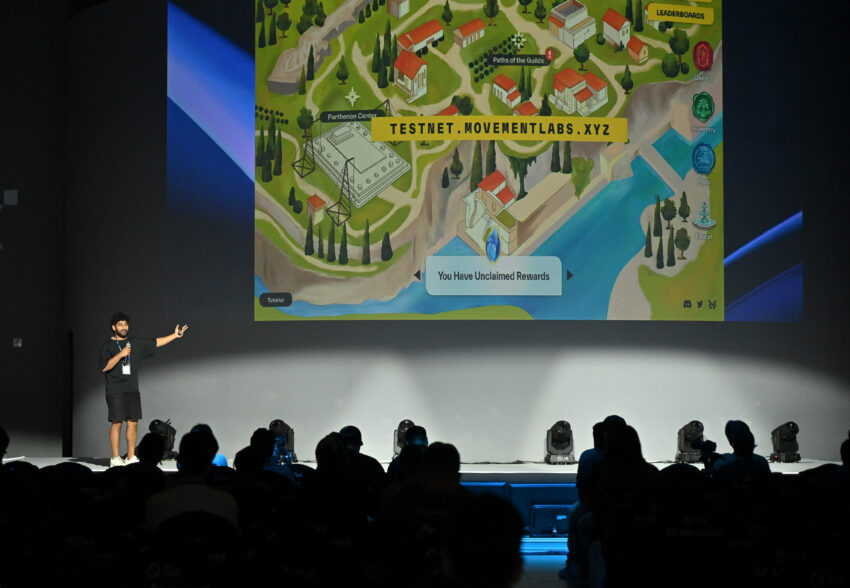 Movement Labs co-founder Rushi Manche at Korea Blockchain Week. Source:Korea Blockchain Week
The second reason is that they belong to the “Layer 2” sector, which was highly popular in the crypto industry from last year to early this year. Layer 2 is widely used to maintain Ethereum’s security while lowering transaction costs. It has advantages in attracting initial users or selling tokens due to high investor interest.
The final reason is that they aim to be a “multi-chain” Layer 2 that can transfer assets across multiple blockchains. The Ethereum Layer 2 market is already quite saturated, but there hasn’t been a notable success case for a multi-chain project, which is a relatively unexplored area in the market.
The team has already made significant progress in technology development. They launched a public testnet in late July, and in recent tests, they recorded a maximum of 12,000 transactions per second. Currently, the Layer 2 with the highest TPS on Ethereum is Polygon at about 190 TPS.
Both founders sat with BeInCrypto in a recent interview and said that multiple financial institutions have shown interest to their project.
Q. What area will Movement specialize in as a Layer 2?
We plan to focus on absorbing stablecoin demand. It’s an area with high market demand, and if transactions can be made much faster using Layer 2, we think there will be more users. We’re also very interested in the gaming sector. In particular, we want to try onboarding users to gaming on mobile devices.
Q. What advantages does Movement have compared to other Layer 2s?
It’s fast, has overwhelming performance, and is efficient in responding to hacking.
Q. Many Ethereum Layer 2s have been introduced, but they often fail to maintain impressive results after the initial hype. How does Movement plan to address this issue?
That’s right. The Layer 2s that have come out so far haven’t significantly improved the user experience of Ethereum. Speed and transaction processing volume are basics, but they weren’t supported, and they didn’t drive substantially more usage. We believe we’ll get different results because we’ve solved these problems.
Read more: Aptos Crypto (APT): A Guide to What it Is and How it Works
Q. The U.S. presidential election has sparked a debate about blockchain/crypto industry policy. As Meta’s example showed, the regulatory environment has a lot to do with the crypto industry.
Among the discussions around the world about crypto, the most important thing is policy. In the U.S., government support has a huge impact on project growth. It’s important to have clear regulations in place, as it determines the direction of token launches and project foundations. It’s also necessary for the government to provide a single set of guidelines in case of disputes between stakeholders in the process of using the app.
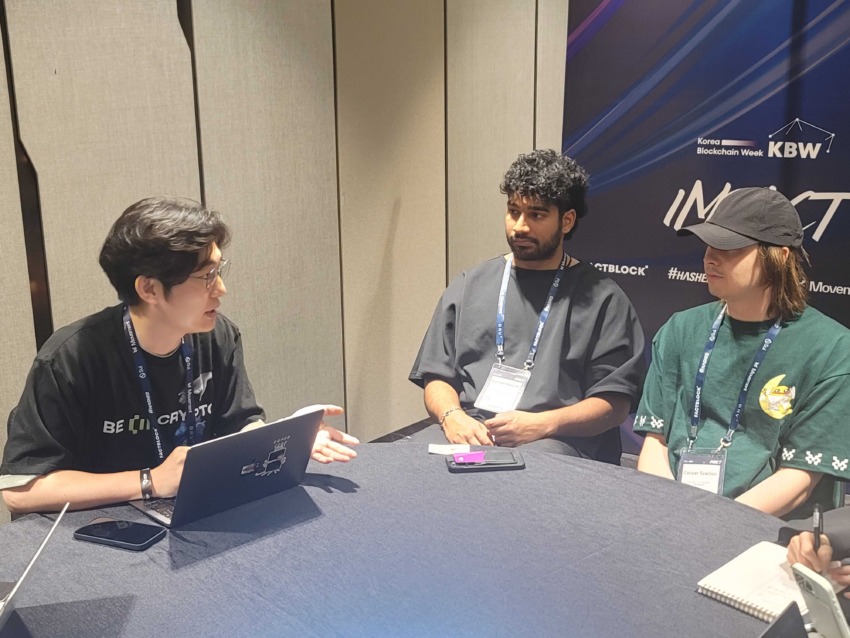 Movement Labs co-founders sat with BeInCrypto for an interview
Q. You seem to be showing a lot of interest in the Asian market. Tell us about the direction of your global business.
We are very community-centered, with more than 20 developer communities around the world, including in Asia, such as Vietnam and Thailand. We’re looking to activate them in other countries as well.
We are focusing on emerging markets because they have a high growth rate. We want to give users from different chains the opportunity to cross over to emerging markets. Our vision is to have a global community, where experts learn new languages, and they bring users from all over the world.”
Q. Movement Labs is the Official Conference Partner of this year’s Korea Blockchain Week. This was not the case for conferences elsewhere in Asia around the same time, are you particularly interested in Korea?
Looking at the success of Aptos (APT) and Sui (SUI), Korea seems to be a country where the Movement ecosystem can settle well. The consumer ecosystem seems to be a strength. Most Move projects have done well in Korea so far. That’s why we became an official partner of KBW this time. Korean investors seem to be very interested in apps using the Move language.
We are actively collaborating with Korean game companies, we are discussing with one or two teams, and we’re talking with one company about mobile apps. Regarding mobile apps, we’re very interested in how to implement an environment where Gen Z can be onboard.
Recommended Articles


