


Iran Claims Strong Oil Cards Ahead of Peak Gasoline Demand Season in the US
Iran’s parliament speaker pushed back at U.S. claims of energy leverage on Sunday, arguing Tehran still holds unplayed supply cards as Strait of Hormuz oil exports remain 95% below normal flows.
Mohammad Bagher Ghalibaf framed the standoff as a poker game of supply versus demand levers, taunting Washington that U.S. summer gasoline demand will amplify the price pain at home.
Ghalibaf Counters U.S. Bragging With Card-Counting Math
Ghalibaf is a hardliner and former Revolutionary Guards commander who often addresses global traders. His latest message answers Washington officials boasting about superior energy leverage.
He laid out a balance sheet equating supply cards with demand cards. Iran’s side covers the Strait of Hormuz, Bab el-Mandeb, and regional pipelines.
He marked Hormuz as partly played, while Bab el-Mandeb and pipelines remain unused. The U.S. side already deployed Strategic Petroleum Reserve releases and absorbed some demand destruction.
However, his sarcastic closer warned Americans will not cancel summer vacations, so the bill will land at the gas pump.
“Add summer vacation to the right unless they want to cancel it for the US!”
Per Ghalibaf, the punchline targets U.S. peak driving demand from May through September.
Goldman Sachs Confirms Historic Supply Shock
Goldman Sachs data showing the depth of the disruption. Total oil exports through Hormuz have collapsed roughly 95% from normal flows near 20 million barrels per day.
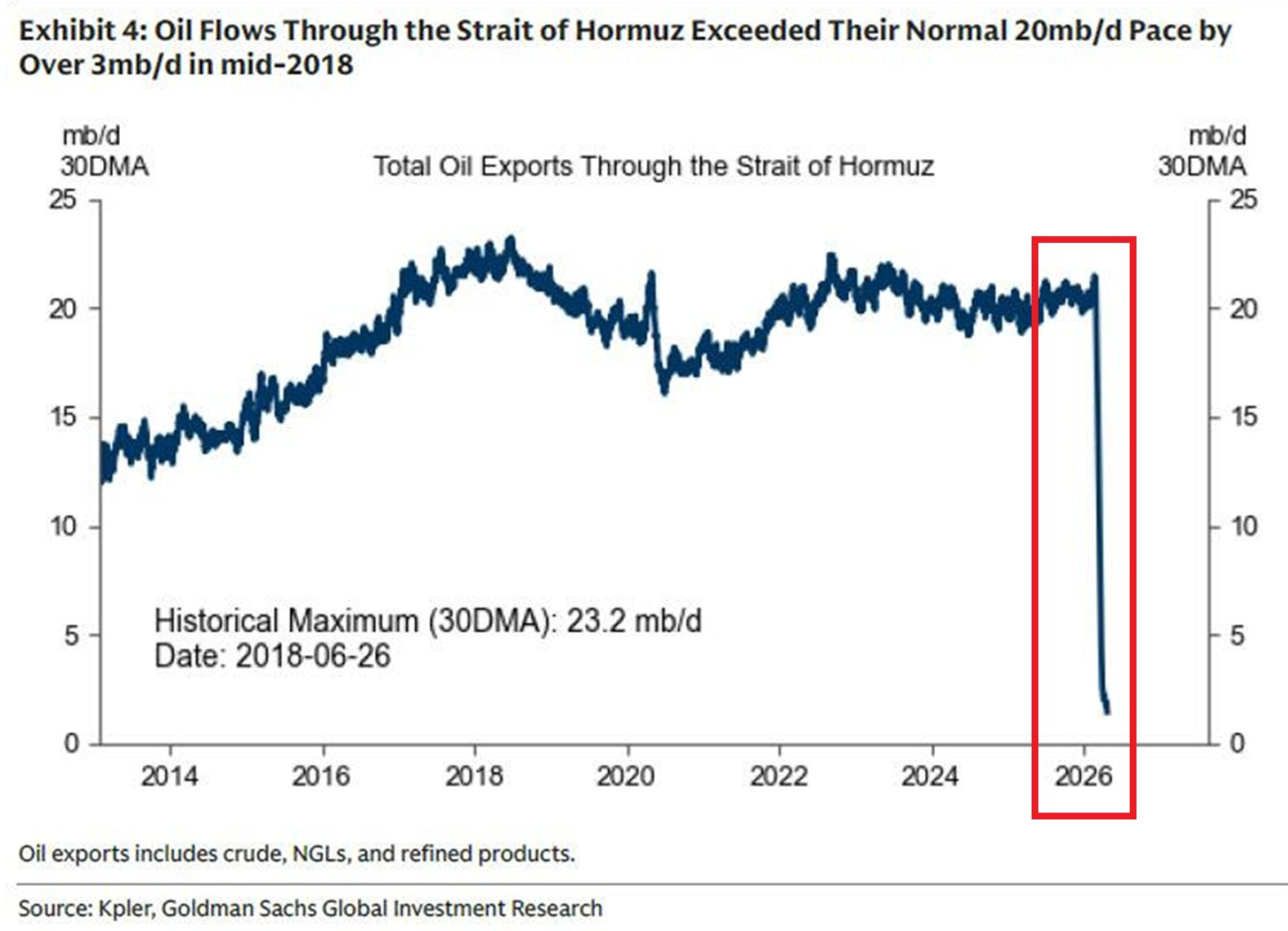 Total oil exports through Hormuz. Source: Global Markets Investor on X
Gulf crude production has fallen by about 14.5 million barrels per day, or 57% versus pre-war levels. Available empty tanker capacity in the region is down by half, equal to about 130 million barrels of slack.
However, Goldman analysts caution that recovery hinges on pipeline capacity, available tankers, and well flow rates.
They estimate only 70% of lost supply returns within three months of any reopening, and 88% within six months.
Extended shut-ins risk reservoir damage, raising the chance that full restoration takes several quarters.
Trump Pitches U.S. Crude as Pain Drags Into Summer
Meanwhile, President Donald Trump has rejected the idea that Washington lacks leverage. He argues the U.S. produces more oil than Russia and Saudi Arabia combined and rarely imports through Hormuz.
Trump has urged China and European buyers to redirect orders to American producers. He has also told U.K. allies to drill in the North Sea, while defending his “Drill, Baby, Drill” agenda.
In contrast to past crises, he has warned voters that pump prices may stay elevated and could rise before the November midterms.
That message lines up with Ghalibaf’s taunt about peak gasoline season. Brent crude continues trading near $100 per barrel, with markets sensitive to any further escalation or inflation pass-through.
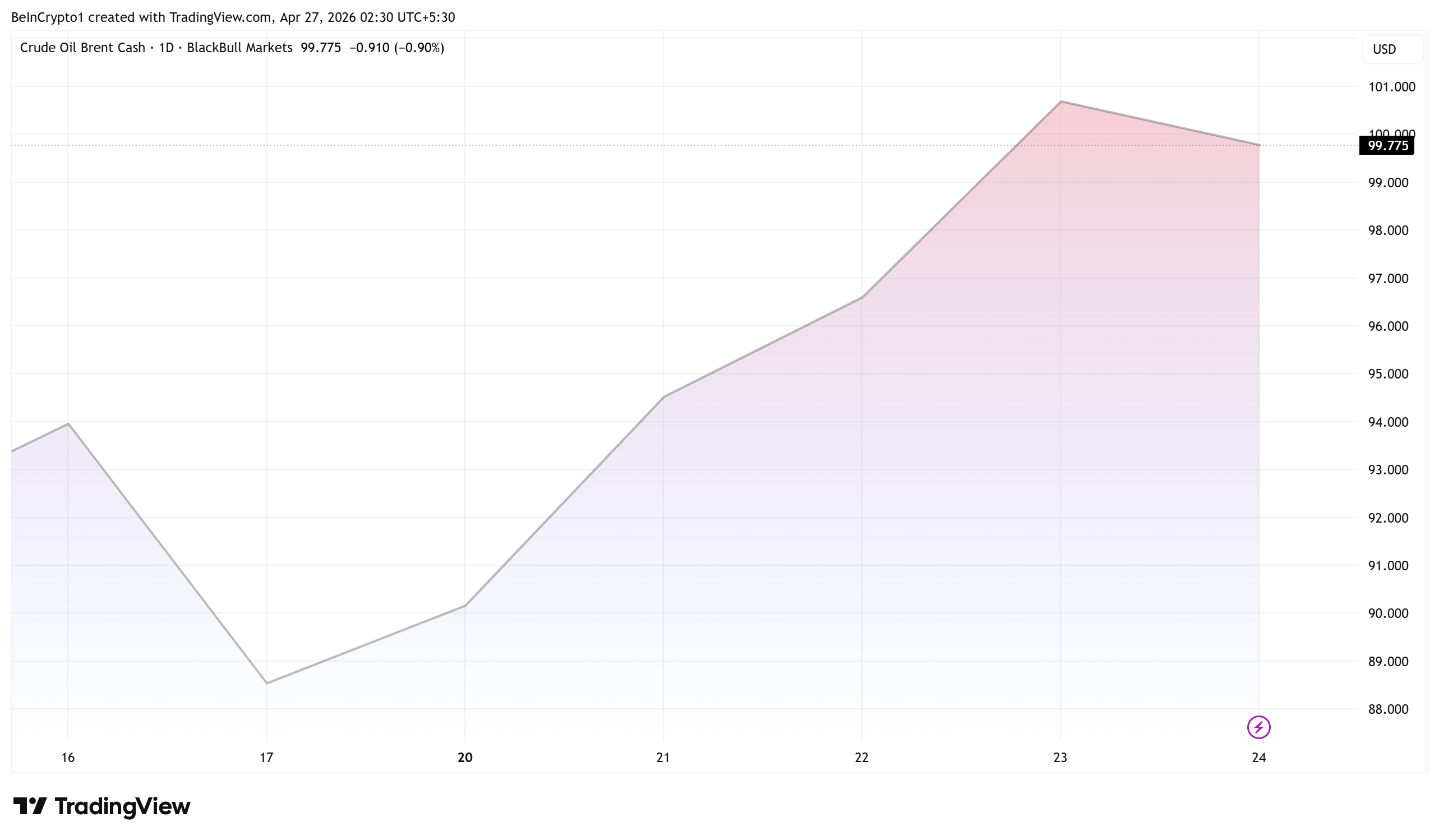 Brent Crude Oil Price Performance. Source: TradingView
Tehran’s signal lands as physical supply realities harden. Whether Iran activates its remaining cards or keeps them in reserve will shape U.S. driving season prices in the weeks ahead.
Subscribe to our YouTube channel to watch leaders and journalists provide expert insights
Recommended Articles


