


Binance Strikes Back: Why It Is Taking The Wall Street Journal To Court
Binance has filed a defamation lawsuit against The Wall Street Journal (WSJ) over a “false and defamatory” article.
Why Binance Filed
Following a WSJ reporting published on February 23, Binance has announced on a blog post today that they have filed a lawsuit against them, claiming that the article contained “false and defamatory statements”. The complaint seeks “vindication” of Binance’s reputation and “accountability for the harm those statements have caused”, citing amongst these consequences “baseless and unnecessary inquiries into the company” by government officials, referring to Senator Richard Blumenthal (D-CT).
Dugan Bliss, Binance’s Global Head of Litigation, assured in the blog post that Binance takes “immense pride” in their compliance program, reflected by the trust that more than 300 million users worldwide continue to place in the company. As stated by Bliss:
We view this lawsuit as a necessary step to defend ourselves against misinformation, hold The Wall Street Journal accountable for prioritizing clicks over journalistic integrity, and address the significant reputational harm and business consequences that have resulted.
Binance’s lawyers (Withers Bergman / Withersworldwide) sent a formal letter demanding immediate corrections, a full retraction, and removal of the WSJ piece. This clash follows Binance’s 2023 4.3 billion dollar U.S. settlement and guilty plea over anti‑money‑laundering and sanctions violations, still shaping the exchange’s monitorship today, which WSJ reportedly used as context to suggest ongoing compliance weaknesses.
NEW: Just as the @WSJ reports the DOJ has begun investigating Iran’s use of @binance to evade sanctions, Binance has filed a defamation lawsuit against the publication in the Southern District of New York.
Binance is seeking damages and legal fees and is demanding a jury… pic.twitter.com/XxjE8oxH1I
— Eleanor Terrett (@EleanorTerrett) March 11, 2026
Inside The WSJ “Defamatory” Article
The 23th February WSJ article accused of being “seriously misleading” by Binance reported that Binance investigators identified around $1 billion in crypto moving through the exchange to a network tied to Iranian entities and groups under U.S. sanctions. WSJ claimed that internal investigators uncovered large transfers from Binance clients to Iran‑linked groups (including Houthi‑aligned entities) in 2024–2025 and that some staff who pushed the issue were sidelined or removed, as covered by an article on our sister’s website Bitcoinist.
“Measurable Results”Binance argues that WSJ ignored extensive rebuttals and cherry‑picked ex‑employee claims, pointing to “measurable improvement over time” based on internal data, such as a 97%+ reduction in exposure to sanctioned entities and expanded sanctions screening after the 2023 settlement or their support on the freezing and recovery of hundreds of million of dollars linked to illicit activity in 2025. They clarified that while the way public blockchains work means the risk cannot be reduced to zero, they are responsible in monitoring possible illegal activity:
As we have noted before, public blockchains allow any party to send assets to an exchange deposit address without the exchange’s prior approval. That reality means risk cannot be reduced to absolute zero on any blockchain platform. Responsible operators focus on detection, investigation, mitigation, offboarding, and reporting, backed by ongoing monitoring and continuous improvement.
What This Case Means For Crypto
Reputational and legal risk could still shape Binance’s access to banking partners and certain jurisdictions, which in turn can affect liquidity, listing confidence, and perceived counterparty risk. The case may also influence how aggressively big media outlets cover crypto compliance going forward: if Binance wins or forces corrections, other projects might be quicker to push back on critical narratives, but if WSJ prevails, expect even sharper investigative focus on exchanges’ sanctions controls.
Following Binance’s today’s blog post announcing the lawsuit, WSJ took down another report published today claiming the Department of Justice is investigating Iran’s use of Binance to evade sanctions.
Department of Justice is investigating Iran’s use of Binance to evade sanctions. pic.twitter.com/zc03U1J5rs
— Ted (@TedPillows) March 11, 2026
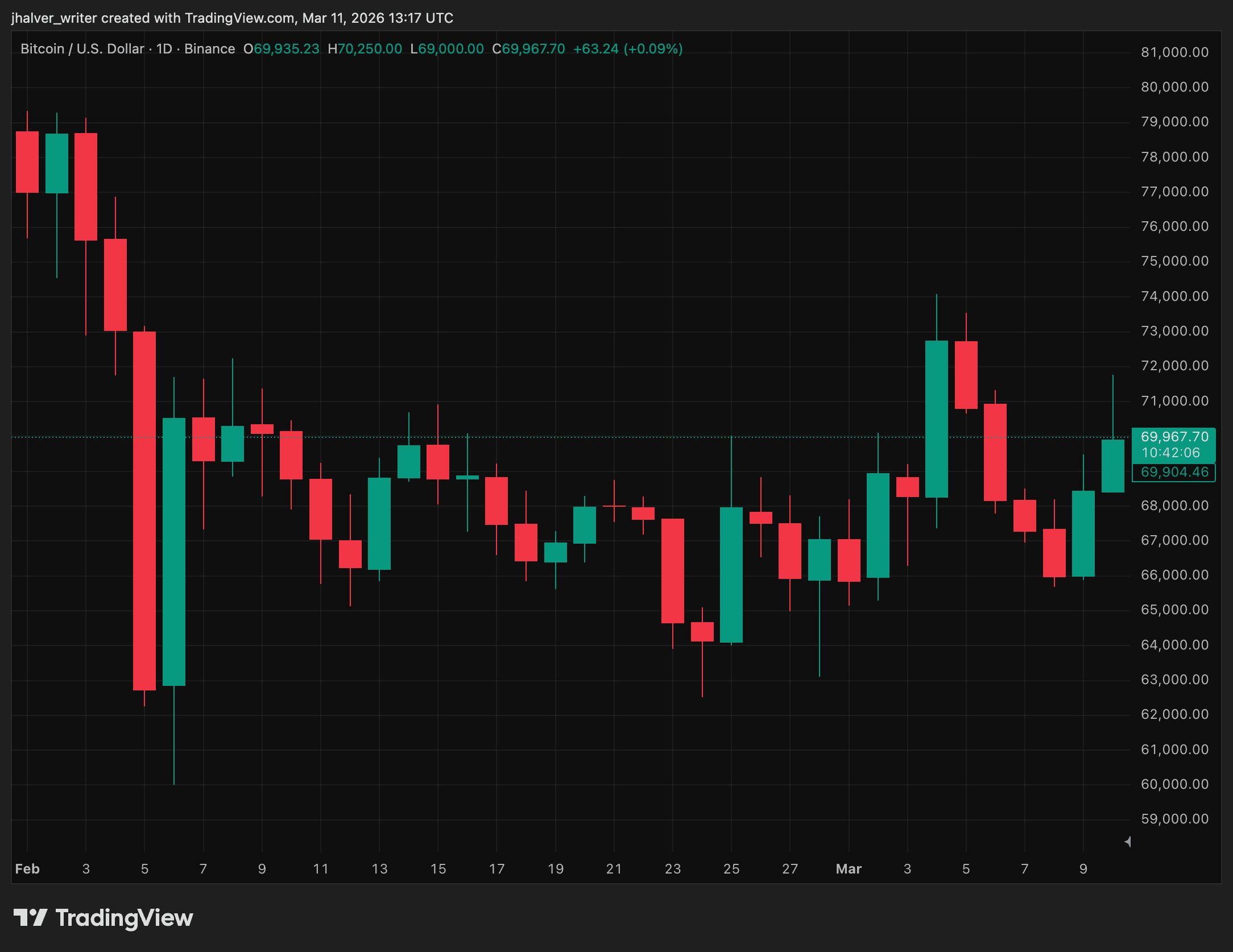
Cover image from Perplexity, BTCUSD chart from Tradingview
Recommended Articles


