


Fed chair Jerome Powell has been in touch with the White House many times

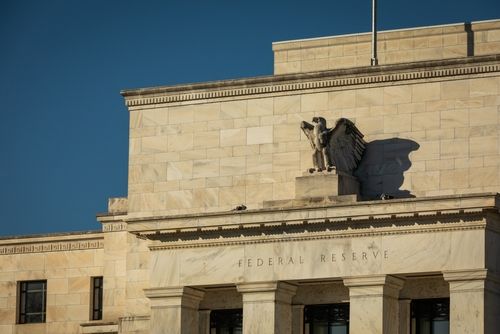
Mr. President Donald Trump is the most unpredictable person on the planet. Turns out, Jerome Powell has been in direct and frequent talks with the White House, despite the president’s very public dislike of him.
Kevin Hassett, Trump’s top economic adviser and the director of the National Economic Council, confirmed the regular discussions, saying they were meant to exchange views on the US economy while keeping the Fed’s independence intact.
“Jay’s an independent person, the Fed’s independence is respected,” Hassett said on CBS’s Face the Nation on Sunday. “The point is the president’s opinion can also be heard. He’s the president of the United States.”
Trump does not like Powell, and he has made sure everyone knows, as he tends to. During the 2024 presidential campaign, Trump raged against Powell, saying he should be fired and replaced with someone who would do what the Oval wanted.
Powell stood his ground in his typical classy fashion, and even said he would sue if Trump ever tried to remove him illegally. The White House meetings may be labeled as friendly economic discussions, but Powell knows that if Trump doesn’t get what he wants, he won’t hesitate to turn on him again.
Trump’s White House revives direct Fed talks
“I have arranged to begin, once again, regular lunches with Jay Powell at the Federal Reserve,” Hassett said in his interview. “Jay and I have a long and collegial relationship, and I’m going to go over there with him and the other governors. So we’re going to talk about our views about what’s going on, and listen to his.”
Inflation has been a major problem for both Trump and Powell. The Consumer Price Index (CPI) showed a 4.6% rise over the last three months, way above the Fed’s 2% target. Prices are still high for food, gas, and everyday essentials.
Eggs, in particular, have been a disaster. “I just went to the grocery store,” Hassett said. “I shop for our family, in part because I love to look at prices. And there were no eggs at the store yesterday, just a few.”
“We saw the consumer price index come out, and we found out that the stagflation that was created by the policies of President Biden was way worse than we thought,” Hassett said. He pointed out that economists from Biden’s own team, including Jason Furman and Larry Summers, had warned that too much government spending would trigger massive inflation.
Now, Trump’s team is working on a multi-layered plan to fix the problem. Hassett said the administration is focused on supply-side tax cuts to increase production, spending reductions through the Department of Government Expenditure (DOGE) and congressional action, more energy production and massive deregulation, as well as industry-specific policies.
Moreover, the bird flu outbreak has wiped out millions of chickens, leading to record-high egg prices. Hassett blamed Biden’s response, saying his administration’s solution was simply to kill chickens without a proper containment strategy.
“Biden didn’t really have a plan for avian flu,” Hassett said. “They spent billions of dollars just randomly killing chickens within a perimeter where they found a sick chicken.”
The Trump administration is now finalizing a new plan that will focus on biosecurity and medication rather than mass slaughter. Hassett explained that the spread is mostly coming from ducks and geese, not chickens. “So why does it make sense to kill all the chickens when the ducks and geese are spreading the disease?” he said.
Trump wants lower interest rates, Fed remains firm
Trump publicly called for lower interest rates, arguing that high rates are hurting consumers. “Interest rates need to come down,” he keeps saying via his posts on Truth Social. “We have inflation under control.”
But the Federal Reserve does not seem ready to cut rates anytime soon. Powell has said many times before that rates will remain high until inflation fully stabilizes.
Hassett, however, defended Trump’s position. He pointed out that market interest rates are already going down. “The 10-year Treasury yield has dropped about 40 basis points in recent weeks,” he said. “That’s saving the American people about $40 billion just from us talking about what we’re about to do.”
Trade is also back in focus. Trump wants to reintroduce reciprocal tariffs on countries that have Value-Added Taxes (VATs), including European nations and China.
“Right now, US companies are paying $370 billion in taxes to foreign governments,” Hassett said. “Meanwhile, foreign companies are paying the US government only $57 billion.”
The White House is now negotiating with foreign leaders, including the UK’s Minister Reynolds, to fix this trade imbalance. The goal is to recover $5 trillion over the next 10 years, which Trump’s team says will fund tax cuts and boost the economy.
“We’re talking to leaders of other countries all the time,” Hassett said. “Last night into the wee hours, I was talking to Minister Reynolds from the UK about this very matter.”
Read more
* The content presented above, whether from a third party or not, is considered as general advice only. This article should not be construed as containing investment advice, investment recommendations, an offer of or solicitation for any transactions in financial instruments.


