




Mining Companies Australia 2026: 10 Best Australian Mining Stocks to Watch
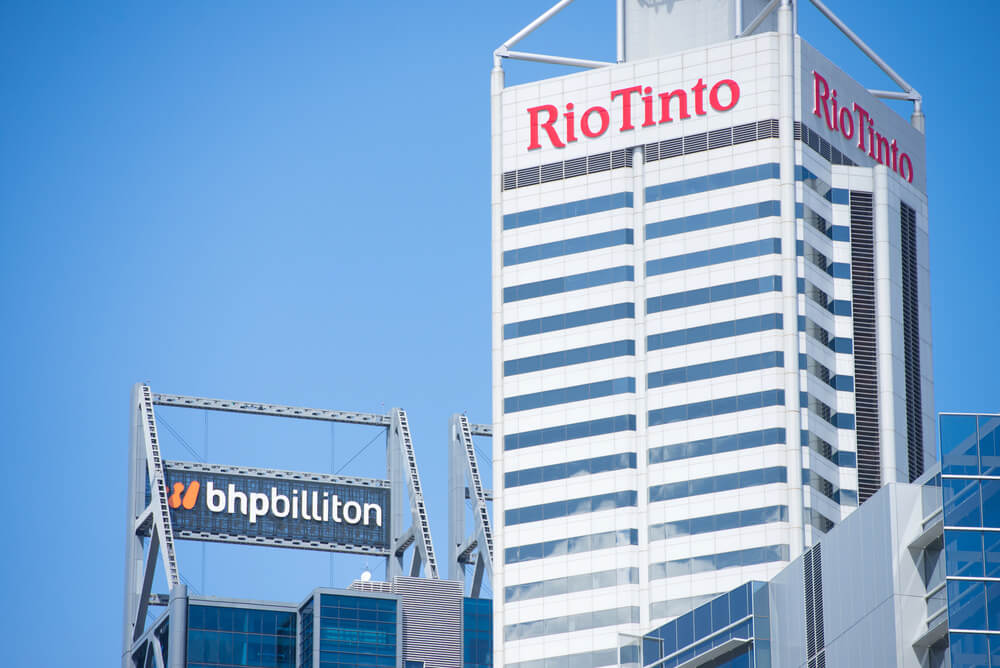
The mining sector in Australia is an undeniable backbone to the economy, accounting for over 10% of its gross domestic product (GDP) and more than half of its exports.
The current “electrification” trend has benefited this sector lately, prompting top companies to invest heavily in exploration. In addition, these titans continue to deploy heavy resources into their well-established operations as global demand for minerals continues to rise.
For investors focusing on fundamentals and growth projections, analyzing Australian mining stocks requires a lot of attention to detail and knowledge about the minerals market to spot attractive opportunities. Leadership in this sector is defined by balance sheet strength, reserve life, and cost efficiency.
The vast range of alternatives within the Australian Stock Exchange (ASX) gives investors an ample range of choices, depending on whether they are looking for stable income-generating opportunities or capital gains.
In this guide, we provide a profile of the 10 best Australian mining stocks to watch in 2026 based on a handful of relevant financial and operational metrics. The goal is to help investors short-list their candidates in this sector and spot attractive opportunities.
Overview of the Australian Mining Industry
The Australian mining industry exports routinely near the $400 billion mark, driven by low-cost production, vast mineral reserves, and strong proximity to primary Asian trade hubs.
The market is segmented into three top categories:
Bulk Commodities: Iron ore primarily, exceeding $100 billion in exports per year.
Safe-Haven Assets: Gold, with exports ranging between $60 and $80 billion per year.
Critical Transition: Copper, lithium, and other minerals, contributing over $30 billion in exports to the country every year.
Operationally, the mining sector is dominated by low-cost tier-1 producers like BHP, Rio Tinto, and Fortescue, which maintain robust balance sheets and offer strong free-cash-flow yields.
While the sector tends to suffer from the cyclical nature of commodity prices and rising geopolitical tensions, Australia’s regulatory stability has helped it maintain its position as a top regional supplier for these critical resources.
Mining Companies Australia at a Glance
| Company | ASX | Main Commodity | Best Known For |
|---|---|---|---|
| BHP | BHP | Iron Ore, Copper | Diversified mining |
| Rio Tinto | RIO | Iron Ore, Copper | Global resources |
| Fortescue | FMG | Iron Ore | Iron ore exposure |
| Northern Star | NST | Gold | Gold mining |
| Evolution Mining | EVN | Gold, Copper | Gold & copper |
| South32 | S32 | Aluminium, Copper, Zinc | Diversification |
| BlueScope Steel | BSL | Steel, Coated Products | Materials producer |
| Lynas Rare Earths | LYC | Rare Earths | Non-China supply |
| PLS Group | PLS | Lithium | Lithium exposure |
| James Hardie | JHX | Fiber Cement Siding | Global fiber cement leader |
10 Best Mining Companies in Australia
1. BHP Group Limited (ASX: BHP)
BHP is Australia's largest diversified miner. It specializes in world-class tier-1 operations across copper, iron ore (WAIO), and coal. The company has increasingly prioritized copper growth to capitalize on global decarbonization trends.
Key Operational & Financial Details:
Operational Scale: Global leader in copper production (~1,950 kt annual capacity).
EBITDA Margin: BHP boasts a 56% Underlying EBITDA margin.
Balance Sheet: Highly conservative leverage ratios with net debt under US$9B (Net Debt/EBITDA ~0.3x).
Dividend Profile: Strong shareholder returns supported by a minimum 50% payout policy.
Investment Thesis: BHP offers the stability of a blue-chip stock along with an attractive dividend yield. In addition, it could deliver attractive long-term gains through its expanding tier-1 copper pipeline.
Key Risks: Its biggest risks include exposure to iron ore price fluctuations and Chinese industrial demand cycles.
2. Rio Tinto (ASX: RIO)
Rio Tinto is a global leader in bulk commodities, aluminum, bauxite, and critical materials. It is known for its low-cost iron ore footprint in the Pilbara mines. The company is expanding aggressively into battery metals, copper (Oyu Tolgoi), and high-grade iron ore developments.
Key Operational & Financial Details:
Cost Position: Rio Tinto boasts one of the industry's lowest C1 iron ore cost structures, generating billions in free cash flows every year.
Capital Discipline: Strong return on capital employed (ROCE) paired with conservative debt metrics.
Dividend Profile: The company supports a dividend payout ratio of 60% that delivers a reliable stream of income to shareholders.
Investment Thesis: Low production cost margins ensure cash flow resilience across the economic cycle, while copper and lithium projects provide long-term structural growth.
Key Risks: Execution risks on major expansion projects, as these are subject to regulatory approval timelines.
3. Fortescue Ltd (ASX: FMG)
Fortescue is a pure-play iron ore giant based in Western Australia that is simultaneously advancing green energy and decarbonization technology initiatives worldwide.
Key Operational & Financial Details:
Operational Efficiency: Its high-volume iron ore mine in the Pilbara operates quite efficiently in terms of costs.
Product Mix: Increasing proportion of higher-grade iron ore via the Iron Bridge magnetite operation.
Capital Allocation: Fortescue balances iron ore cash returns with ongoing investments in zero-emission technology.
Investment Thesis: This firm offers a high dividend yield of around 6%, exposure to growth coming from renewable sources of energy, and direct exposure to iron ore price swings.
Key Risks: Narrow commodity diversification, which makes earnings sensitive to volatility in the price of iron ore.
4. Northern Star Resources Limited (ASX: NST)
Northern Star is a tier-1 Australian gold producer with flagship operational hubs in Kalgoorlie (Super Pit), Yandal, and Pogo (Alaska).
Key Operational & Financial Details:
Production Volume: Northern Star is on track to hit 2.0 million ounces of annual gold production.
Robust Top-Line Growth: Revenues grew by 19% during the last fiscal year while net profits after taxes surged by 24%.
Balance Sheet: Strong net cash position nearly matching total borrowings, along with decent free cash flow levels to finance expansion opportunities.
Investment Thesis: Northern Star is a safe-haven asset play positioned to benefit directly from rising gold prices.
Key Risks: Mining cost inflation (labor & energy) and grade variability in underground mining blocks.
5. Evolution Mining Limited (ASX: EVN)
Evolution Mining operates a diversified portfolio of low-cost gold and copper mines across Australia and Canada, including Cowal, Ernest Henry, and Red Lake.
Key Operational & Financial Details:
By-Product Benefit: Significant copper by-products typically reduce Evolution’s All-In Sustaining Costs (AISC) per ounce.
Asset Longevity: Reported reserve lives exceed 10+ years across core operating sites.
Capital Management: Steady and sustainable dividend distributions funded directly with underlying operational cash flows.
Investment Thesis: Hybrid gold-copper exposure provides double benefit from safe-haven demand and growing electrification trend.
Key Risks: Turnaround timelines and operational execution at international assets (e.g., Red Lake).
6. South32 Limited (ASX: S32)
South32 is a globally diversified mining company spun out from BHP. It focuses primarily on base metals and transition minerals such as aluminum, zinc, lead, silver, and nickel.
Key Operational & Financial Details:
Commodity Footprint: South32’s diversified portfolio of minerals minimizes its reliance on a single market segment.
Portfolio Restructuring: The firm continues to allocate significant capital toward high-margin base metals (e.g., the Hermosa project).
Capital Returns: Positive track record of share buybacks and dividend distributions.
Investment Thesis: Its broad exposure to different metals results in a more resilient business model that can withstand economic cycles.
Key Risks: South32’s complex multi-asset operation exposes its earnings to a wide variety of supply chain risks.
7. PLS Group Limited (ASX: PLS)
PLS Group (formerly Pilbara Minerals) operates the Pilgangoora hard-rock lithium mine in Western Australia, which is one of the largest independent spodumene concentrate deposits globally.
Key Operational & Financial Details:
Cost Structure: Its tier-1 unit operating costs place Pilgangoora near the bottom of the global lithium cost curve.
Balance Sheet: PLS boasts robust cash reserves built to weather severe commodity price downturns. Its cash holdings increased from $974M to $2.29B during the last fiscal year.
Downstream Expansion: The firm’s strategic joint venture with POSCO in South Korea, focused on lithium hydroxide conversion capacity, reflects PLS’s ongoing commitment to growing its footprint in this market.
Investment Thesis: PLS is a premier low-cost lithium play. It is favorably positioned to benefit from the steady growth in the demand for EV batteries in the long term.
Key Risks: Lithium price cycles and rapid shifts in battery chemistry technology.
8. Lynas Rare Earths Limited (ASX: LYC)
Lynas is the world's largest producer of rare earth metals outside of China, operating the high-grade Mt Weld mine in WA and downstream processing infrastructure in Malaysia and Kalgoorlie.
Key Operational & Financial Details:
Strategic Position: Lynas is a supplier of Neodymium-Praseodymium (NdPr), used in permanent magnets for EVs, wind turbines, and defense technology.
Processing Footprint: This firm boasts advanced downstream cracked and leached chemical processing capabilities.
Financial Health: Lynas has a debt-free balance sheet and a healthy cash buffer exceeding $1.2 billion.
Investment Thesis: Rare earth minerals are strategic assets that enjoy massive geopolitical protections. This allows Lynas to benefit from Western supply chain diversification mandates.
Key Risks: Regulatory and environmental licensing across international processing hubs.
9. BlueScope Steel Limited (ASX: BSL)
While BlueScope is primarily a steelmaker and flat steel product manufacturer rather than a raw miner, it is a well-known materials producer within the ASX. It manages multiple operations across Australia, New Zealand, and North America (North Star).
Key Operational & Financial Details:
Margin Dynamics: BlueScope depends much less on commodity extraction prices, making its financial performance less susceptible to price swings.
Strong Free Cash Flows: Its strong organic FCF yield supports continuous on-market share buybacks.
Decarbonization Roadmap: BlueScope is investing heavily in electric arc furnace (EAF) technologies.
Investment Thesis: BlueScope is a highly disciplined capital allocator benefiting from rising building/infrastructure demand in Australia and North America.
Key Risks: Fluctuations in spread margins between scrap/iron ore inputs and finished steel output prices.
10. James Hardie Industries plc (ASX: JHX)
James Hardie Industries is a global leader in fiber cement and high-performance building solutions. While JHX is also classified under materials and building products rather than raw extraction mining, the company is a key industrial anchor on the ASX, converting minerals and raw materials into value-added residential and commercial construction inputs.
Key Operational & Financial Details
Market Position: Dominant North American market share in fiber cement exterior siding (HardiePlank, HardiePanel), generating ~80% of the group’s total earnings.
Margin Resilience: High structural EBIT margins (28% to 30% in North American operations) supported by strong pricing power and category creation from traditional vinyl/wood alternatives.
Growth Driver: Expansion into outdoor living and composite materials, alongside ongoing conversion of US home siding demand from traditional materials to fiber cement.
Capital Allocation: Strong organic free cash flows that are used for strategic acquisitions, expanding production capacity, and funding an active share buyback program.
Investment Thesis: High-margin industrial market leader benefiting from long-term structural demand in US residential repair & remodel (R&R) activity and new home construction.
Key Risks: Sensitivity to US housing market cycles, mortgage interest rates, consumer spending slowdowns, and raw material input cost inflation (e.g., pulp, cement, freight).
“Trade Mining Stocks with an ASIC-regulated broker. Fast AUD funding via PayID. ”
Largest Mining Companies in Australia
| Company Name | Ticker | Market Cap | Revenues (2025) |
|---|---|---|---|
| BHP Group Limited | BHP | $322.5 billion | $58.8 billion |
| Rio Tinto | RIO | $64.9 billion | $57.6 billion |
| Fortescue Ltd | FMG | $52.9 billion | $17.0 billion |
| Northern Star Resources | NST | $32.1 billion | $7.6 billion |
Source: Annual reports
How to Trade Mining Stocks in Australia
Users can easily trade Australian mining stocks on Mitrade. The platform provides access to major ASX-listed shares via Contracts for Difference (CFDs) with zero commissions and competitive spreads. Below is a simple step-by-step guide to register and execute a first trade.
Step 1: Open and Verify a Mitrade Account
Visit the Mitrade website or download the mobile app and complete the registration process. Users will need to verify theiridentity by uploading a government-issued photo ID, such as a passport or driver's license, alongside a proof of address document.
Step 2: Deposit Funds into the Account
Once the account is verified, users must navigate to the deposit section within the account dashboard to fund the account. They must choose a funding method (e.g., credit card, debit card, bank transfer, or electronic wallet) and enter the amount that they would like to deposit.
Step 3: Locate Mining Stocks on the Platform
Access the trading interface, go to the markets directory, and select the Australian shares category. Users can turn to the search bar at the top of the platform to type in the name or the specific ASX ticker code of the mining company that they want to trade.
Step 4: Analyze Each Stock and Choose a Bias
Traders typically examine the live chart, historical price action, real-time market sentiment, and recent news related to the selected mining stock or its underlying commodity. Users can either open a “buy” or “sell” position depending on their directional bias.
Step 5: Select the Leverage Level and Place Risk Management Orders
Users can set a desired leverage level for the trade based on their risk tolerance and available account margin. Before confirming the order, they should configure Stop Loss and Take Profit price levels to manage the position’s risks and lock in prospective gains or limit losses.
Step 6: Execute the Trade and Monitor The Position
Traders must specify the trade size in terms of lots or number of shares and click execute. They can keep track of their open trades on the positions tab.

 Enjoy simple and fast trading Flexible leverage options available Follow real-time trading strategies Demo account with $50,000 virtual funds

You might be interested in…
1. What drives the valuation and performance of Australian mining stocks?
Valuations are primarily driven by global commodity spot prices, the company’s operational capacity to mine resources at a low cost, reserve longevity, and balance sheet discipline.
2. Which commodities are dominating capital expenditure in Australia’s resource sector?
While bulk commodities like iron ore are the ones producing the most cash, capital expenditure is heavily shifting toward copper, lithium, rare earths, and safe-haven assets like gold.
3. What are the primary operational risks when investing in ASX materials companies?
Investors face risks tied to commodity price volatility, mining cost inflation, project execution delays, and international regulatory approvals.
Disclaimer: The content presented above, whether from a third party or not, is considered as general advice only. CFD trading involves significant risk of loss. Past performance does not guarantee future results. This article serves informational purposes only and does not constitute financial advice. Consider your risk tolerance before trading.


