




Gold Price Forecast: Gold Rebounds Above US$4,200 — Can XAU/USD Extend Its Recovery?

How to Start Trading Gold CFDs in Australia
Gold prices staged a sharp rebound on Friday, 9 October 2026, recovering above the US$4,200 an ounce level after several sessions of selling pressure. Spot gold climbed from an intraday low of approximately US$4,130.80 to a high near US$70 from the session low, according to the supplied market figures.
The recovery came as the US dollar weakened, US Treasury yields eased and concerns about an imminent escalation between the United States and Iran moderated. Reuters also reported that spot gold had risen more than 1% during Friday's trading, with lower oil prices and the outlook for Federal Reserve policy among the main market drivers.
However, the rebound does not necessarily signal a confirmed bullish reversal. Gold had recently fallen to a two-month low as a stronger US dollar and elevated Treasury yields weighed on the precious metal.
For Australian traders following the gold price forecast, the key question is whether XAU/USD can establish support above US$4,250–US$4,300, or whether renewed selling pressure will push prices back towards US$4,100.
Why Is Gold Rising Today?
Three factors are helping explain gold's recovery: easing geopolitical concerns, a pullback in US Treasury yields and renewed attention to the Federal Reserve's next policy decision.
1. US-Iran developments ease immediate geopolitical concerns
Geopolitical uncertainty has been an important influence on gold prices. However, the latest comments from US President Donald Trump have reduced some immediate concerns about a further military escalation.
Reuters reported on 9 October that Trump said the US would not attack Iran before the November midterm elections, citing ongoing discussions. The comments helped ease concerns about potential disruptions to Middle Eastern oil supplies and contributed to a decline in crude oil prices.
For gold, the effect is not straightforward. Lower geopolitical risk can reduce safe-haven demand, but falling oil prices may also ease inflation concerns and reduce pressure on bond yields. That second channel can support gold.
The key issue for traders is whether diplomatic progress translates into a sustained reduction in shipping and energy-supply risks. Any renewed escalation involving the Strait of Hormuz or other major shipping routes could quickly change market sentiment.
What to watch: further US-Iran statements, oil-price movements and changes in US Treasury yields.
2. Falling Treasury yields and a softer US dollar support XAU/USD
Gold does not pay interest, so its relative attractiveness can decline when government bond yields rise. A stronger US dollar can also weigh on dollar-denominated gold by making it more expensive for buyers using other currencies.
The recent market move has begun to reverse some of that pressure. Reuters reported that the benchmark US 10-year Treasury yield declined for a second consecutive session as the dollar rally lost momentum.
This combination helped gold recover towards US$4,200.
The next question is whether the pullback in yields will continue. If US economic data weaken and Treasury yields fall further, gold could receive additional support. Conversely, renewed inflation concerns or another rise in yields could undermine the recovery.
For Australian traders, the AUD/USD exchange rate is another variable to monitor. A change in the Australian dollar can affect the AUD value of internationally quoted gold, even when the US-dollar gold price moves only modestly.
3. Federal Reserve rate expectations remain a major risk
The Federal Reserve's policy outlook is likely to remain a key driver of gold prices in October.
Fed officials have continued to express concern about inflation. Reuters reported that St. Louis Fed President Alberto Musalem said further rate increases may be needed to bring inflation back towards the central bank's target. Markets are therefore weighing the possibility of additional tightening against the risk that weaker economic data could alter the policy outlook.
This creates two competing scenarios for gold:
A more dovish Fed outlook: softer inflation or weaker growth could reduce expectations for further rate increases, potentially pushing yields and the US dollar lower.
A more hawkish Fed outlook: persistent inflation could keep rates elevated or prompt further tightening, increasing the opportunity cost of holding gold.
Although gold is often regarded as an inflation hedge, rising interest rates can still put pressure on its price. Traders should therefore avoid assuming that higher inflation automatically means higher gold prices.
Gold Price Forecast: Can XAU/USD Extend Its Rebound?
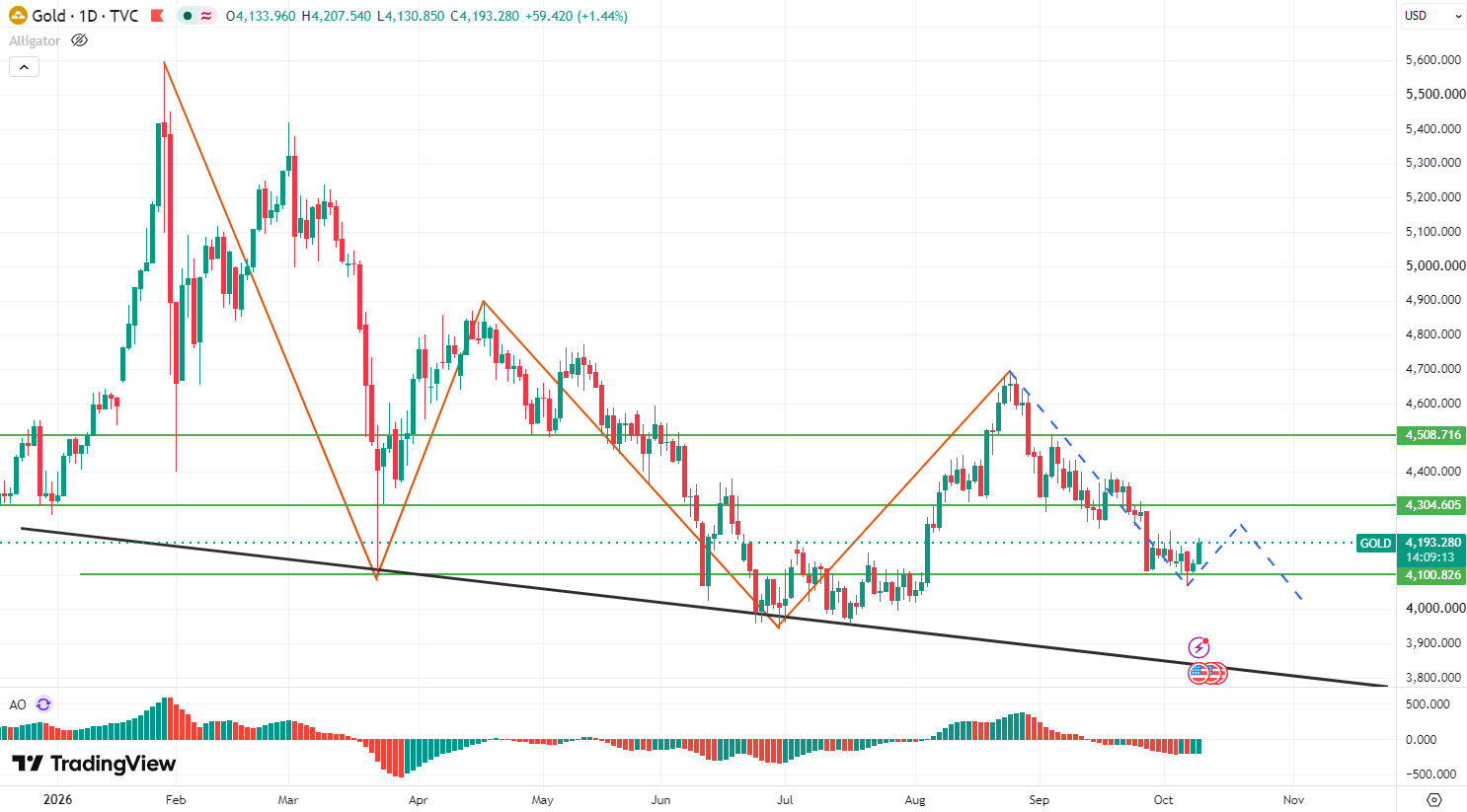
Source: tradingview
The short-term outlook for gold has improved following its recovery above US$4,200. However, the broader technical picture remains uncertain after the recent decline towards two-month lows. The next move may depend on whether buyers can defend the US$4,200 area and overcome nearby resistance.
Bullish scenario: A sustained break above US$4,200
If gold holds above US$4,200 and buyers push the price through US$4,250, the recovery could extend towards US$4,300.
This scenario would become more convincing if the breakout coincided with a weaker US dollar, declining Treasury yields and reduced expectations for further Fed rate increases.
However, a brief move above resistance is not necessarily a confirmed breakout. Traders may look for a sustained close above the level or a successful retest before concluding that bullish momentum has strengthened.
Bearish scenario: Gold falls back below US$4,200
If gold fails to hold US$4,200, the latest rebound could lose momentum and prices could revisit the US$4,130 area.
A renewed decline below US$4,100 would put the recent lows back in focus, with US$4,000 becoming a further downside reference.
This scenario could gain traction if US Treasury yields rebound, the US dollar strengthens or Fed officials signal that additional rate increases remain necessary.
For traders, the important distinction is between a temporary pullback within a recovery and a broader continuation of the preceding downtrend.
Medium-term outlook: Has gold's uptrend broken?
A single strong trading session is not enough to establish a medium-term reversal.
Gold's longer-term outlook continues to be influenced by fiscal concerns, investment demand, central-bank purchases and geopolitical uncertainty. The World Gold Council reported that global physically backed gold ETFs attracted approximately US$10 billion in September 2026, even as gold prices fell during the month.
This divergence suggests that underlying investment demand may remain resilient despite short-term price weakness.
Nevertheless, stronger bond yields and a sustained rise in the US dollar could continue to challenge gold. Until price action confirms a more durable recovery, traders should consider both the potential for a rebound and the risk of another test of support.
How to Trade Gold CFDs in Australia with Mitrade
For Australian traders looking to act on changes in the gold price, gold CFDs offer a way to speculate on price movements without owning or storing physical bullion.
With a gold CFD, traders can potentially take a long position if they expect prices to rise or a short position if they expect prices to fall. This can be relevant when gold is testing important levels such as US$4,200, where a breakout or rejection may influence short-term trading decisions.
Before opening a position, consider the following:
Define your entry and exit levels. Identify the price conditions that would invalidate your trading view.
Use risk management tools. Stop-loss orders may help manage risk, although execution at the requested price is not guaranteed in all market conditions.
Understand leverage. Leverage magnifies both profits and losses, and adverse price movements can lead to rapid losses.
Account for trading costs. Check the applicable spread, overnight financing charges and other fees before trading.
Monitor market volatility. Economic announcements and geopolitical headlines can trigger sudden price swings.

Trade XAU/USD with Tight Spreads
What Australian Gold Traders Should Watch Next
For Australians following the gold price, the next stage of the recovery will depend on several international developments.
Australian traders should also consider the timing of US economic releases relative to the Australian trading day. International gold markets can experience sharp moves when US data or central-bank comments are released, and prices may move quickly in either direction.
You might be interested in…
Disclaimer: The content presented above, whether from a third party or not, is considered as general advice only. CFD trading involves significant risk of loss. Past performance does not guarantee future results. This article serves informational purposes only and does not constitute financial advice. Consider your risk tolerance before trading.


