




Did Avalanche’s New NYSE Deal Just Make Solana and XRP Irrelevant?
Key Points
Avalanche scored a symbolic win by agreeing to set up an on-chain exchasnge for the NYSE.
The agreement was a setback for Solana and XRP, both of which are angling for institutional adoption.
The deal offers little direct benefit to Avalanche holders.
- Motley Fool Issues Rare "Total Conviction" Buy Alert ›
The New York Stock Exchange (NYSE) and its owner, Intercontinental Exchange (NYSE:ICE), just handed the cryptocurrency Avalanche (CRYPTO:AVAX) a central role in their plan to launch a new exchange for tokenized stocks. On Nov. 9, Ava Labs, Avalanche's developer, announced it would provide blockchain technology for a new NYSE-affiliated venue for those tokens. This is the best news that the coin's holders have gotten in recent memory, but its price was little changed for the seven days ended Nov. 13.
The NYSE deal immediately looks like bad news for two other cryptocurrencies that have been positioning themselves as the preferred solution for this exact niche. Apparently, the NYSE was influenced by properties like Avalanche's speed, throughput, and regulatory tooling. Yet Solana (CRYPTO:SOL) is dramatically ahead of Avalanche on the first two, and XRP's (CRYPTO:XRP) network, the XRP Ledger (XRPL), has built strong compliance tools directly into its systems. So did Avalanche and the NYSE deal just make both of those coins irrelevant?
Missed AI’s "Act 1"? Act 2 Could Be 15x Bigger. Most investors think they missed the AI boat because they didn't buy Nvidia in 2005. But according to our analysts, we’re only at the end of "Act 1"—the R&D phase. "Act 2" is the global rollout. Continue »
This is a blow to the institutional thesis for Solana and XRP
Talking about the choice of Avalanche, NYSE executive Dennis Lee said that the company wanted to pick a blockchain solution that offered predictable costs and strong control over the permissible participants. It's also very likely that a major exchange launching a new venue would want to choose something with high throughput capacity and speed to handle the volume it could bring to the table.
Since its latest upgrade, Alpenglow, Solana finalizes transactions on its network in about 150 to 400 milliseconds. Avalanche takes about two full seconds, and the XRPL takes several seconds. In terms of transaction costs, Solana's median fee is $0.0004, whereas Avalanche's is $0.01, and the XRPL's is $0.00001. At first glance, it looks as if both Solana and the XRPL were passed over in favor of a more expensive (and in Solana's case, much slower) solution here.
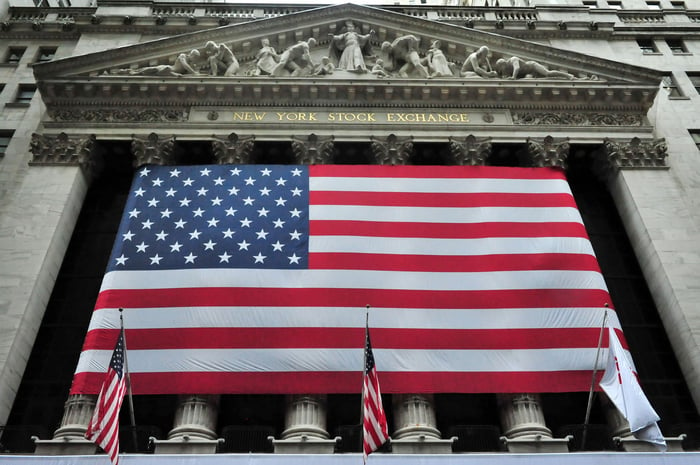
Image source: Getty Images.
Solana is also already home to a large sum of tokenized asset trading activity. It hosted $583 million in tokenized stocks as of Nov. 13, more than triple Avalanche's $179 million; the XRPL doesn't host any of those assets. So while it makes sense that the XRPL isn't a good fit for NYSE's needs, Solana still looks like a stronger option than what they actually went with on paper.
The XRP Ledger supports permissioned decentralized exchanges (DEXs), which are trading venues built into its blockchain that can be configured to admit only specific accounts holding approved credentials. That's a gated venue on a shared ledger, while the NYSE wanted a ledger of its own. One explanation for the NYSE's selection of Avalanche is that, per Ava Labs, the exchange will run its own custom blockchain built with Avalanche's technology, rather than settling on Avalanche's public chain. That fits the access control requirement.
So, Solana's and the XRPL's advantages mainly apply to their public ledgers, whose tokenized asset bases, transaction costs, and speed rankings mean little to a business looking to run its own private blockchain.
Should Solana and XRP holders worry?
Realistically, Avalanche clinching the NYSE deal was a major missed opportunity for Solana and, to a lesser extent, XRP. But Solana holders should not be too hung up on that, as Solana landed a smaller win the same day.
Formation Securities told regulators on Nov. 9 that it plans to launch a new tokenized stock venue of its own running on Solana's network in early 2027, specifically citing its speed, low costs, and its existing base of tokenized real-world assets — ownership rights of things like stocks and bonds converted into tradeable crypto. Its trades would post directly to Solana's public ledger, incurring standard fees.
In contrast, Avalanche's NYSE deal will likely offer its coinholders little directly. So Solana lost some prestige here more than it lost potential revenue. XRP, for its part, just got new evidence that, somewhat surprisingly, its network's native compliance tooling is not as appealing to the institutions it's courting as what its developers and its investors may have hoped.
More broadly, the risk here is that other exchanges will copy the NYSE's template, launching their own blockchain products within small, exclusive walled gardens rather than launching them on public blockchains. That could lead to more lost business and further diminish the institutional adoption thesis for buying Solana and XRP, among many other coins.
Still, don't sell Solana or XRP over this.
During the next few quarters, watch for new exchanges for tokenized assets to announce their plans to launch and their chosen crypto partners. If XRP doesn't net any of those deals, it will be a deeply bearish sign, and if Solana can't capture at least a couple more, it's an indication that its competitive environment is getting fiercer and harder to navigate successfully.
Should you buy stock in Avalanche right now?
Before you buy stock in Avalanche, consider this:
The Motley Fool Stock Advisor analyst team just identified what they believe are the 10 best stocks for investors to buy now… and Avalanche wasn’t one of them. The 10 stocks that made the cut could produce monster returns in the coming years.
Consider when Netflix made this list on December 17, 2004... if you invested $1,000 at the time of our recommendation, you’d have $327,620!* Or when Nvidia made this list on April 15, 2005... if you invested $1,000 at the time of our recommendation, you’d have $959,410!*
Now, it’s worth noting Stock Advisor’s total average return is 802% — a market-crushing outperformance compared to 205% for the S&P 500. Don't miss the latest top 10 list, available with Stock Advisor, and join an investing community built by individual investors for individual investors.
See the 10 stocks »
*Stock Advisor returns as of November 18, 2026.
Alex Carchidi has positions in Solana. The Motley Fool has positions in and recommends Solana and XRP. The Motley Fool recommends Avalanche and Intercontinental Exchange. The Motley Fool has a disclosure policy.
Recommended Articles


