




Yemen's Houthis Could Cause a Global Oil Shock That Rattles Markets
Key Points
Saudi Arabia has moved the bulk of exports to a Red Sea port.
Closure of that route could reduce global oil supplies by 7%.
- These 10 stocks could mint the next wave of millionaires ›
This week has brought a fresh threat to the stock market. The Houthis, a Yemeni Shia Islamist political and military organization backed by Iran, announced a maritime blockade on Saudi Arabia in response to "an unjust and oppressive siege."
This could mean closing the Bab el-Mandeb Strait, which connects the Red Sea to the Gulf of Aden and the wider world. With the Strait of Hormuz in the Persian Gulf essentially closed by Iran, Saudi Arabia has been using an alternative export route for its oil through the Red Sea, and that alternate route has helped mitigate the disruption to global oil supplies caused by the closure of the Strait of Hormuz.
Where to invest $1,000 right now? Our analyst team just revealed what they believe are the 10 best stocks to buy right now, when you join Stock Advisor. See the stocks »
Houthi action could reduce global oil supplies significantly
If the Houthis succeed in closing the Red Sea route to Saudi oil, it's estimated that it would reduce global oil supplies by 7% and prevent most Saudi oil exports from leaving the region.
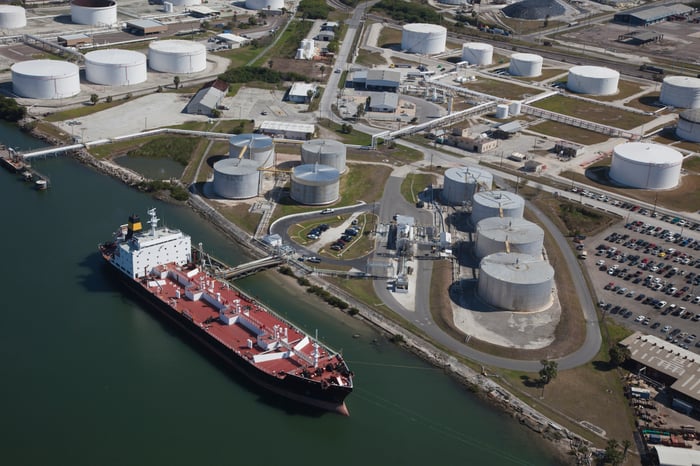
Image source: Getty Images.
As I write this, Brent crude oil, the international benchmark, has risen from about $72 a barrel to around $89 since early July, when the temporary truce between Iran and the U.S. fell apart. Further pressure caused by a Houthi blockade could push oil higher still.
Higher oil prices, if they last for any significant time, could do real damage to economies and financial markets. They can drive prices higher as energy costs bleed into core prices because oil and gas are major economic inputs for many businesses, while at the same time depressing consumer spending and sentiment, as consumers are forced to spend more of their budgets at the gas pump.
We’re already seeing examples of this. PepsiCo recently reported worse-than-expected second-quarter results, and CEO Ramon Laguarta said higher gas prices are the reason, as consumers had to pull back on nonessential purchases like the snacks and soda his company sells.
And Walmart said in May that it might have to raise prices to offset soaring fuel costs. The retailer said it absorbed $175 million in higher-than-expected fuel prices in the first quarter -- a major hit to profitability.
Gasoline prices receded from their May peak in June but have begun to head higher again since the U.S.-Iran truce ruptured.
PepsiCo and Walmart show what higher oil prices resulting from blockades can do to both consumer spending and corporate profitability. If the Houthis are successful in blocking the Red Sea passage for Saudi oil, we could see a lot more of each of those, which could cause major trouble for the stock market.
Where to invest $1,000 right now
When our analyst team has a stock tip, it can pay to listen. After all, Stock Advisor’s total average return is 904%* — a market-crushing outperformance compared to 208% for the S&P 500.
They just revealed what they believe are the 10 best stocks for investors to buy right now, available when you join Stock Advisor.
See the stocks »
*Stock Advisor returns as of July 22, 2026.
Matthew Benjamin has no position in any of the stocks mentioned. The Motley Fool has positions in and recommends Walmart. The Motley Fool has a disclosure policy.
Recommended Articles


