




Micron, Western Digital, and Sandisk Just Jumped 12% to 14%. Here's the Forecast That Did It.
Key Points
Micron rose 12%, Western Digital 12.5%, and Sandisk 14.3% on Tuesday.
Morgan Stanley reportedly forecast memory prices to rise at least 25% from the second quarter to the third.
All three stocks entered the session down more than 30% from their 52-week highs.
- 10 stocks we like better than Micron Technology ›
Tuesday was the day the memory trade turned back around. Micron Technology (NASDAQ: MU), Western Digital (NASDAQ: WDC), and Sandisk (NASDAQ: SNDK) rose 12%, 12.5%, and 14.3%, respectively, in Tuesday's session. It was a violent reversal for three stocks that entered the day down 31%, 39%, and 41% from their 52-week highs.
The biggest catalyst was a single forecast. In a Monday note, Morgan Stanley reportedly told clients it expects memory prices to rise at least 25% from the second quarter to the third, with artificial intelligence (AI) data-center demand keeping supply tight. The firm's checks reportedly found no sign the shortage is easing, and it said shortages could grow even more severe in 2027 and 2028. The group started climbing on the note Monday. On Tuesday, the buying turned into a surge.
Where to invest $1,000 right now? Our analyst team just revealed what they believe are the 10 best stocks to buy right now, when you join Stock Advisor. See the stocks »
For a group of stocks that had spent two weeks selling off on fears the memory boom was ending, that was the whole argument. If prices are still rising, the boom isn't over. Here's what the forecast means for each of the three.
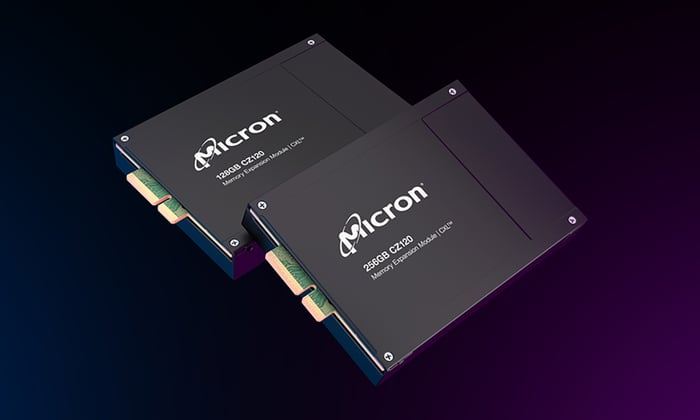
Image source: Micron.
Micron has the broadest exposure
Micron is the biggest of the three and the most watched. The company sells both major categories of memory chips (DRAM and NAND flash), plus the high-bandwidth memory that AI accelerators depend on. So a rising price forecast touches nearly everything it ships.
Its latest results show what that leverage already looks like. Revenue for Micron's fiscal third quarter (the period ended May 28) more than quadrupled year over year to $41.5 billion, the company's fifth consecutive quarterly revenue record. Net income came in at $28.2 billion. And operating cash flow more than doubled sequentially, to $25.4 billion from $11.9 billion the prior quarter.
"Micron's record fiscal Q3 financial results and even stronger outlook for Q4 reflect the strategic value of memory in the AI era," CEO Sanjay Mehrotra said in the company's June earnings release.
Even after Tuesday's move, the stock trades at about 20 times earnings, a multiple that says investors still doubt numbers like these can last.
Western Digital rode along
Western Digital is the odd one out: it doesn't sell memory chips at all. The company makes hard disk drives, the slower, cheaper storage tier that data centers deploy in enormous volumes. Its leverage to a memory-price forecast is indirect.
Its own supply picture, however, is just as tight. Revenue for its fiscal third quarter (the period ended April 3) rose 45% year over year to $3.3 billion, and guidance calls for 36% to 44% year-over-year growth in the fiscal fourth quarter.
"The demand drivers are clear: Virtually every AI workload, from training, inference, agentic AI to physical AI, creates data that is stored persistently and cost-efficiently on HDDs," Western Digital CEO Irving Tan said in the company's April earnings release.
When every tier of data-center storage is scarce at once, the market trades the group as one bet on AI's appetite for capacity. Tuesday showed as much.
Sandisk is the purest play
Sandisk sells NAND flash, the exact product whose price Morgan Stanley expects to jump. That arguably makes it the most direct way to own the forecast.
Its results show what rising NAND prices do to a focused producer. Sandisk's fiscal third-quarter revenue rose 251% year over year to $5.95 billion, and non-GAAP (adjusted) gross margin reached 78.4%, up more than 55 percentage points from a year earlier. When the price of a company's core product surges, most of the increase lands in gross profit.
The company is also locking in demand, signing five multiyear supply agreements under a new business model built on firm customer commitments. And its guidance calls for $7.75 billion to $8.25 billion of revenue in its just-ended fiscal fourth quarter, or roughly 34% sequential growth at the midpoint.
One forecast, three different bets
So which of the three has the most direct leverage to rising memory prices? Arguably, Sandisk, whose entire business is the product in question. Micron is close behind, with broader exposure across DRAM, NAND, and high-bandwidth memory. Western Digital benefits at one remove, through the same data-center scramble that is straining storage supply of every kind.
Of course, a forecast is still just a forecast, and memory remains the most cyclical corner of the chip industry. The same operating leverage that multiplies profits on the way up works in reverse when prices roll over. The roughly 30% to 40% drawdowns these stocks carried into Tuesday existed precisely because investors understand this risk.
Ultimately, I wouldn't chase Tuesday's move. If Morgan Stanley is right about the third quarter, these companies' results will do the talking soon enough. And if it's wrong, this group has demonstrated in recent weeks just how fast it can reprice in either direction.
Should you buy stock in Micron Technology right now?
Before you buy stock in Micron Technology, consider this:
The Motley Fool Stock Advisor analyst team just identified what they believe are the 10 best stocks for investors to buy now… and Micron Technology wasn’t one of them. The 10 stocks that made the cut could produce monster returns in the coming years.
Consider when Netflix made this list on December 17, 2004... if you invested $1,000 at the time of our recommendation, you’d have $364,562!* Or when Nvidia made this list on April 15, 2005... if you invested $1,000 at the time of our recommendation, you’d have $1,247,668!*
Now, it’s worth noting Stock Advisor’s total average return is 894% — a market-crushing outperformance compared to 207% for the S&P 500. Don't miss the latest top 10 list, available with Stock Advisor, and join an investing community built by individual investors for individual investors.
See the 10 stocks »
*Stock Advisor returns as of July 22, 2026.
Daniel Sparks and his clients do not have positions in any of the stocks mentioned. The Motley Fool has positions in and recommends Micron Technology and Western Digital. The Motley Fool has a disclosure policy.
Recommended Articles


