




The SpaceX IPO Marks "the Top of a Terrific Bubble," According to This Famous Wall Street Veteran
Key Points
Asset manager Jeremy Grantham has called several previous market bubbles.
He thinks the SpaceX IPO could mark the peak of the current bull market.
- 10 stocks we like better than Space Exploration Technologies ›
Jeremy Grantham, co-founder of GMO LLC -- an asset manager with around $70 billion in assets under management -- is sounding the alarm on Space Exploration Technologies (NASDAQ: SPCX) stock, as well as stock market valuations across the board.
Grantham, who has called many previous market events, including the dot-com bubble and the 2008-09 financial crisis, was recently interviewed on Steven Bartlett's "The Diary of a CEO" podcast and asked whether he thinks SpaceX will succeed. His answer was clear. "I think it will fail to deliver anything like its promises in the prospectus," he stressed. "Yes, absolutely."
Where to invest $1,000 right now? Our analyst team just revealed what they believe are the 10 best stocks to buy right now, when you join Stock Advisor. See the stocks »
But Grantham isn't just bearish on SpaceX stock. He went on to say, "SpaceX is such a fabulous BS story. Mining asteroids. Huge, incredible success of AI ... It's the classic description of a market peak. It's what you look for at the top of a terrific bubble."
Perhaps surprisingly, Grantham is a fan of one of SpaceX's core businesses. But it's clear why he's bearish on the stock in general.
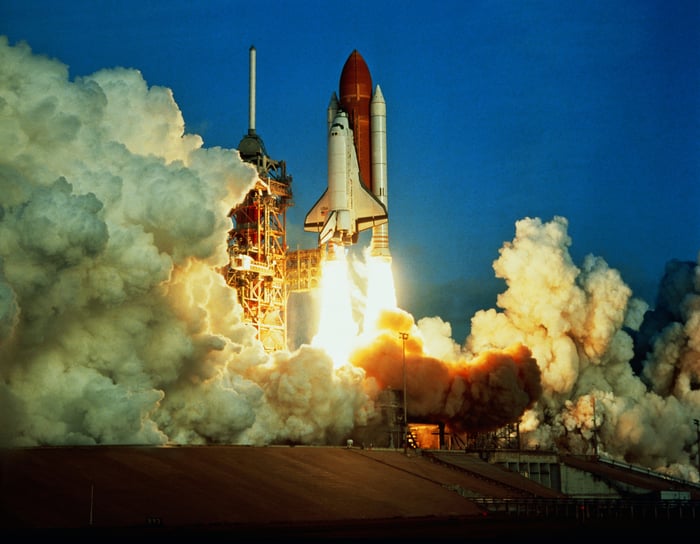
Image source: Getty Images.
Here's why Grantham is so bearish on SpaceX stock
Grantham isn't bearish on SpaceX as a business. He is, for example, a big fan of SpaceX's Starlink internet service. Starlink is currently SpaceX's only profitable business, with impressive revenue growth rates and gross margins. But most of SpaceX's valuation is tied up in other speculative ventures, not just Starlink.
"Great idea, by the way," Grantham stresses in the podcast interview, speaking about Starlink. "Makes money. But this is not Starlink. Maybe I'd be an investor too, if it were Starlink."
Grantham doesn't see most of SpaceX's growth initiatives paying off in the long term. And because the stock price is mostly tied to those initiatives, buying SpaceX stock would force Grantham to invest in a bunch of growth efforts he ultimately doesn't believe in.
To realize its full potential -- which includes capital-intensive efforts such as launching data centers into space, establishing a permanent human colony on the moon, and scaling AI data centers with massive infrastructure investments -- SpaceX will need a ton of cash. It will also need continued investor optimism when it inevitably stumbles.
In the past, Grantham argues that Elon Musk has benefited from tremendous luck, timing capital raises during fortuitous bull market runs. Musk's marketing appeal during these periods enabled him to raise large amounts of capital for speculative ventures with otherwise poor risk-to-reward dynamics. This strategy paid off for Tesla (NASDAQ: TSLA). But Grantham isn't convinced it will happen the same way again for SpaceX.
"The scale of SpaceX requires him to do the same again," Grantham stresses. "And the timing of the market cycle, the timing of confidence, would have to be the same."
Grantham seems to be admitting that, at least in theory, Musk could justify SpaceX's exorbitant market cap by raising capital at steep valuations, pouring that capital into speculative but high upside growth ventures, and realizing success with one or more of those ventures. As Grantham points out, Tesla has been able to execute a similar strategy in the past thanks to Musk's marketing skills.
But much of Tesla's success occurred during strong bull market stretches. Thus far, SpaceX has enjoyed similar conditions.
What happens in a less-beneficial market situation?
Let's assume for argument, however, that a bear market occurs over the next 12 to 24 months. Perhaps the market is no longer willing to grant SpaceX a lofty "Musk" premium. Shares could slide from $160 all the way to $63 -- the price point Morningstar analysts believe is the true intrinsic value of the stock. The would cut SpaceX's market cap well below the $1 trillion mark, dramatically reducing its ability to raise additional capital at attractive valuations.
Keep in mind that SpaceX remains unprofitable. Last year, the company lost nearly $5 billion. With elevated spending, losses seem to be accelerating over the short term. In the first quarter of 2026, SpaceX posted a net loss of $4.3 billion -- nearly as much as it lost over the entirety of 2025.
Put simply, SpaceX will need to continually raise capital to survive and grow, potentially for years to come. Goldman Sachs (NYSE: GS), for example, predicts SpaceX will generate a negative free cash flow of $105 billion in 2029.
This gets to the crux of Grantham's argument. If market conditions change -- as they reliable have countless times throughout history -- the SpaceX investment narrative suddenly becomes a lot more unpredictable. The company's moonshot growth opportunities, in other words, become much more difficult and costly to achieve in a bear market.
While I love SpaceX as a business, it's hard not to agree with Grantham here. Because the business is unprofitable and has massive capital expenditure plans ahead of it, SpaceX can't control its own growth journey. It needs markets to play along. So if market conditions shift, the SpaceX story -- at least from an investor standpoint -- could crumble quickly.
Should you buy stock in Space Exploration Technologies right now?
Before you buy stock in Space Exploration Technologies, consider this:
The Motley Fool Stock Advisor analyst team just identified what they believe are the 10 best stocks for investors to buy now… and Space Exploration Technologies wasn’t one of them. The 10 stocks that made the cut could produce monster returns in the coming years.
Consider when Netflix made this list on December 17, 2004... if you invested $1,000 at the time of our recommendation, you’d have $418,761!* Or when Nvidia made this list on April 15, 2005... if you invested $1,000 at the time of our recommendation, you’d have $1,195,804!*
Now, it’s worth noting Stock Advisor’s total average return is 918% — a market-crushing outperformance compared to 208% for the S&P 500. Don't miss the latest top 10 list, available with Stock Advisor, and join an investing community built by individual investors for individual investors.
See the 10 stocks »
*Stock Advisor returns as of July 5, 2026.
Ryan Vanzo has no position in any of the stocks mentioned. The Motley Fool has positions in and recommends Goldman Sachs Group and Tesla. The Motley Fool has a disclosure policy.
Recommended Articles


