




Japan and South Korea Stocks Open Lower; KOSPI Tumbles 3% to Lead Asian Tech Stocks, Samsung Electronics, SK Hynix and SoftBank Pull Back in Tandem
TradingKey - The KOSPI and Nikkei 225 indices continued to pull back, with Samsung Electronics, SK Hynix, SoftBank, and Kioxia falling across the board.
During the Asian trading session on June 29, Japanese and South Korean stock markets diverged at the open but both declined. South Korea's KOSPI opened lower and continued to slide, falling 3.05% to temporarily trade at 8,154.92 points; the Nikkei 225 opened higher but turned lower, dropping 1.31% to temporarily trade at 68,455.32 points.
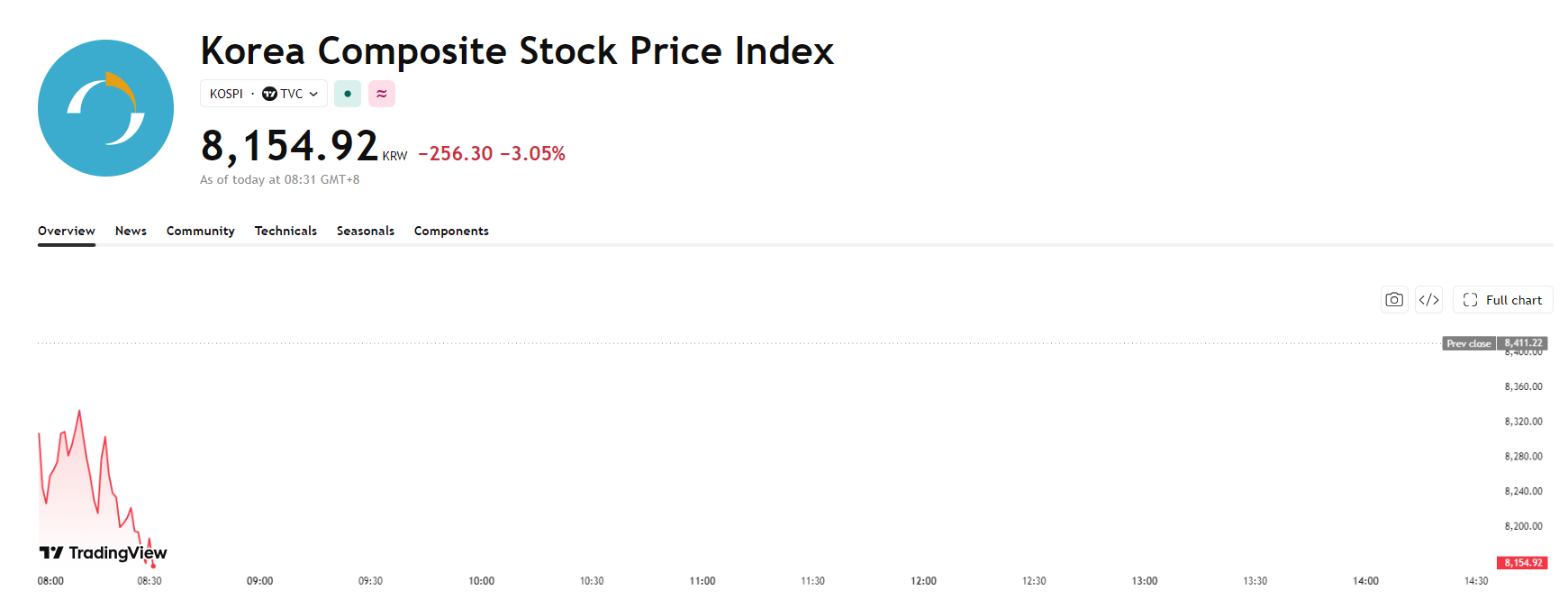 KOSPI Index Chart, Source: TradingView
Among individual stocks, heavyweight shares plunged collectively. Kioxia fell 2.57%, breaking below the 90,000 yen threshold to temporarily trade at 89,810 yen; SoftBank declined 1.3%, approaching the 6,000 yen mark to temporarily trade at 6,142 yen; SK Hynix slid 1.83%, breaking below the 2.7 million won threshold to temporarily trade at 2,624,000 won; and Samsung Electronics dropped 3.68% to temporarily trade at 327,000 won.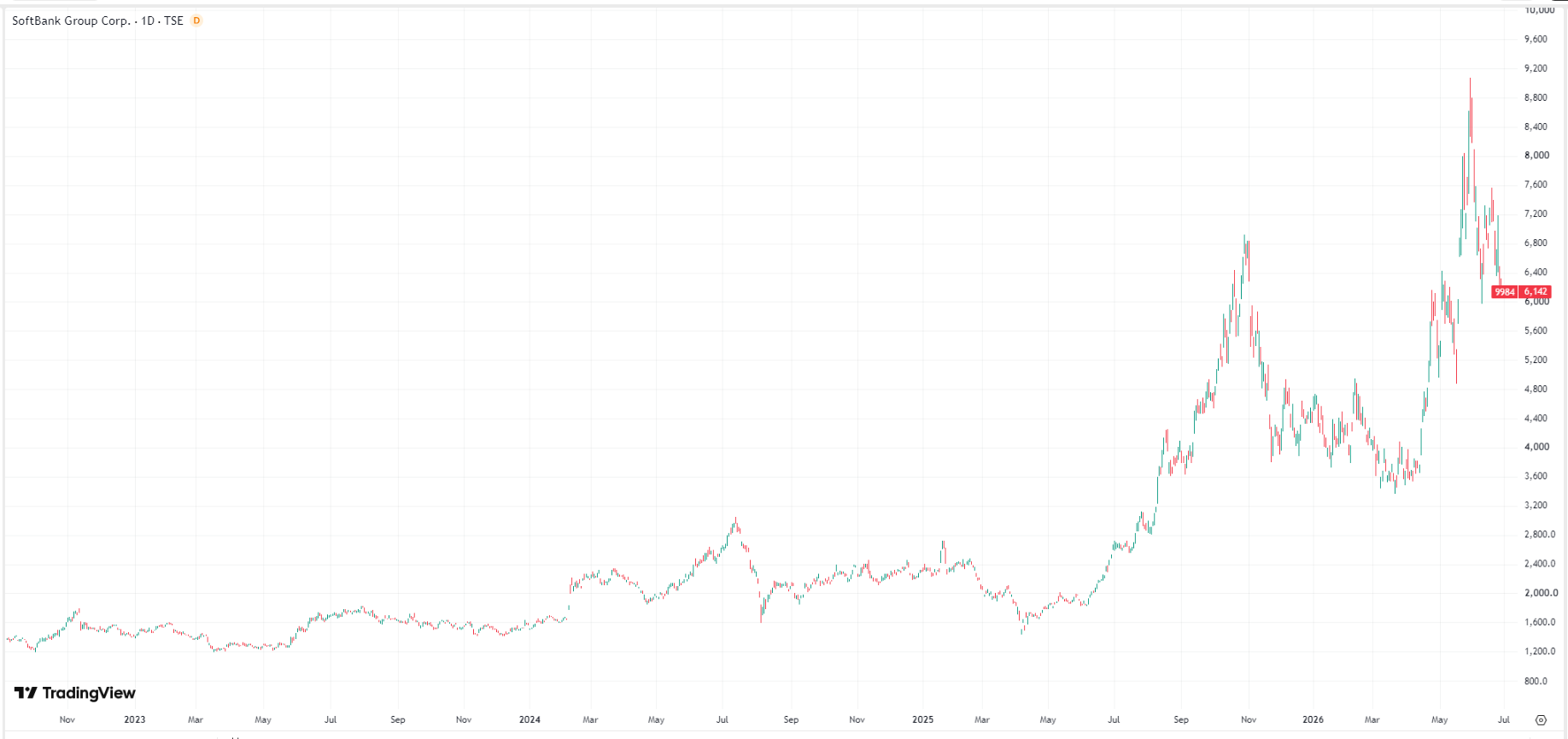
SoftBank Price Chart, Source: TradingView
Although South Korea's two major memory giants, Samsung Electronics and SK Hynix, announced a massive chip plant plan with a total investment of up to 2,000 trillion won over the next decade, the positive news failed to offset a sudden regulatory brake. The Korea Exchange was originally scheduled to officially launch "weekly options" derivative financial products today (June 29) targeting giants such as Samsung Electronics, SK Hynix, Hyundai Motor, and LG Energy Solution. However, due to the recent frenzy of South Korean retail investors pouring into daily double-leveraged ETFs, market volatility has surged to a record high. The Financial Supervisory Service recently made an emergency announcement to postpone the plan indefinitely, dealing a heavy blow to short-term speculative market sentiment.
Although Japanese stocks actually opened slightly higher, overall market sentiment remained extremely tense. In late June, the Nikkei Index hit record highs for six consecutive days, briefly crossing the 72,000-point mark for the first time. This has triggered a severe "fear of heights" among investors. At the slightest sign of trouble, heavy profit-taking pressure would emerge in market leaders, particularly the semiconductor and AI sectors, causing the index to continue its technical correction after falling below the 70,000-point threshold. In addition, OpenAI's delayed listing dealt a heavy blow to heavyweight SoftBank, which in turn dragged down the broader market.
Recommended Articles


