




Eli Lilly Zepbound Returns to CVS Formulary, Premarket Shares Rise Nearly 2%
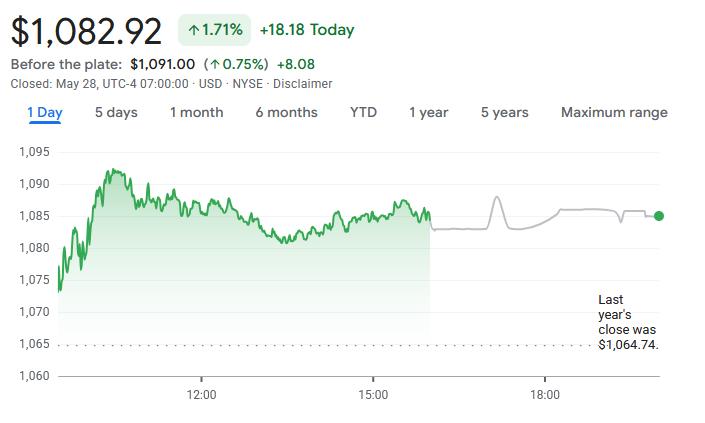
TradingKey - Before the U.S. market opened on Thursday, Eli Lilly ( LLY) shares rose nearly 2% at one point as the market focused on a major decision on Thursday by U.S. healthcare giant CVS Health ( CVS) to restore insurance coverage for its weight-loss drug Zepbound and include the oral weight-loss drug Foundayo, which was newly approved this April, in its standard drug plan.
This move not only provides a significant boost to Eli Lilly's competition in the GLP-1 weight-loss drug market but also offers more treatment options to millions of American patients.
CVS's pharmacy benefit manager, Caremark, announced that Zepbound will return to its commercial formulary on October 1, while Foundayo will be added as early as June 1. This adjustment covers 25 million to 30 million Americans. In insurance plans using the Caremark standard formulary, patients' out-of-pocket costs for these two drugs are expected to be as low as $25 per month.
CVS expects this move to drive an additional 10% to 15% reduction in the price of weight management drugs, further improving the accessibility of these high-cost medications.
CVS Caremark President Ed DeVaney stated in a press release: "We are creating access and choice that would not exist without our leadership in the marketplace. We have boldly addressed the affordability and access issues for our clients and their members through active communication and negotiation with our pharmaceutical manufacturer partners."
Last July, Caremark removed Zepbound from its insurance formulary, retaining only Novo Nordisk’s ( NVO) Wegovy as the preferred weight-loss drug, triggering strong dissatisfaction among patients.
At that time, about 70% of Caremark standard formulary users were forced to switch medications. Some patients who relied on Zepbound to treat complications like sleep apnea faced the risk of treatment interruption, which even triggered class-action lawsuits.
Following this policy adjustment, GLP-1 drugs from both Eli Lilly and Novo Nordisk will become preferred drugs in the Caremark standard formulary, ending the year-long "either-or" situation.
Market analysis suggests that the reversal in CVS policy is the result of multiple factors. Eli Lilly significantly reduced the supply price of Zepbound through active negotiations, giving it a cost advantage in competing with Wegovy. Meanwhile, as new products such as Novo Nordisk's oral Wegovy and Eli Lilly's Foundayo enter the market, the competitive landscape of GLP-1 has shifted. CVS needs to balance its partnerships with the two pharmaceutical giants, while persistent patient complaints and public pressure also pushed CVS to re-evaluate its drug coverage strategy.
For Eli Lilly, this return to the CVS insurance system is expected to further solidify Zepbound's market position and pave the way for the promotion of the oral drug Foundayo.
According to Eli Lilly CEO David A. Ricks, Foundayo, as a small-molecule oral drug, has advantages in large-scale production and does not require cold-chain transportation, allowing it to quickly cover the global market. Analysts generally predict that Foundayo's sales could reach $14.8 billion to $21 billion by 2030.
However, not all patients will benefit immediately. Employers and insurers using the Caremark formulary can still choose not to cover GLP-1 drugs for weight loss, and some special indications, such as sleep apnea, have not yet been included in insurance coverage.
Furthermore, uncertainty remains regarding Zepbound's insurance coverage, pending final approval from the Centers for Medicare & Medicaid Services (CMS). Regardless, CVS's policy adjustment undoubtedly brings new competitive vitality to the GLP-1 weight-loss drug market and offers more hope to patients.
Recommended Articles


