




The Federal Reserve holds rates and two officials vote for a hike: Why the US Dollar stayed flat anyway
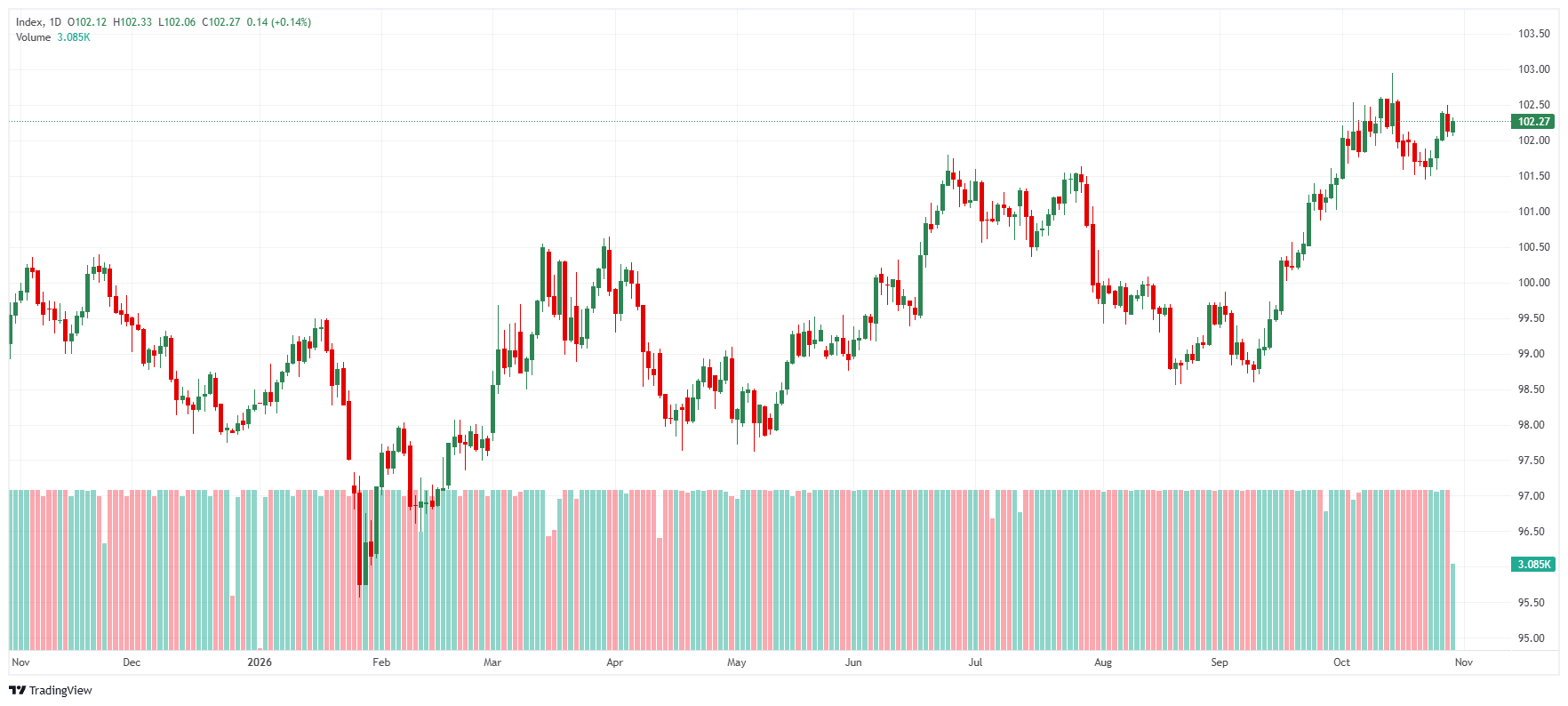
The US Dollar (USD) remains in a consolidation phase after the Federal Reserve’s decision to keep interest rates on hold, with market attention shifting directly toward key economic data releases. Despite two dissenting votes favoring an immediate rate increase and strong economic activity, Fed Chair Kevin Warsh’s cautious tone regarding the timing of future hikes prevented the Greenback from extending its recent rally. As investors await upcoming US Personal Consumption Expenditures (PCE) inflation for September and Q3 Gross Domestic Product (GDP) figures, institutional strategists at DBS Group Research and Commerzbank are evaluating whether robust growth alongside easing underlying inflation will derail long-term rate-hike pricing or if a December policy tightening remains firmly on track.
DBS warns yield divergence and easing underlying inflation challenge US Dollar rally
Philip Wee at DBS Group Research cautions that the Federal Reserve's hawkish pause was insufficient to sustain the US Dollar's upward momentum, pointing to a stark divergence between a softer Greenback and elevated Treasury yields. With Chairman Kevin Warsh refusing to affirm a December rate hike, upcoming PCE inflation and Q3 GDP data will be pivotal; Wee suggests that resilient economic growth paired with moderating underlying inflation could force markets to scale back expectations for multiple Fed rate hikes in 2027.
"The Fed’s hawkish hold was not enough to sustain the USD’s rally. The divergence between a softer DXY and higher US Treasury yields was particularly noteworthy... Fed Chairman Kevin Warsh’s refusal to affirm a December hike leaves markets reliant on today’s PCE inflation and 3Q26 GDP reports for guidance... September’s headline PCE inflation is expected to increase to 3.6% YoY (0.5% MoM)... Advance estimate for 3Q26 GDP growth is expected to accelerate to an annualised 3.2% QoQ saar... A combination of resilient growth and easing underlying inflation should prompt a reassessment of the multiple 2027 Fed hikes projected by markets."
Commerzbank sees USD unmoved as markets price 85% odds of December Fed hike
Michael Pfister at Commerzbank observes that the Fed's decision to hold rates steady – despite two dissenting votes for a hike – left the US Dollar virtually unchanged as markets continue to price in an 85% likelihood of a December rate increase. While solid economic growth and labor data support ongoing tightening arguments, Pfister highlights that upcoming structural changes to FOMC meetings starting in 2027 will shift foreign exchange volatility further away from central bank announcements and directly onto economic data prints.
"As expected, yesterday’s Federal Reserve meeting did not result in any change to interest rates. However, two votes were cast in favour of a rate hike, including one from Lisa Cook... For the US dollar, therefore, the whole affair was a non-event: there was virtually no movement, and the market continues to price in an interest rate rise of roughly 85% for the December meeting... The meeting became particularly interesting at the outset when Warsh announced that, whilst they intend to stick to eight meetings a year, from 2027 onwards, one of these will be a strategy meeting without an interest rate decision or statement."
Key Takeaway
The US Dollar's stagnant response to the Federal Reserve's rate pause highlights a foreign exchange market torn between near-term hawkish pricing and longer-term macro recalibration. While Commerzbank notes that an 85% probability of a December rate hike continues to anchor near-term Greenback valuations, DBS Group Research stresses that if Q3 GDP (3.2% QoQ annualized) confirms solid economic expansion alongside moderating core inflation, investors may be forced to pare back expectations for 2027 Fed rate hikes, placing a temporary ceiling on further US Dollar upside.
(This article was created with the help of an Artificial Intelligence tool and reviewed by an editor. Know more.)
Recommended Articles


