




Gold Faces Pressure Ahead of Fed Decision as Prices Extend Drop Below $4,000
TradingKey - As of the Asian session on October 23, gold prices (XAUUSD) continued Thursday's decline, dipping below the $4,000 mark during intraday trading to hit a low of $3,986.54. On Thursday, gold prices dropped sharply by 2.83% to close at $4,024.21, marking a low of over two months. After falling below key levels such as $4,100 and $4,066 in succession, short-term selling in gold accelerated further, with precious metals market volatility amplifying significantly.
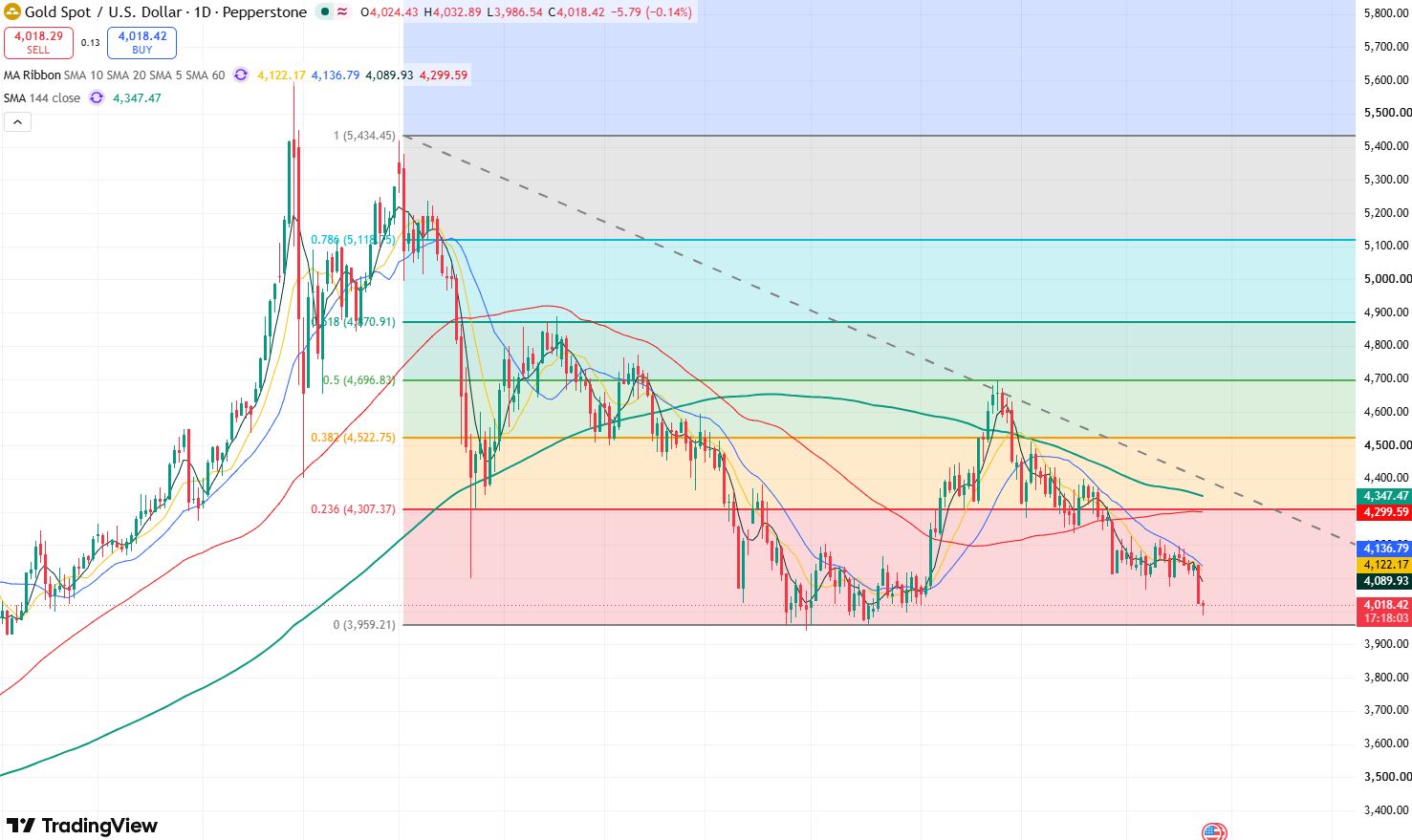
Gold Daily Price Chart, Source: TradingView
The recent decline in gold prices was initially driven by energy prices and interest rate expectations. Brent crude briefly rose above $114 this week, with high oil prices intensifying market concerns that U.S. inflation will remain high, while previously released U.S. CPI and PPI both came in above expectations. The Federal Reserve will hold its interest rate meeting from October 27 to 28; although the market still generally expects rates to remain unchanged this month, the likelihood of another rate hike in December remains at 86%.
However, gold's price movement since Thursday has also displayed characteristics of a liquidity sell-off. On that day, the 10-year U.S. Treasury yield pulled back sharply to below 5%, and the U.S. Dollar Index also fell to near 101.5, both of which are theoretically favorable for gold, yet gold prices still declined noticeably. During the same period, silver, copper, and tech stocks were sold off simultaneously, suggesting that some investors may be selling higher-liquidity assets to reduce leverage as market risk appetite drops rapidly.
Currently, $4,000 has become the most important psychological level for gold. If gold's closing price today fails to reclaim this level, prices may fall further toward around $3,960; if it firmly reclaims the ground above $4,000, gold could experience a technical rebound, testing the short-term resistance level of $4,066 on the upside. Going forward, the Fed's interest rate decision and U.S. PCE data will serve as crucial variables for gold's trajectory.
Recommended Articles


