




WTI and Brent Futures Both Fall Below $100 Mark, Have Oil Prices and Energy Sector Peaked?
TradingKey - WTI crude oil futures settled at $96.21 per barrel on May 6, plunging 6.3% to close below $100 for the first time in six days, marking the largest single-day decline since March 17. Brent crude futures dropped more than 7.73% on the same day, briefly dipping below the $100 threshold for the first time since April 22.
Previously, reports that the U.S. and Iran were "close to reaching a ceasefire agreement" were identified as the catalyst for this decline in crude oil. Prior to this, Trump announced the suspension of "Operation Liberty" military escort missions to observe further developments, which the market interpreted as a signal of substantial cooling.
Meanwhile, Saudi media outlets Alhadath and Al Arabiya reported on April 7 ET that the U.S. and Iran reached a consensus on gradually reopening the Strait of Hormuz in exchange for easing blockades. Impacted by this news, both major oil benchmarks fell below $100, representing the most dramatic reversal of bullish sentiment in the energy sector since the conflict began.
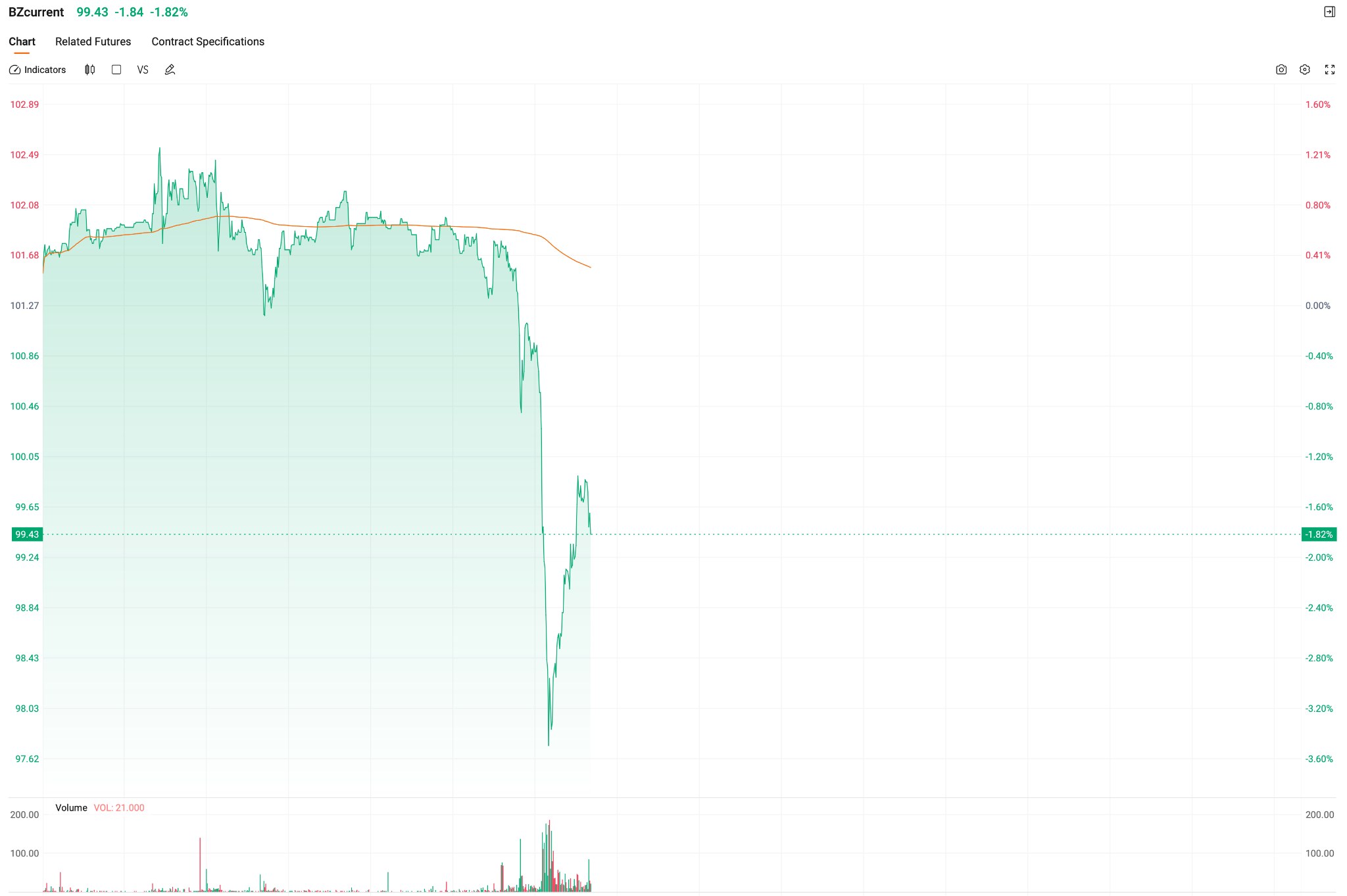
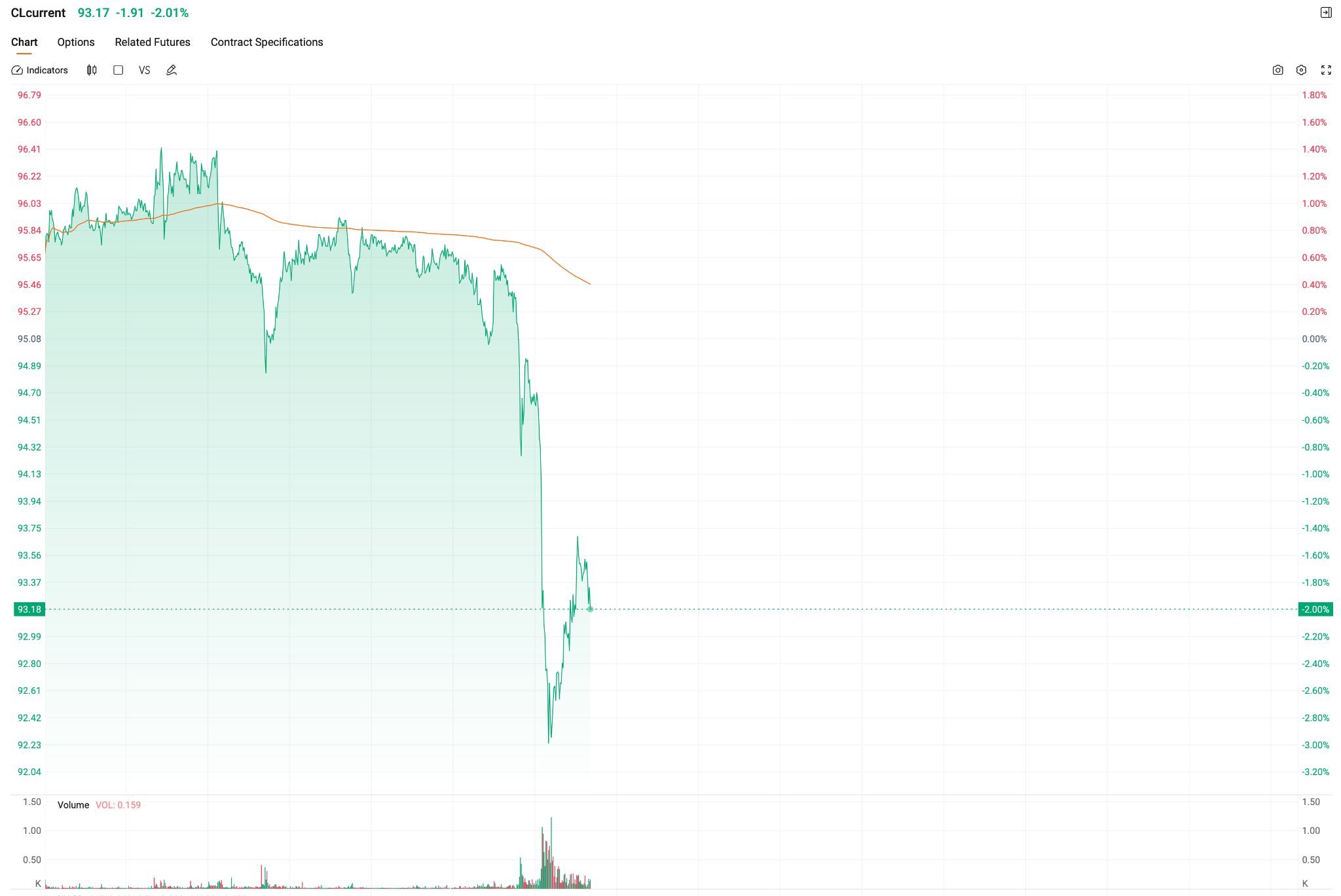
The market focus is now on whether the technical breakdown in both WTI and Brent signals that the rally in the energy sector has come to an end.
Demand destruction narrative undermines oil price fundamentals.
Although a sharp reduction in supply leads to sustained oil price increases, once prices exceed what the market can bear, demand will suffer a backlash; when oil's fundamentals are called into question, it may prove more unsettling for market bulls than the easing of geopolitical tensions.
Previously, Goldman Sachs analysts explicitly calculated that high oil prices have already begun to destroy demand, estimating a global reduction of 1.7 million bpd this quarter and a decrease of approximately 100,000 bpd in 2026 compared to 2025.
In its late-April outlook, Citi also pointed out that when assessing the transmission effects of the Hormuz blockade on the global economy, elevated oil prices are triggering a "cannibalization" effect—namely, demand destruction—which is exerting internal balancing pressure on prices.
Meanwhile, the valuation expansion of the energy sector itself is creating a structural mismatch with these demand-side risks. The U.S. energy sector's total return has already exceeded 25% in 2026, ranking first among all S&P 500 sectors.
As oil prices pull back below $100, earnings estimate revisions for these leading sectors will face a severe test.
Simultaneously, the UAE officially withdrew from the OPEC+ alliance on May 1, and OPEC+ announced on May 3 a further production increase of 188,000 bpd for June. Although many analysts believe implementing an increase is extremely difficult given current shipping disruptions in the strait, the signal clearly sounds an alarm for market bulls that producing nations are preparing for a supply rebound "post-blockade."
In the face of a fierce counter-offensive from bears, bulls are not without their trump cards.
EIA data shows that global crude supply plummeted by 10.1 million bpd in March, with OPEC+ capacity alone dropping by 9.4 million bpd; supply is expected to fall by another 2.9 million bpd in April. The number of cargo ships transiting the Strait of Hormuz remains less than 5% of pre-war levels. Meanwhile, Goldman Sachs recently noted that global inventories are being depleted at a record pace of over 10 million barrels per day, compressing the inventory buffer to its lowest level in over eight years.
Furthermore, total open interest for WTI futures has dropped to its lowest level since August 2025, reflecting extreme market caution where participants are neither willing to open new long positions nor daring to over-short.
As Dilin Wu, a strategist at Pepperstone in Melbourne, noted, even if Iran agrees to restore passage, "there is an inherent lag in supply recovery," as rescheduling stranded tankers and conducting insurance risk assessments will require time.
Market Awaits Clear Breakout Signal
If Iran accepts the ceasefire framework within the next 48 hours, a 30-day negotiation window will open, and valuation support for the energy sector will give way to a 'priced-in' repricing; if negotiations stall or are rejected by Iran, the risk premium that has been significantly reduced in the market will be swiftly re-factored in, and oil stocks are poised to rapidly recover their losses.
Goldman Sachs previously maintained its core forecast of an average Brent price of $90 and an average WTI price of $83 for the fourth quarter of 2026, while warning that if the recovery in maritime transport continues to lag, 'upside risks to oil prices are greater than what the baseline forecast suggests.'
How should investors position themselves?
From the current market structure, the energy sector is at a bull-bear inflection point. In terms of recent market trends, the spot premium structure for oil prices has not yet completely dissipated, but long-dated pricing has begun to account for expectations of supply normalization.
The 'certainty premium' phase for oil prices is nearing an end; in the coming weeks, pricing will be driven by both the progress of negotiations and the rate of inventory destocking.
For investors with existing positions, the strategic focus should shift from betting on peak oil prices to the time discounting of future supply-demand gaps. During this highly uncertain geopolitical window, diversifying positions and dynamic adjustments are superior to concentrated bets in a sector where PE has already significantly expanded.
Recommended Articles


