




Coffee (COFFEE) Is up 2.06% on Aug 17: Is the Market Repricing It?
Coffee (COFFEE) is up 2.06% at Aug 17 04:40(ET), now at $3.2907, with a 7-day up of 1.54%.
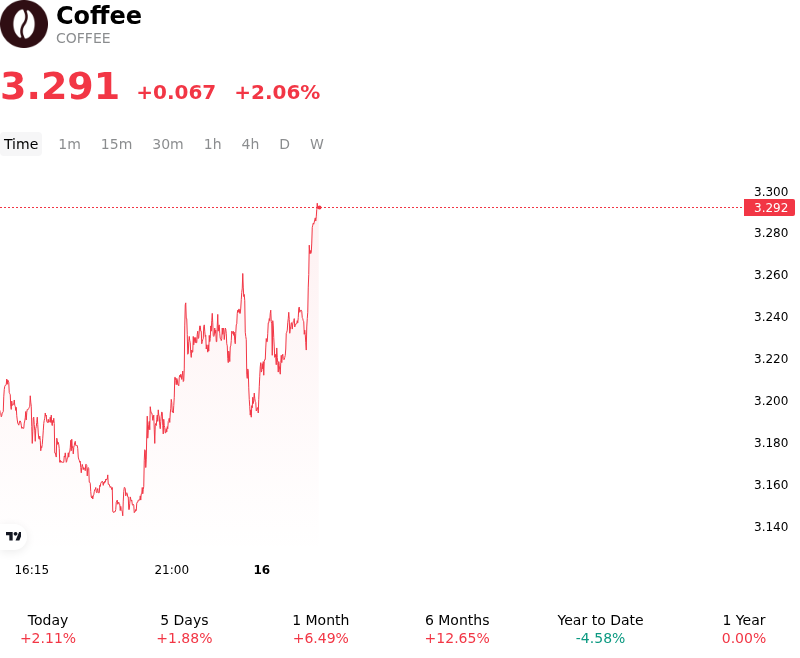
What is driving Coffee (COFFEE)’s stock price up today?
Coffee prices advanced as persistent harvest delays in Brazil and depleted exchange inventories created immediate supply tightness in the spot market, triggering buying interest from roasters and systematic investors. Rain across primary Arabica-growing regions, notably Minas Gerais, slowed field operations and pushed harvest completion rates well behind historical averages. The resulting delay in processing and transportation has slowed the arrival of new-crop beans at export terminals, exacerbating short-term availability bottlenecks and forcing commercial buyers to bid up prompt deliverables.
The physical supply constraints are accentuated by declining certified inventories on major commodity exchanges. Exchange-monitored Arabica stocks have drawn down to multi-year lows, leaving the market vulnerable to localized supply dislocations. With certified storage levels severely depleted, physical roasters facing immediate operational needs have had to pay a premium, while speculative short-position holders were pressured into covering positions amidst the tightening prompt spread.
Underpinning the upward momentum are lingering medium-term supply concerns linked to potential climate anomalies. Analysts are monitoring emerging El Niño weather patterns, which pose severe risks of delaying crucial September and October flowering rains in Brazil and disrupting growing conditions across key producers in Asia and South America. While long-term crop projections suggest a recovery in global production later in the cycle, the convergence of delayed current-season harvesting, critically low exchange stocks, and forward weather risks continues to drive upside volatility and maintain a bullish undertone in the market.
Technical Analysis of Coffee (COFFEE)
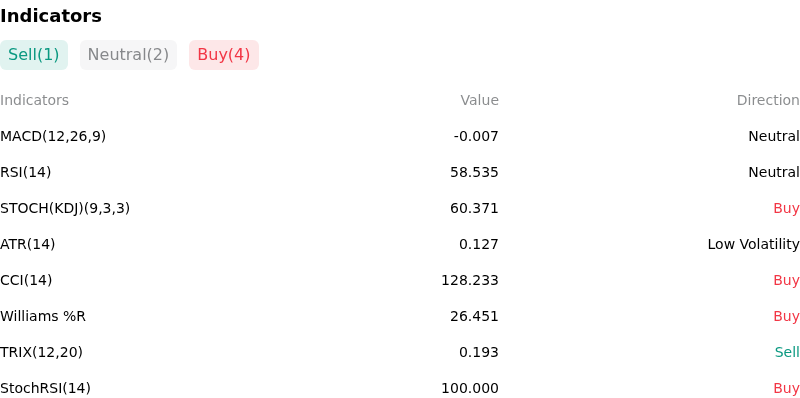
Technically, Coffee (COFFEE) shows a MACD (12,26,9) value of -0.007, indicating a neutral signal. The RSI at 58.535 suggests neutral condition and the Williams %R at 26.451 suggests buy condition. Please monitor closely.
More details about Coffee (COFFEE)
Recent Events and Risks:
- Accelerating Brazilian Harvest and Clear Weather: Dry weather across primary growing regions like Minas Gerais is accelerating the final stages of Brazil's 2026/27 coffee harvest, overcoming earlier rain delays. The influx of new physical green coffee availability and expanding export shipments from Cecafé is exerting immediate downside pressure on spot and futures prices.
- Surging Robusta Exports and Rising Exchange Stocks: Vietnam's coffee exports surged 21.1% year-on-year between January and July to 1.31 million metric tons, while ICE-monitored Robusta inventories climbed to a 5-month high. This rapid arrival of Asian supply is dampening global market support and driving roasters to increase lower-cost Robusta ratios in commercial blends.
- Projections of a Record Global Coffee Surplus: Institutional commodity strategists and USDA forecasts point to world coffee production expanding 6.0% year-on-year to a record 189.7 million bags, anchored by a 14% crop surge in Brazil. Expectations of the global balance shifting into a multi-million bag surplus are dismantling the multi-year deficit risk premium embedded in forward contracts.
- Speculative Long Liquidation and Technical Breakdowns: As benchmark Arabica futures broke below key support near $3.10 per pound, speculative fund profit-taking intensified. Heavy fund net-long positioning relative to open interest leaves the market asymmetric to the downside, triggering forced liquidations as commercial producer hedging picks up.
Recommended Articles


