




Brent Futures (UKOIL-F) Moved Sharply on Jul 19: Inventories, the Dollar, or Geopolitics?
Brent Futures (UKOIL-F) is up 2.93% at Jul 19 18:05(ET), now at $90.64, with a 7-day up of 19.31%.
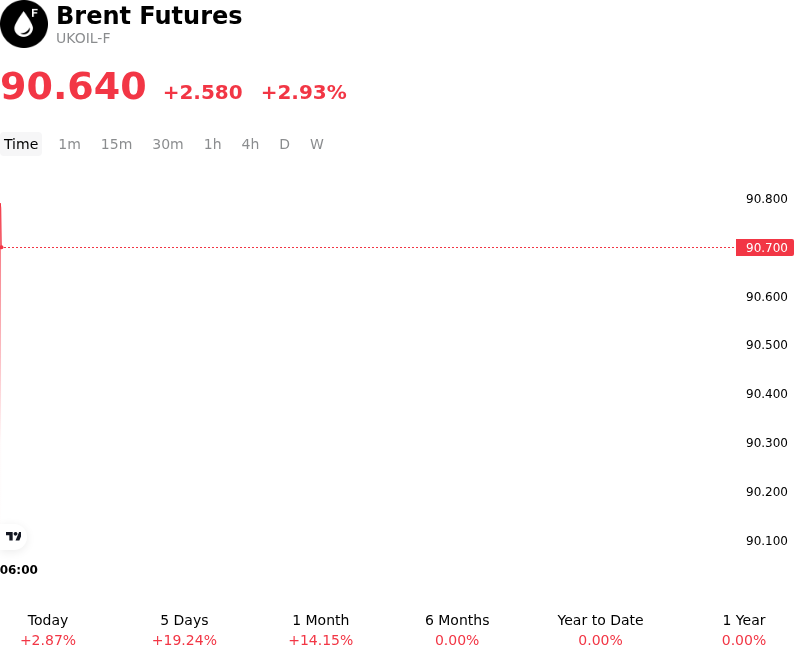
What is driving Brent Futures (UKOIL-F)’s stock price up today?
The upward movement in Brent crude oil is primarily driven by an intensification of geopolitical risk premiums and signs of a tightening physical market balance during the peak summer demand season. Renewed instability in the Middle East, specifically reports of potential disruptions to maritime transit through critical energy chokepoints, has forced market participants to re-evaluate the probability of supply interruptions. This geopolitical friction coincides with a period of structural vulnerability in global inventories, where high-frequency data indicates a more rapid depletion of stocks than previously forecasted.
On the supply side, the steadfast commitment of OPEC+ to its production restraint strategy continues to provide a firm floor for prices. Recent communications from the alliance suggest that voluntary cuts will be maintained or even deepened if market conditions do not align with fiscal break-even requirements for major producers. Furthermore, localized outages in non-OPEC production regions, potentially due to infrastructure maintenance or seasonal weather-related interruptions, have exacerbated the immediate supply deficit, limiting the availability of specific crude grades favored by complex refineries.
Demand expectations have also undergone an upward revision as macroeconomic indicators from major consuming nations suggest a recovery in industrial activity and transportation fuel consumption. The convergence of peak seasonal driving demand in the Northern Hemisphere and increased fuel requirements for power generation to meet cooling needs has created a significant short-term demand spike. This is reflected in the narrowing of time spreads, with the front-month Brent contract trading at a notable premium to future months, indicating that physical traders are aggressively securing immediate barrels.
Macroeconomic tailwinds have further supported the price action, as shifting expectations regarding central bank policy have weighed on the US dollar. A softer greenback makes dollar-denominated commodities more attractive to international buyers, providing an additional layer of support for Brent. From a positioning perspective, the breach of key technical resistance levels has likely triggered a wave of algorithmic buying and short-covering by institutional investors who were previously positioned for a more range-bound market.
Institutional investors remain focused on the sustainability of this rally, monitoring whether the current supply constraints will be met by a meaningful response from non-aligned producers or if the demand-side strength will be dampened by persistent inflationary pressures. For now, the combination of restricted supply, robust seasonal demand, and a favorable macroeconomic backdrop continues to drive the bullish momentum in the global energy complex.
More details about Brent Futures (UKOIL-F)
Recent Events and Risks:
- Monetary Policy and Demand Headwinds: Recent hawkish signals from central bank minutes indicate that interest rates may remain elevated for longer than anticipated, strengthening the U.S. Dollar and heightening concerns over a potential slowdown in global industrial demand and fuel consumption.
- Unexpected Inventory Accumulation: The latest Energy Information Administration (EIA) data revealed a surprise build of 1.8 million barrels in U.S. commercial crude stocks, contradicting market expectations of a significant draw and suggesting that near-term supply is outpacing current refinery intake.
- Physical Market Softness and Technical Breaches: Brent prices have recently slipped below key technical support levels, including the 200-day moving average, as narrowing prompt spreads indicate a well-supplied physical market and a diminishing geopolitical risk premium in the Middle East.
- OPEC+ Policy Uncertainty: Heightened market volatility is expected ahead of the upcoming production policy meeting, with growing concern among participants that any lack of clarity regarding the extension of voluntary output cuts could trigger a massive liquidation of long positions by trend-following funds.
Recommended Articles


