




AI’s power buildout is pushing copper to record highs — can the rally continue?
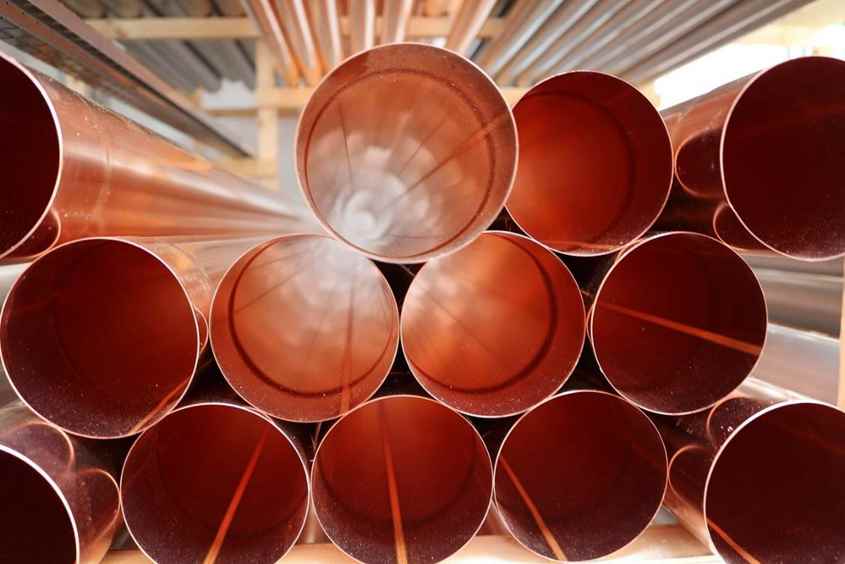
Copper’s rally is no longer being driven only by China’s economy, construction activity, or the broader energy transition.
The metal has reached record highs this year as investors begin pricing in a new source of demand: the power infrastructure required to support artificial intelligence.
That focus sharpened this month after the International Energy Agency warned that, even with more projects expected to come online, announced mine supply could still leave the copper market around 25% short of projected requirements by 2035.
At the same time, Chilean producer Codelco—the world’s largest copper producer—has warned that its output is likely to remain broadly flat in the coming years as declining ore grades, project delays, and rising costs limit growth.
The timing matters. AI data centres are moving from a technology-sector story to an electricity-system story. Each new hyperscale facility needs a grid connection, substations, transformers, high-voltage cables, and enough transmission capacity to deliver reliable power around the clock.
For traders, this is creating a new way to view copper: not simply as a bet on global manufacturing, but as a potential pressure point in the AI capital cycle.
Why Today's Copper Prices Is Back in Focus Now
Today's Copper Prices
The latest copper rally reflects a collision between stronger expectations for electricity infrastructure spending and the reality that new mine supply takes years to develop.
For Australian traders, copper Contracts for Difference (CFDs) offer a way to take a position on the metal directly, without purchasing physical copper or relying on the performance of a single mining company.
“Trade Copper with an ASIC-regulated broker. Fast AUD funding via PayID. ”
The AI trade is moving beyond chips
The first phase of the AI rally rewarded chipmakers. Now, investors are asking whether power grids can support the data centres that those chips need to run.
That shifts attention to copper. New data centres require grid connections, transformers, substations, and transmission upgrades—and all of them rely heavily on the metal. The AI trade is therefore broadening from technology shares into the infrastructure and commodities behind them.
Codelco’s warning highlights the supply problem
The problem for copper buyers is that supply cannot respond at the speed of AI spending.
Codelco expects its output to remain broadly flat in the coming years as declining ore grades and delayed projects limit growth. That matters because Chile is the world’s largest copper-producing country, and it highlights a wider industry issue: new mines can take more than a decade to permit, finance, and build.
The IEA’s latest outlook suggests announced projects may still leave copper supply well short of projected requirements by 2035. That does not guarantee an immediate shortage or a straight-line price rally—Chinese demand, the US dollar, and global growth still drive copper day to day—but it raises the risk that any sustained acceleration in grid and data-centre spending meets a constrained supply response.
Why the copper story can be harder to trade from Australia
AI-related power demand may support copper over time, but the trade can still turn quickly. Australian traders need to weigh several competing forces:
The AI story is only one driver: Chinese manufacturing data, global growth expectations, and the US dollar can all move copper sharply, even when data-centre investment remains strong.
Mining shares are an imperfect proxy: A copper producer can fall because of lower grades, project delays, or rising costs while copper rises. It can also outperform the metal because of company-specific production results.
The key news often breaks overnight: US hyperscaler spending plans, utility demand forecasts, and Chinese economic data can reshape the outlook outside Australian hours—before ASX-listed miners have a chance to react.
The challenge is gaining direct exposure to copper while retaining the flexibility to respond when AI demand, mine supply, and the wider economy point in different directions.
How Mitrade helps traders keep up
Mitrade’s copper CFDs give Australian traders direct exposure to copper-price movements without buying physical metal or relying on the performance of a single mining company.
Trade the underlying theme directly: A copper CFD tracks the commodity price, allowing traders to focus on the market’s response to AI power demand, grid spending and supply constraints.
Take a view in either direction: Traders can go long if fresh data-centre investment or mine disruptions tighten the outlook, or go short if weaker Chinese demand, a stronger US dollar or broader growth concerns weigh on copper.
Set risk parameters before overseas catalysts: Pending orders, stop-losses, and take-profit levels can be established in advance when major US or Chinese updates are expected outside Australian hours.
Trade from an AUD-denominated account: Margin requirements and profit or loss are displayed in Australian dollars, without first needing to fund an overseas commodity account.
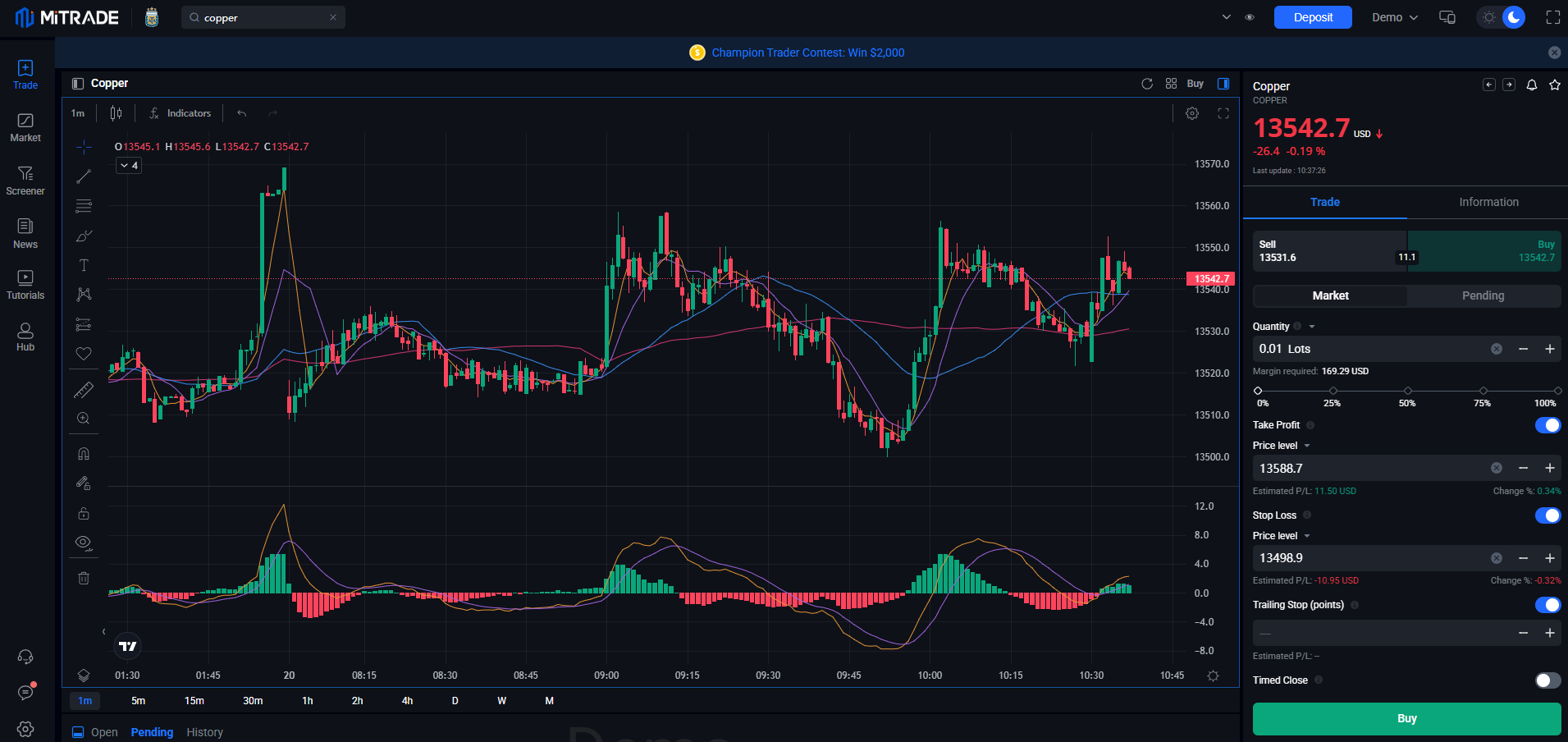
Leverage can amplify losses as well as gains, particularly when copper reacts to unexpected supply or economic news. Position sizing and predefined exit levels, therefore, matter as much as getting the broader AI infrastructure theme right.
“Trade Copper with an ASIC-regulated broker. Fast AUD funding via PayID. ”
Can AI demand keep copper’s rally going?
The next move depends on whether AI-related power demand begins showing up in real grid spending—and whether supply can respond.
AI and grid investment: Hyperscaler spending plans, utility forecasts, and major grid-connection announcements will show whether data-centre demand is translating into new infrastructure.
Equipment constraints: Transformer shortages and transmission delays could make the power buildout slower, but also reinforce the need for more copper-intensive investment.
Mine output: Further production setbacks from Codelco or other major suppliers would strengthen concerns that new supply cannot keep pace.
China and the US dollar: Chinese manufacturing data, global growth expectations, and dollar moves can still outweigh the AI theme in the short term.
Together, these signals will determine whether copper’s AI-driven rally has further room to run—or whether broader economic pressures begin to take control.
A new way to follow the AI infrastructure trade
Copper has become a more timely AI trade because the market is no longer looking only at the chips inside a data centre.
It is looking at the wires, transformers, substations, and transmission lines needed to power them—and whether mining supply can expand fast enough to support that buildout.
With copper already at record highs this year, each new AI spending plan, utility forecast, or mine-production update could create fresh volatility.
Start trading copper CFDs in three simple steps
Open an Account: Register through the Mitrade homepage, or use the fast sign-up process with existing Google or Facebook credentials.
Fund Your Account: Deposit in Australian dollars using supported payment methods, including POLi or Visa/Mastercard.
Trade copper CFDs: Analyse the market, set risk parameters, and choose whether to take a long or short position.
AI spending, grid upgrades, and mine-supply constraints are all reshaping the copper market. Open your Mitrade account today and be ready to respond when the next catalyst moves prices.


1. Why is copper linked to AI data centres?
AI data centres need large and reliable electricity supplies. Copper is used in the grid infrastructure around them, including transmission lines, substations, transformers, cables, and electrical connections.
2. Does AI alone determine copper prices?
No. Copper is also heavily influenced by Chinese industrial demand, global growth, mine supply, inventories, and the US dollar. AI-related power demand is becoming an additional catalyst rather than the market’s only driver.
3. Why can’t miners simply produce more copper?
Large mines take years to discover, permit, finance, and build. Existing mines also face lower ore grades, operational challenges, and rising costs, making supply growth slower than many infrastructure investment cycles.
4. Can traders profit if copper prices fall?
CFDs allow traders to take long or short positions. A short position can potentially benefit if copper falls, although losses can occur if the price rises instead.
Disclaimer: The content presented above, whether from a third party or not, is considered as general advice only. CFD trading involves significant risk of loss. Past performance does not guarantee future results. This article serves informational purposes only and does not constitute financial advice. Consider your risk tolerance before trading.


