




Oil just surged as Middle East tensions reignite - here’s what you need to know
Oil prices have surged sharply after renewed U.S.-Iran tensions placed the Strait of Hormuz back at the centre of global energy markets.
Brent crude jumped more than 5% to briefly trade near $80 per barrel, while West Texas Intermediate (WTI) climbed above $75, as traders reacted to fresh U.S. strikes on Iran, renewed tanker attacks near the Strait of Hormuz, and Washington’s decision to revoke a waiver that had allowed Iranian oil sales.
The move marks a sharp reversal from recent expectations that oil markets were heading back towards a more comfortable supply backdrop. Instead, traders are once again pricing in the risk that conflict in the Middle East could disrupt one of the world’s most important energy corridors.
For Australian traders, the surge is a reminder of just how quickly oil can move when geopolitics, supply risk, and shipping routes collide.
What’s driving oil’s latest rally?
Oil’s latest move reflects a sudden repricing of geopolitical risk after fresh military action and concerns over shipping security in the Gulf.
The biggest concern is the Strait of Hormuz, the narrow waterway between Iran and Oman that carries roughly one-fifth of global oil supplies. Any threat to tanker traffic through the region can immediately lift insurance costs, shipping risk, and the market’s perceived probability of supply disruption.
Several forces are now shaping the oil market:
The key point is that oil markets often move before supply is actually lost. When traders see rising risk around a major shipping route, prices can jump quickly as the market adjusts to the possibility of disruption.
Fortunately for Australian traders, moves like these no longer require exposure through physical commodities, energy shares, or complex futures contracts. Contracts for Difference (CFDs) make it possible to trade movements in oil prices directly, with the flexibility to respond whether prices rise or fall.
“Trade Crude Oil with an ASIC-regulated broker. Fast AUD funding via PayID. ”
Why the Strait of Hormuz matters
The Strait of Hormuz is not just another shipping route. It is one of the most important chokepoints in the global energy system, linking major oil producers in the Persian Gulf with customers across Asia, Europe, and the rest of the world.
That is why oil traders react so quickly when tensions rise in the region. Even if barrels continue flowing, the risk of disruption can push prices higher as refiners, shipping companies, and traders reassess supply security.
Oil is also deeply connected to the broader economy. Rising crude prices can feed into petrol prices, airline costs, transport expenses, and inflation expectations, making the market important well beyond energy traders alone.
The challenge of trading oil
The latest Middle East flare-up has once again demonstrated how quickly oil prices can respond to geopolitical events. But for Australian investors, gaining exposure to those moves isn’t always as straightforward as buying or selling a share.
Several practical challenges often stand in the way.
Physical ownership isn’t practical. Unlike shares or ETFs, crude oil isn’t an asset most investors can simply buy and hold. Physical ownership brings significant storage, transport, and insurance considerations.
Oil futures can be complex. Professional oil markets trade through futures contracts, which involve expiry dates, contract rollovers, and pricing differences between delivery months.
Energy shares don’t always follow oil prices. Companies such as oil producers and refiners can benefit from higher crude prices, but earnings are also influenced by production costs, operational performance, and broader share market sentiment.
Headlines can move the market instantly. Developments in the Middle East, OPEC+ production decisions, or unexpected changes in US crude inventories can all trigger sharp price moves with little warning.
For traders looking to respond quickly when geopolitical risk changes, these practical limitations can make timely execution more difficult.
How Mitrade helps remove these barriers
Mitrade uses CFDs to provide exposure to movements in oil prices without requiring traders to own physical crude, navigate complex futures markets, or rely on energy company shares. That means many of the practical challenges of trading oil can be managed more efficiently.
Respond as oil prices move. Oil doesn’t need to be rallying to create opportunities. CFDs allow traders to take either long or short positions, making it possible to respond whether supply concerns push prices higher or easing tensions trigger a pullback.
Access oil prices directly. Rather than gaining indirect exposure through oil producers or managing futures contracts with expiry dates and rollovers, CFDs provide a simpler way to trade movements in the underlying oil price.
Be prepared when headlines break. Developments in the Middle East, OPEC+ production decisions, and US inventory reports can move oil markets within minutes. Entry orders, stop-losses, and take-profit levels can all be placed in advance, allowing trades to execute automatically if target prices are reached.
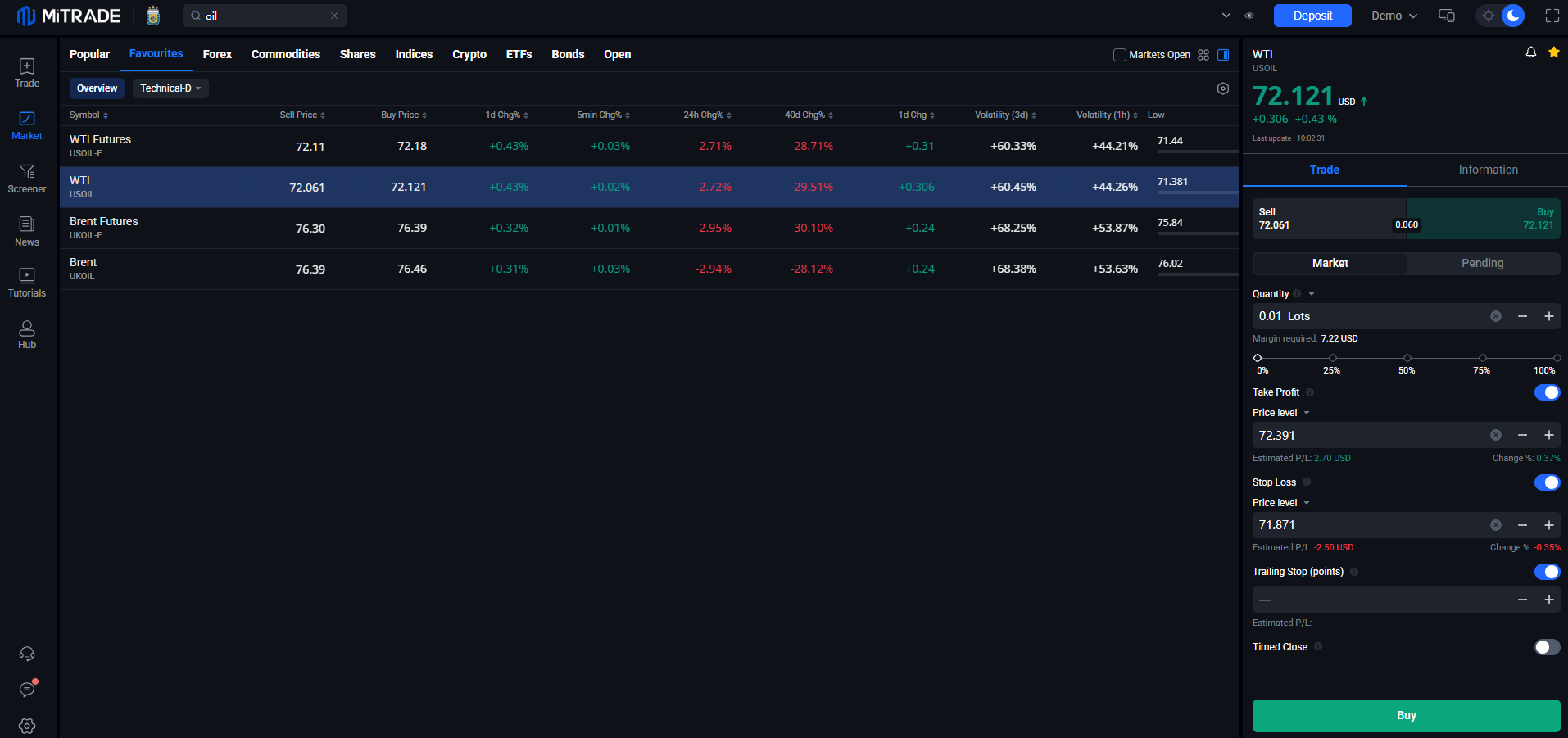
The latest surge has already shifted attention beyond the initial geopolitical shock. Traders are now watching whether tensions continue disrupting supply expectations—or whether the market begins refocusing on underlying demand and production fundamentals.
“Trade Crude Oil with an ASIC-regulated broker. Fast AUD funding via PayID. ”
What could drive oil next?
The Middle East flare-up has put supply risk back at the centre of the oil market. Traders are now watching whether the latest escalation becomes a short-lived price spike or the start of a more sustained energy shock.
Several developments are likely to remain firmly in focus.
Strait of Hormuz shipping flows: Any disruption to tanker traffic, insurance costs, or port activity could quickly lift the risk premium in crude prices.
U.S.-Iran escalation: Further military strikes, retaliation, or renewed diplomatic talks could all reshape expectations within hours.
OPEC+ response: Additional supply from major producers could help calm the market, while restraint would keep supply concerns elevated.
U.S. inventory data: Weekly crude stockpile reports remain a key short-term gauge of whether the market is tightening or loosening.
For active traders, the focus has already shifted beyond the initial price spike. The next major move will likely depend on whether supply risks ease—or whether the conflict begins to threaten actual crude flows.
Be ready when oil moves
With markets now watching every headline from the Gulf, every tanker update, and every signal from OPEC+, the next move in oil could arrive quickly.
Mitrade helps Australian traders stay prepared with:
AUD-based accounts.
0% commission trading, with costs incorporated into competitive spreads.
Advanced charting and integrated risk management tools.
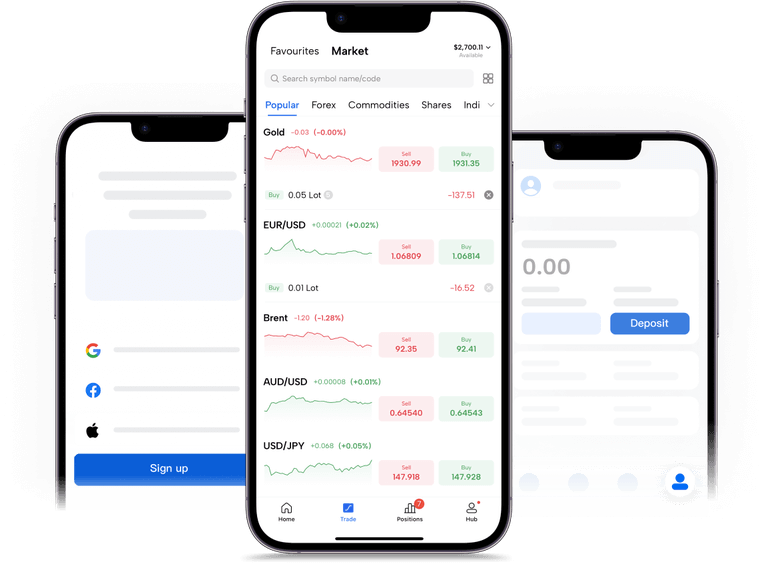
A mobile app designed for global markets.
ASIC regulation, with retail client funds held in segregated trust accounts.
A free $50,000 demo account to practise trading strategies before risking real capital.
Start Trading Oil CFDs in Three Simple Steps
Getting started takes only a few minutes.
Open an Account: Register manually via the Mitrade homepage, or use the fast sign-up process by linking your existing Google or Facebook credentials.
Fund Your Account: Deposit your initial margin using secure Australian payment methods, including POLi or Visa/Mastercard.
Trade CFDs: Access the platform, analyze your preferred trading instruments , define your risk parameters, and execute your long or short position.
Oil is back at the centre of global market attention. Open your account today and be ready for whatever comes next.


1. Can you still trade oil if prices start falling?
Yes. Oil markets can move in either direction depending on changes in supply, demand, or geopolitical developments. CFDs allow traders to take both long and short positions, making it possible to respond whether oil prices rise or fall. However, leverage increases both potential gains and losses.
2. Why does the Strait of Hormuz have such a big impact on oil prices?
Around one-fifth of the world’s oil supply passes through the Strait of Hormuz. Even the threat of disruption can increase shipping costs and raise concerns about global supply, prompting traders to build a geopolitical risk premium into oil prices before any physical shortages occur.
3. Do oil company shares always rise when oil prices increase?
Not necessarily. While higher crude prices can benefit many energy producers, company share prices are also influenced by production costs, earnings results, debt levels, and broader share market sentiment. As a result, oil stocks don’t always move in line with the underlying oil price.
4. What events do oil traders watch most closely?
The biggest market-moving events typically include developments in the Middle East, OPEC+ production decisions, weekly US crude inventory reports, and major economic data that influences expectations for global energy demand. Any of these can quickly change sentiment in the oil market.
Disclaimer: The content presented above, whether from a third party or not, is considered as general advice only. CFD trading involves significant risk of loss. Past performance does not guarantee future results. This article serves informational purposes only and does not constitute financial advice. Consider your risk tolerance before trading.


