


Oracle Stock Plunges Over 40% This Year: Can It Return to All-Time High of $345 by 2027?
TradingKey - Oracle shares have plunged over 40% year-to-date, nearing the $100 mark, putting a return to their $345 high before 2027 to the test.
On November 25, Eastern Time, Oracle (ORCL) shares dropped below the $100 threshold intraday to a low of $99.34, hitting a nearly three-year low. Year-to-date, Oracle's stock has undergone a sharp correction, weakening steadily from around $192–$193 at the start of the year and bringing its year-to-date loss to 45%.
The core driver of the selloff in Oracle shares is not shrinking cloud orders, but massive AI data center capital expenditures, free cash flow plunging deeply negative, mounting debt, and financing dilution concerns, compounded by a high-inflation, high-interest-rate environment compressing valuations for high-capex tech stocks.
To expand AI computing power and data center capacity, Oracle's fiscal 2026 capital expenditures reached $55.7 billion, resulting in a negative full-year free cash flow of $23.686 billion; the company further guided total capex for fiscal 2027 to $90 billion–$95 billion. Free cash flow was also negative $5.396 billion in the first quarter of fiscal 2027, heightening market concerns over its cash burn rate and return horizon.
Alongside infrastructure expansion, total debt climbed to approximately $135.3 billion, and 5-year credit default swap (CDS) spreads hit a new high of 356 basis points, reflecting the credit market's growing caution regarding its leverage and financing costs. Meanwhile, Oracle completed a $10 billion share offering in early November, further fueling market worries over equity dilution and share overhang absorption.
The U.S. core PCE inflation rate remained elevated at 3.3% year-over-year, bolstering expectations of a December rate hike by the Federal Reserve, which triggered valuation multiple compression and portfolio deleveraging across growth and AI-related stocks that had previously bet on an accommodative or low-rate environment. Moreover, interest rates remaining elevated or rising further implies persistently high corporate debt issuance and refinancing costs, diminishing the credit market's tolerance for high leverage and massive capital expenditures.
Based on recent trading levels of roughly $100–$110, Oracle would need to surge over 210%–245% to return to $345. Before sticky inflation, rate-hike expectations, and negative free cash flow are reversed, it will be difficult for the market to absorb both the realization of earnings growth and a substantial re-rating of valuation multiples within a single year.
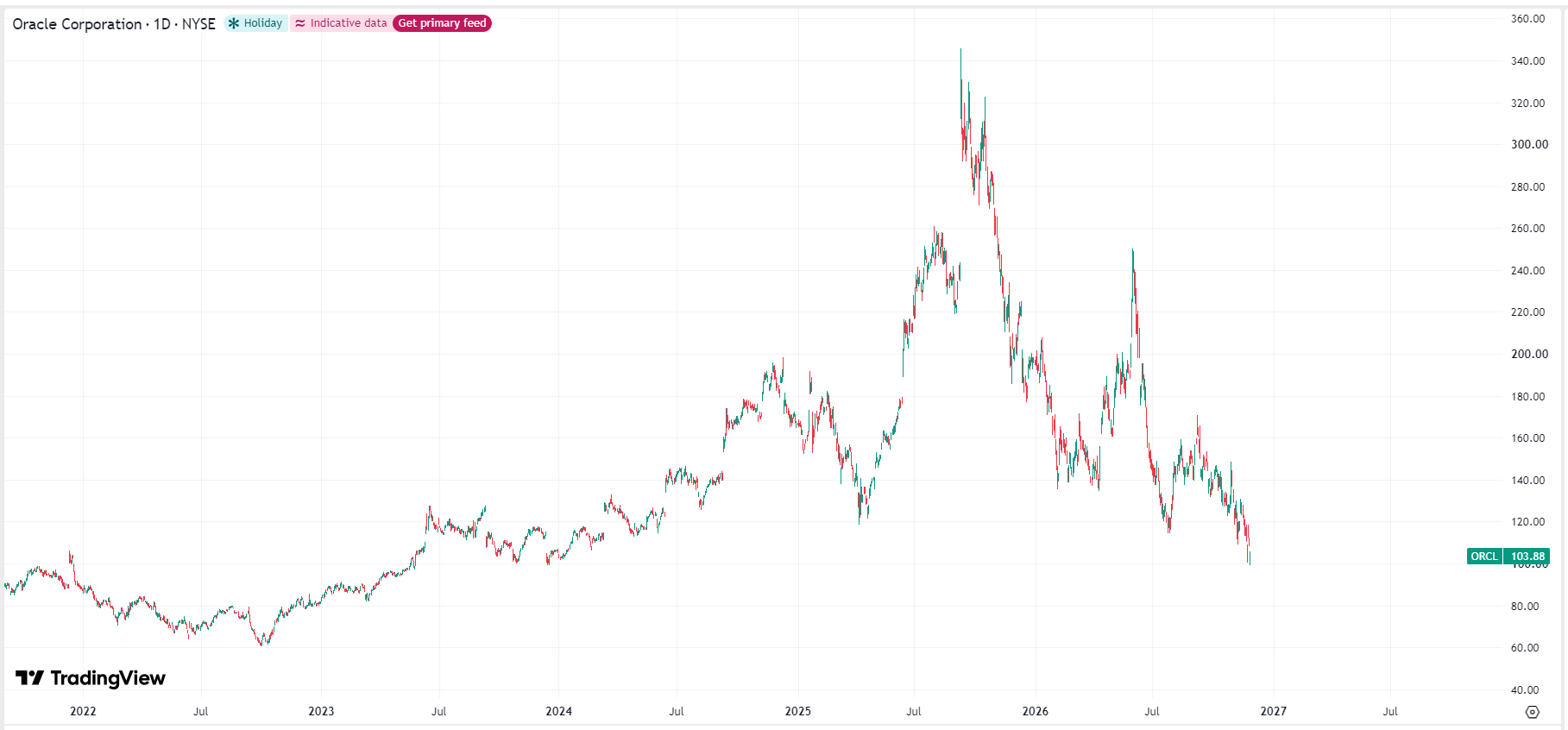 Oracle stock price chart, Source: TradingView
In the short term, investors must watch whether the $99–$100 range can hold and establish a bottom. If this level is breached, technicals suggest further downside will open up, with the next line of defense at $60, implying another 40% plunge in Oracle's stock price. To the upside, Oracle needs to climb back above the $116 level—the offering price of its new shares, which also represents a resistance level flipped from a nearly two-year support. A decisive break above this resistance would break the downtrend and turn the rebound into a full reversal.
Recommended Articles


